
Main Courses
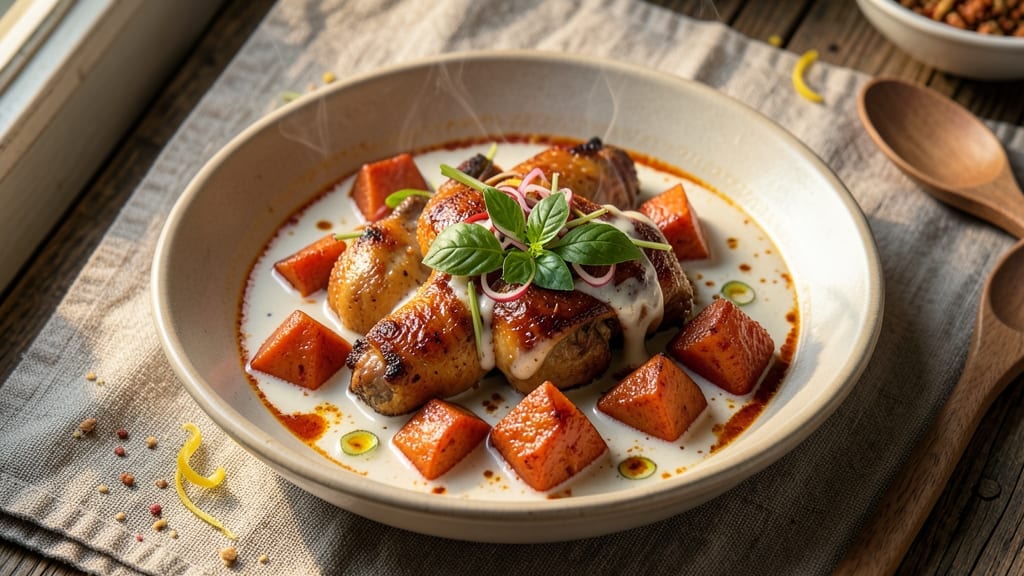
This Thai chicken sweet potato curry recipe brings the vibrant flavors of Thailand to your dinner table with its fragrant coconut and lemongrass harmony. 🌟 I developed this recipe after years of studying authentic Thai cooking techniques, and it's designed to deliver restaurant-quality results at home with simple ingredients and straightforward steps.
The secret to this curry lies in the balance of flavors—sweet, spicy, tangy, and savory—all coming together in a rich, aromatic sauce. The sweet potatoes add natural sweetness that complements the chicken beautifully, while the lemongrass and galangal infuse the dish with authentic Thai fragrance.
This recipe is perfect for a weeknight dinner or a special occasion, and it's sure to impress even the most discerning food lovers.
What makes this curry truly special is the tender chicken and perfectly cooked sweet potatoes, all swimming in a velvety coconut milk sauce.
The dish is infused with the bright citrus notes of kaffir lime leaves and the earthy warmth of red curry paste, creating a complex flavor profile that's both comforting and exciting. Serve it with steamed jasmine rice and fresh herbs like cilantro and Thai basil to complete the experience.
This recipe is designed to be foolproof, with clear instructions that guide you through each step—from sautéing the aromatics to simmering the curry and balancing the flavors. Whether you're a seasoned cook or a beginner in the kitchen, you'll be able to create this delicious Thai-inspired dish with confidence.
Let's get started on making this fragrant, flavorful curry that will transport you to the streets of Bangkok with every bite.
Ingredients for thai chicken sweet potato curry
Fragrant lemongrass and galangal meet sweet potatoes and tender chicken in this restaurant-worthy curry.
| Ingredient | Amount | Notes |
|---|---|---|
| Boneless Chicken Thighs 🍗 | 1 ½ lb | Skin-on for better flavor |
| Sweet Potatoes 🍠 | 2 medium | Peeled, cut into 1-inch cubes |
| Red Curry Paste 🌶️ | 2 tbsp | Store-bought or homemade |
| Coconut Milk 🥥 | 1 can | Full-fat for creaminess |
| Fresh Lemongrass 🌿 | 3 stems | Bruised and cut into 2-inch pieces |
| Galangal 🌿 | 1 inch | Peeled and sliced thinly |
| Kaffir Lime Leaves 🍋 | 4 leaves | Fresh, torn into strips |
| Fresh Ginger 🧄 | 1 inch | Peeled and sliced thinly |
| Fish Sauce 🍶 | 2 tbsp | For umami depth |
| Brown Sugar 🍚 | 2 tbsp | Balances flavors perfectly |
| Vegetable Oil 🫒 | 2 tbsp | For sautéing aromatics |
| Fresh Cilantro 🌿 | ¼ cup | Chopped for garnish |
| Thai Basil 🌿 | ¼ cup | For authentic Thai flavor |
| Salt 🧂 | 1 tsp | Adjust to taste |
| Black Pepper 🌶️ | ½ tsp | Freshly ground |
The galangal and lemongrass are the soul of this curry—look for fresh galangal at Asian markets (it's like ginger's more exotic cousin). If you can't find it, extra ginger plus a pinch of turmeric works in a pinch. For lemongrass, Trader Joe's usually carries it, but any grocery store with a good international aisle should have it. Bruise the stems with the side of your knife before cutting—they'll release more flavor. The sweet potatoes should be firm and vibrant orange; Yukon Golds work too if you're in a hurry.
No fish sauce? Soy sauce or coconut aminos will do, though the umami won't be quite the same. Running out of kaffir lime leaves? Regular lime zest plus a splash of lime juice adds brightness, just not that same citrusy aroma. The curry paste is non-negotiable for authentic flavor—Maesri or Thai Kitchen brands are my go-tos, but any good-quality paste will work. For the chicken, thighs stay juicier than breasts, but if you only have breasts, pound them thin and add 5 minutes to the cooking time. The coconut milk? Full-fat only—light versions won't give that creamy texture.
This curry tastes even better the next day—make extra and freeze portions. Store leftovers in airtight containers for 4-5 days in the fridge. For freezing, portion into 1-cup servings with a splash of coconut milk on top to prevent a skin from forming. Reheat gently on the stove with a splash of water. The herbs? Add them fresh at the end—they'll wilt in the simmering sauce. Serve with steamed jasmine rice to soak up every last bit of that fragrant sauce.
Why You'll Love This Recipe
- One-Pot Magic: I swear by this recipe when I’m too tired to wash dishes. Toss everything—chicken, sweet potatoes, even the lemongrass—into one pot with coconut milk, and let the curry paste work its magic. The sweet potatoes soften perfectly while the chicken stays juicy, all without a single extra bowl.
- Sweet Heat Balance: Between us, that red curry paste and coconut milk combo is chef’s kiss—creamy but with a slow-building spice that lingers. The sweet potatoes add natural sweetness that cuts through the heat, and the lemongrass? It’s the secret citrusy backbone that makes it taste like a proper Thai restaurant, not just a weeknight hack.
- Meal Prep MVP: Honestly, this curry is my go-to for lunches. Cook a big batch, and it reheats beautifully—even better the next day, if you ask me. The sweet potatoes hold their shape, the chicken stays tender, and the flavors deepen. Pack it in jars for easy grab-and-go bowls, or serve it over rice for a proper sit-down meal.
- Budget-Friendly Feast: Chicken thighs and sweet potatoes are affordable, and coconut milk stretches further than you’d think. I’ve fed four people for under $15 with this, and there’s always leftovers. Plus, the red curry paste is a pantry staple that lasts forever—so you’re not scrambling for expensive ingredients. Solid win for flavor without breaking the bank.
Step-by-step instructions for Thai chicken sweet potato curry
Here's how to create a rich, fragrant curry that balances sweet, spicy, and creamy notes perfectly.
🍳 Step 1: Sauté Aromatics Until Fragrant
Heat the 2 tablespoons vegetable oil in a large pot or deep skillet over medium heat. Add the 3 stems fresh lemongrass (bruised and cut), 1 inch galangal (peeled and sliced), 4 leaves kaffir lime leaves (torn), and 1 inch fresh ginger (peeled and sliced). Sauté for 3-4 minutes until the lemongrass turns vibrant green and the ginger becomes translucent.
This is where the magic happens—the aromatics release their essential oils and build the curry's complex flavor foundation. You'll smell that beautiful citrusy, slightly peppery aroma that's pure Thai comfort food. If the lemongrass starts to brown too quickly, reduce the heat slightly to prevent bitterness.
🍳 Step 2: Cook the Curry Paste and Chicken
Add the 2 tablespoons red curry paste to the pot and stir for 1 minute until it darkens slightly and becomes fragrant. Immediately add the 1.5 lb boneless chicken thighs, turning to coat them completely in the paste. Cook for 3-4 minutes until the chicken develops a light golden crust.
The paste will release its signature deep red color and rich spices. Here's the thing—don't rush this step. The chicken needs time to develop flavor and start cooking through before we add the liquid ingredients. You'll notice the curry paste releases its oils and creates a beautiful, aromatic coating on the chicken.
🥘 Step 3: Simmer with Coconut Milk and Seasonings
Pour in the 1 can coconut milk, 2 tablespoons fish sauce, and 2 tablespoons brown sugar. Stir well to combine, then add 1 teaspoon salt and ½ teaspoon black pepper. Bring to a gentle simmer over medium-low heat, then reduce heat to low and let it bubble gently for 10 minutes. This allows the flavors to meld beautifully.
While it simmers, add the 2 medium sweet potatoes (peeled and cut into 1-inch cubes) to the pot. The sweet potatoes will absorb all that incredible coconut-chicken flavor as they cook. Keep an eye on the curry—it should maintain a gentle simmer, not a rolling boil, which could cause the coconut milk to separate.
⏰ Step 4: Finish and Garnish
Continue simmering for another 15-20 minutes until the chicken is cooked through (internal temperature reaches 165°F) and the sweet potatoes are tender when pierced with a fork. The curry should have thickened slightly but still maintain a luscious, creamy consistency.
Remove from heat and stir in the ¼ cup fresh cilantro and ¼ cup Thai basil. Let it sit for 5 minutes to allow the flavors to fully integrate. Taste and adjust seasoning—you might want to add a bit more fish sauce for umami or brown sugar for sweetness, depending on your preference.
🍽️ Step 5: Serve with Perfect Garnishes
Ladle the curry into serving bowls and garnish with additional Thai basil leaves and cilantro if desired. Serve immediately with steamed jasmine rice to soak up every last drop of that fragrant coconut sauce. The contrast of the warm, creamy curry with the fluffy rice makes this dish truly special.
Each bite should deliver tender chicken, sweet potatoes that melt in your mouth, and layers of complex Thai flavors. The curry should be rich but not overly thick, with a perfect balance of heat, sweetness, and umami. Don't forget to save some of that delicious sauce for leftovers—it only gets better as the flavors continue to develop!
Pro Tips For Making Thai Chicken Sweet Potato Curry
- Bloom the Paste: Toss your red curry paste into the dry pan first—no oil—before adding heat. I learned this the hard way after my curry tasted raw and bitter; blooming it for 30 seconds unlocks the flavors and prevents that weird aftertaste.
- Parboil the Potatoes: Cut sweet potatoes into even chunks, then boil them for 5 minutes before adding to the curry. This guarantees they soften without turning to mush, especially if you’re using thicker pieces.
- Stir the Coconut Milk: Give your coconut milk a good shake before opening—fat settles at the bottom. Pour it in slowly while stirring the pot, or you’ll end up with a greasy, unbalanced sauce.
- Char the Lemongrass: Split the lemongrass stalks lengthwise and sear them in the pan for 30 seconds before adding liquid. The smoky edge cuts through the richness of the coconut milk and deepens the curry’s aroma.
Essential equipment for perfect results
Pot Essentials
For this curry, I swear by a heavy-bottomed Dutch oven—like my trusty Le Creuset 5.5-quart—because it distributes heat evenly and prevents scorching. The deep sides make stirring easier, and it holds enough volume for the sweet potatoes to cook gently without boiling over.
If you don’t have one, a stainless steel stockpot with a tight-fitting lid works too. Just avoid nonstick—it can’t handle the high heat needed for those aromatic spices. 🍳
Knife and Cutting Tools
A sharp chef’s knife (I use my Victorinox 8-inch) is non-negotiable for mincing ginger, slicing galangal, and chopping lemongrass stems. For sweet potatoes, a mandoline saves time if you’re prepping for a crowd—just set it to ¼-inch slices and work quickly.
A microplane comes in handy for zesting lime leaves if you’re substituting kaffir lime. Pro tip: Keep a small bowl of water nearby while chopping herbs to preserve their freshness. 🌿
Measuring and Prep Tools
Precision matters with Thai curries, so grab a small mixing bowl for bruising lemongrass (tap it with your knife first!) and a measuring spoon set for the 2 tbsp red curry paste and 2 tbsp fish sauce.
A fine-mesh strainer helps if you want to remove lemongrass pieces before serving. For sweet potatoes, a vegetable peeler makes quick work of the skin, and a cutting board with a non-slip mat keeps everything stable.
I also keep a small bowl of ice water nearby to refresh herbs after washing. ✨
Thermometer for Perfect Chicken
No more dry chicken! A meat thermometer (I love the Thermoworks Smoke) ensures your 1.5 lb chicken thighs hit 165°F without overcooking. Insert it into the thickest part—right through the paste—and monitor as it simmers.
This is especially important since sweet potatoes can absorb moisture, making the curry thicker as it cooks. A thermometer takes the guesswork out of timing. 🌡️
Garnish and Serving
Fresh herbs elevate this dish, so keep cilantro and Thai basil in separate small bowls until serving. A slotted spoon helps transfer the curry without the herbs falling in. For rice, a steamer basket or rice cooker (like my Zojirushi) keeps jasmine rice perfectly fluffy.
Don’t forget a ladle for serving—this curry is all about that creamy coconut sauce, so encourage seconds! 🍚
Optional Upgrades
Want to take it to the next level? A mortar and pestle lets you grind your own curry paste from scratch (toast the spices first for deeper flavor!).
For extra aroma, a small bundle of fresh cilantro stems tied with twine can infuse the curry while simmering—just remove it before serving. And if you’re feeling fancy, a blender lets you make a smoother sauce by puréeing some of the cooked sweet potatoes back into the curry. 💫
Nutrition facts
Frequently asked questions
Can I substitute white potatoes for sweet potatoes in this recipe?
While it's possible, I don't recommend it for this specific curry. Sweet potatoes add natural sweetness that balances the Thai flavors perfectly, while white potatoes can make the dish taste too starchy. If you must substitute, use orange-fleshed potatoes and reduce the brown sugar to 1 tablespoon to maintain flavor balance. The texture will be slightly different but still delicious!
How spicy is this Thai chicken sweet potato curry?
The recipe uses red curry paste which provides mild heat, but the actual spiciness depends on the brand. For a milder version, reduce the curry paste to 1.5 tablespoons and add ½ teaspoon more brown sugar to balance. If you want more heat, add ½ teaspoon chili flakes or a dash of Thai bird's eye chili at the end. Always taste before serving!
Can I make this curry in an Instant Pot or slow cooker?
For an Instant Pot, sauté the aromatics first, then add all ingredients except herbs. Cook on High Pressure for 10 minutes, then natural release. For a slow cooker, combine everything (including sweet potatoes) and cook on Low for 4-5 hours or High for 2-3 hours. The slow cooker version will be even more flavorful as the ingredients meld longer. Just be careful not to overcook the chicken!
What if I can't find galangal or kaffir lime leaves?
No problem! For galangal, use extra ginger plus ¼ teaspoon turmeric (it adds that distinctive citrusy flavor). For kaffir lime leaves, substitute with lime zest plus 1 tablespoon lime juice. While not identical, these swaps will keep your curry delicious. The combination of ginger and turmeric works surprisingly well for that earthy galangal flavor.
How can I make this curry ahead of time?
This curry actually tastes better the next day! Store leftovers in an airtight container in the fridge for up to 4 days. Reheat gently on the stove with a splash of water or coconut milk to restore creaminess. For freezing, portion into 1-cup servings with a bit of coconut milk on top to prevent a skin from forming. Thaw overnight in the fridge and reheat slowly on low heat.