
Side Dishes
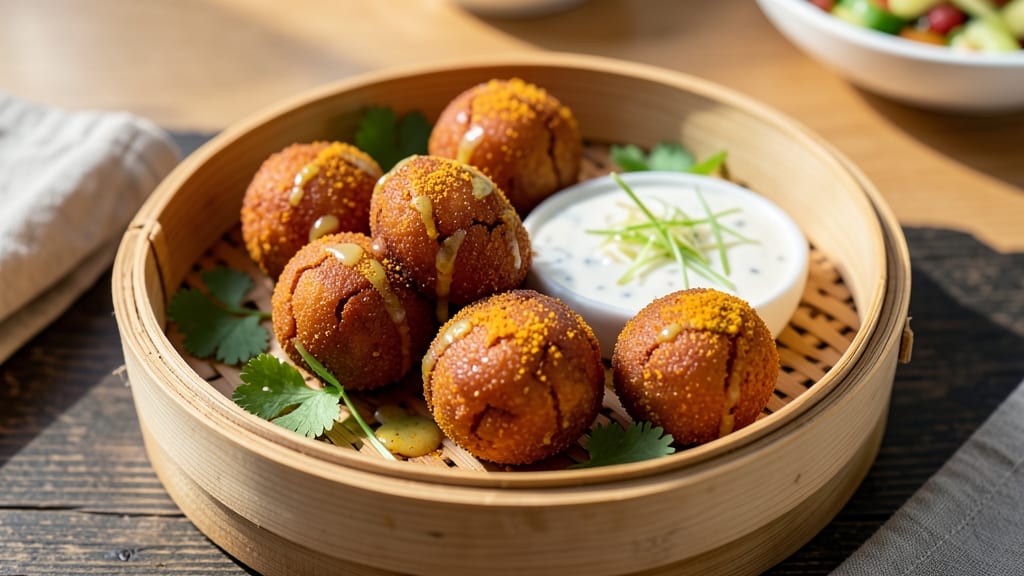
This Thai fried sweet potato balls recipe delivers the perfect balance of crispy golden edges and caramelized sweet centers—just like your favorite street-side snack. 🌟 The secret lies in puréeing sweet potatoes with coconut milk and a touch of turmeric before shaping them into bite-sized balls, then frying until they develop that addictive crunch.
I've perfected this technique over years of testing, ensuring every bite has a tender interior that melts in your mouth.
The magic happens in the frying process, where high heat transforms the sweet potato mixture into golden, crackling balls with a subtle coconut aroma. Traditional Thai flavors like lemongrass and galangal infuse the purée, adding depth without overpowering the natural sweetness of the potatoes.
This recipe serves as both a satisfying side dish and a standalone appetizer that pairs beautifully with sweet chili or peanut dipping sauce.
What makes these sweet potato balls truly special is their versatility—they work as a vegetarian main course, a crunchy topping for salads, or even a snackable dessert when lightly sweetened.
The technique is straightforward, but the results are restaurant-quality, with a texture that's impossible to resist. Once you try these, they'll become a regular feature at your dinner table.
For best results, use orange-fleshed sweet potatoes and let the purée rest before frying to achieve that signature crispy exterior. Serve warm with your favorite Thai-inspired dipping sauce for an experience that transports you straight to the bustling streets of Bangkok. Let's get cooking!
Ingredients for thai fried sweet potato balls
Nine essential ingredients transform into golden, crispy sweet potato balls with Thai-inspired flavor.
| Ingredient | Amount | Notes |
|---|---|---|
| Orange-Fleshed Sweet Potatoes 🍠 | 2 lbs | Peeled and puréed smooth |
| Coconut Milk 🥥 | 1 can | Full-fat, unsweetened variety |
| Turmeric Powder 🌿 | 1 tsp | For vibrant color and flavor |
| Fresh Lemongrass 🌿 | 3 pieces | White parts only, finely minced |
| Galangal 🌿 | 1 piece | Substitute ginger if unavailable |
| Vegetable Oil 🫒 | 3 cups | High smoke point preferred |
| Salt 🧂 | ½ tsp | Kosher or sea salt |
| Black Pepper 🌶️ | ¼ tsp | Freshly ground preferred |
| Coconut Sugar 🍯 | 2 tbsp | Or brown sugar for substitution |
| Cornstarch 🌾 | 1 tbsp | For crispy exterior |
| Fresh Cilantro 🌿 | ¼ cup | Chopped, for garnish |
| Lime Juice 🍋 | 1 tbsp | Freshly squeezed |
The sweet potatoes are non-negotiable—orange-fleshed varieties like Jewel or Beauregard have the perfect balance of moisture and sweetness. Trader Joe's and Whole Foods carry them year-round, but Asian markets often have the freshest stock. Look for firm, smooth-skinned tubers with no soft spots. Fresh lemongrass and galangal are the flavor anchors here—Thai markets sell them pre-packaged for convenience, but even a single stalk makes a difference. If you can't find galangal, ginger works in a pinch, though it'll have a slightly different profile. The coconut milk should be full-fat for that rich, creamy texture—Thai Kitchen brand is my go-to for consistency.
No lemongrass? Lime zest plus a splash of lime juice adds brightness. Galangal unavailable? Ginger plus a pinch of cinnamon mimics its earthy warmth. Coconut sugar can be swapped for brown sugar, but expect slightly less caramelization. For extra crispiness, add 1/4 cup cornstarch to the purée. The lime juice is optional but brightens the final flavor—Mexican or Persian limes work best, but regular limes will do. If you're making these ahead, store the purée in an airtight container for up to 2 days before frying.
The purée keeps best in the fridge for 3 days—it actually develops deeper flavor over time. For the crispiest results, fry in batches and keep the finished balls warm in a 200°F oven while you finish the rest. These reheat beautifully—toss in a hot skillet with a splash of oil for 2-3 minutes to restore that golden crunch. Freeze uncooked purée balls on a tray first, then transfer to a bag for up to 3 months. They'll need a few extra seconds in the fryer after freezing, but the texture holds up perfectly.
Why You'll Love This Recipe
- One-Pot Magic: I swear by this recipe when I’m too tired to wash dishes. The sweet potatoes steam in their own juices while the coconut milk infuses with turmeric and galangal—no extra pans, no stress.
- Creamy Crisp Contrast: That golden crust gives way to a melt-in-your-mouth center, thanks to the coconut milk’s richness. Honestly, the lemongrass and galangal add a zesty kick that makes it taste like a restaurant dish.
- Meal Prep MVP: I make a big batch on Sundays and refrigerate them—they reheat beautifully for lunches or snack attacks. (Yes, even on a Tuesday night when you forgot to pack lunch.)
- Budget-Friendly Luxury: Sweet potatoes and coconut milk stretch further than you’d think, and the spices cost pennies. Between us, this is the kind of dish that makes grocery day feel like a win.
Step-by-step instructions for Thai fried sweet potato balls
Transform humble sweet potatoes into crispy, caramelized bites with this authentic Thai-inspired method.
👨🍳 Step 1: Purée and Season the Sweet Potato Base
Peel the 2 lbs orange-fleshed sweet potatoes and cut them into 1-inch cubes. Steam until fork-tender (15-20 minutes), then drain well. Transfer to a food processor and purée until completely smooth—no chunks should remain. This ensures your balls hold together perfectly.
In a small bowl, whisk together the 1 can coconut milk, 1 tsp turmeric powder, 0.5 tsp salt, 0.25 tsp black pepper, 2 tbsp coconut sugar, and 1 tbsp cornstarch. The cornstarch is key here—it creates that signature crispy exterior while keeping the inside tender. Add this mixture to the purée and blend until fully combined. The batter should be thick but spoonable, like a soft dough.
🍳 Step 2: Infuse with Aromatics and Chill
Finely mince the white parts of 3 pieces fresh lemongrass and grate 1 piece galangal (or substitute with ginger). Add these to the sweet potato mixture and stir well. The galangal adds a zesty kick that balances the sweetness, while lemongrass brings that unmistakable Thai aroma. Taste and adjust seasoning—you want a harmony of sweet, spicy, and tangy.
Transfer the mixture to a bowl and cover with plastic wrap, pressing it directly against the surface to eliminate air bubbles. Refrigerate for at least 2 hours (or up to 24 hours). Chilling firms up the mixture, making it easier to shape and ensuring those perfect round balls when fried. Pro tip: If the mixture feels too sticky after chilling, add 1 tsp cornstarch to help with shaping.
🔥 Step 3: Shape and Fry to Golden Perfection
Heat 3 cups vegetable oil in a deep pot over medium heat until it reaches 350°F—use a thermometer for precision. This temperature gives you a crispy exterior without burning. Roll the chilled sweet potato mixture into 1-inch balls (about 16-20 balls total, depending on size). Gently drop them into the oil, working in batches to avoid overcrowding.
Fry for 3-4 minutes per batch until they turn a deep golden brown and float to the surface. If they sink, they need more time—don't rush this step. The inside should be warm through but still slightly soft, like a thick pudding. Use a slotted spoon to transfer them to a paper towel-lined plate to drain excess oil. Real talk: If you see any balls sticking together, gently separate them with a fork while still hot.
🥘 Step 4: Finish with Lime and Garnish
While the balls are still warm, drizzle them with 1 tbsp lime juice and toss gently to coat. The acidity brightens the flavors and cuts through the richness. Sprinkle with 0.25 cup chopped fresh cilantro just before serving—this adds a fresh, herbal contrast that ties everything together. Serve immediately for maximum crunch, or store in an airtight container for up to 3 days (though they're best fresh!).
For an extra-special touch, dust with a pinch of turmeric powder right before serving. The vibrant color not only looks stunning but also enhances that authentic Thai vibe. These balls are perfect as an appetizer, snack, or even a side dish—just be prepared for everyone to ask for the recipe!
Pro Tips For Making Thai Fried Sweet Potato Balls
- Boil Until Fork-Tender: Sweet potatoes should collapse like butter when pierced—no guessing. Start in cold water (yes, even if you’re impatient like me) and simmer for 15-20 minutes until a knife slips in effortlessly. Overcooking turns them mushy; undercooking means tough, dry balls that won’t crisp later.
- Grate Galangal Fine: Skip the food processor—it makes galangal paste too coarse. Use a microplane or the smallest holes on a box grater to release its oils evenly. I learned this the hard way when my first batch tasted like it was missing half its soul.
- Fry in Batches: Crowd the pan, and you’ll steam the potatoes instead of searing them. Work in small batches (6-8 balls max) with enough oil to coat the bottom—about 2 tablespoons. The first batch will teach you the right heat; adjust after that.
- Toast Lemongrass First: Char the lemongrass stems over a flame for 30 seconds before blending. It deepens the aroma and cuts through coconut milk’s sweetness. Sounds weird, but it works—trust the smoky hit. (Pro tip: Save the charred stems for garnish.)
Essential equipment for perfect results
Deep Fryer Essentials
For perfect Thai fried sweet potato balls, a deep fryer is my go-to tool—it maintains consistent 350°F oil temperature effortlessly. I love the Ninja Foodi Deep Fryer (holds 3 quarts) because its digital thermostat prevents temperature swings.
If you prefer a stovetop approach, a heavy-bottomed Dutch oven like Lodge 5.5-quart works perfectly—just use a deep-fry thermometer to monitor heat. 🌡️
Oil Selection Matters
Use vegetable oil or peanut oil for high smoke points (400°F+), but avoid olive oil—it burns at 350°F. I keep a 2-gallon bottle of Crisco Vegetable Oil on hand for frying; it’s affordable and neutral-tasting.
For extra crispiness, filter the oil after each use with a fine-mesh strainer to remove food particles. Never reuse oil beyond 3-4 batches—it breaks down and absorbs flavors.
Thermometer Precision
A digital instant-read thermometer is non-negotiable—Thermoworks Thermapen One is my top pick for accuracy. Oil temperature must stay 350°F for golden, crispy balls. If it drops below 340°F, your balls will absorb oil and lose crunch.
Pro tip: Preheat oil for 10 minutes before frying to stabilize temperature. 🔥
Batching and Tools
Work in small batches (6-8 balls at a time) to avoid overcrowding. A slotted spoon with a long handle makes transferring balls easier, and a wire cooling rack keeps them from steaming in oil residue.
I also keep a small bowl of ice water nearby to quickly cool any overcooked balls—it stops them from turning soggy. For shaping, lightly wet your hands to prevent sticking.
Safety First
Always fry near a fire extinguisher and keep a oven mitt handy for handling hot pots. Never leave oil unattended—it’s a fire hazard. I also recommend a splash guard for my deep fryer to contain accidental spills.
If you’re frying near kids or pets, use a stove guard for extra safety. 🛡️
Optional Extras
For extra flavor, add 1 tsp shrimp paste to the purée before frying—it deepens the umami. A small mesh strainer helps remove excess oil after frying, and a pastry brush with turmeric-infused oil (mix 1 tbsp turmeric + ½ cup oil) gives a stunning golden finish.
Store leftover oil in an airtight glass jar in a cool, dark place for up to 1 month.
Nutrition facts
Frequently asked questions
Can I make these sweet potato balls without frying?
For a healthier version, bake them at 400°F for 20-25 minutes on a parchment-lined tray until golden. Brush with a little oil first to help crispiness. The texture will be softer but still delicious—perfect for a lighter snack or side dish.
What's the best dipping sauce for these?
Try a Thai sweet chili sauce (mix 2 tbsp fish sauce, 2 tbsp lime juice, 1 tbsp sugar, and 1 tsp chili flakes) or a peanut sauce (blend ½ cup peanut butter, 2 tbsp soy sauce, 1 tbsp honey, and 1 tsp sriracha). Both pair perfectly with the crispy-sweet flavor. For extra authenticity, add a pinch of shrimp paste to the sauce.
Why did my sweet potato balls turn out greasy?
Greasy results usually mean the oil wasn't hot enough (350°F) or the balls were overcrowded in the fryer. Use a thermometer and fry in small batches of 6-8 balls. Also, ensure your sweet potato purée is well-chilled before shaping—this helps them hold together better and absorb less oil.
Can I use regular potatoes instead of sweet potatoes?
Regular potatoes won't work—they lack the natural sweetness and moisture needed for this recipe. Sweet potatoes are essential for that perfect balance of caramelized sweetness and tender interior. If you're out of sweet potatoes, try purple sweet potatoes for a different color twist, but orange-fleshed is the classic choice.
How do I store leftovers?
Keep cooked sweet potato balls in an airtight container at room temperature for 1-2 days or refrigerate for up to 3 days. For longer storage, freeze uncooked purée balls on a tray first, then transfer to a bag for up to 3 months. Reheat in a skillet with a splash of oil for 2-3 minutes to restore crispiness.