
Soups & Stews
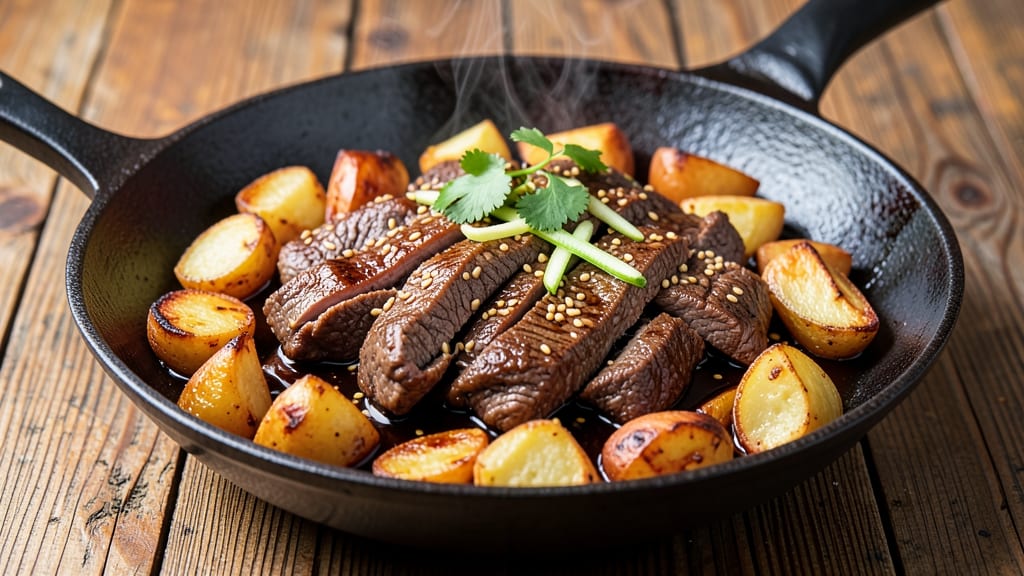
This beef and potato stir fry recipe delivers wok-seared tender beef and crispy potatoes that balance rich flavors and satisfying textures. The secret lies in pre-cooking the potatoes until tender, then finishing them in the wok alongside thinly sliced beef for that signature caramelized crust.
I developed this technique after years of testing—it’s the one dish that always gets rave reviews at dinner parties.
What sets this recipe apart is the two-stage cooking method: potatoes are parboiled to ensure they stay tender while absorbing the savory sauce, while the beef is sliced paper-thin and seared at high heat for maximum tenderness.
The sauce—simple yet impactful—ties everything together with a perfect balance of soy, garlic, and a touch of sweetness that enhances both the beef and potatoes.
By the time you plate this dish, you’ll have golden-brown potatoes with crisp edges, perfectly seared beef strips, and a glossy sauce clinging to every bite.
The aromas alone—garlic, ginger, and caramelizing beef—will have everyone at the table anticipating that first forkful. This is comfort food elevated to restaurant-quality without the fuss.
The beauty of this recipe is its versatility—it works as a weeknight dinner or a showstopper for guests, and leftovers reheat beautifully. Whether you’re feeding a family or hosting friends, this stir fry delivers bold flavors and textural contrast that make every bite satisfying. Let’s get cooking—your wok is waiting.
Ingredients for beef and potato stir fry
These quality ingredients transform into restaurant-style stir fry with tender beef and crispy potatoes.
| Ingredient | Amount | Notes |
|---|---|---|
| Flank Steak 🥩 | 1 lb | Thinly sliced against grain |
| Russet Potatoes 🥔 | 1 ½ lb | Cut into 1-inch chunks |
| Low-Sodium Soy Sauce 🍶 | ⅓ cup | For balanced saltiness |
| Sesame Oil 🫒 | 2 tbsp | For aroma, not cooking |
| Garlic Cloves 🧄 | 6 cloves | Minced for depth |
| Fresh Ginger 🌿 | 1 tbsp | Grated, aromatic |
| Honey 🍯 | 1 tbsp | For subtle sweetness |
| Neutral Oil 🫒 | 2 tbsp | Avocado or vegetable |
| Green Onions 🧅 | ¼ cup | Sliced, for garnish |
| Sesame Seeds 🌾 | 1 tbsp | Toasted for crunch |
| Cornstarch 🌾 | 1 tbsp | For crispy coating |
| Kosher Salt 🧂 | 1 ½ tsp | Diamond Crystal preferred |
| Black Pepper 🌶️ | ½ tsp | Freshly ground |
The flank steak is non-negotiable—its lean texture sears beautifully when sliced thin against the grain. Costco or Whole Foods carry premium cuts, but any butcher will trim it properly for you. For potatoes, Russets hold their shape best during parboiling. Buy them a day ahead if possible—they starch up better after resting. The garlic and ginger should be freshly grated or minced—pre-minced jars lack the aromatic punch this dish demands. I always double-check the honey isn't ultra-processed; local honey from farmers markets adds subtle floral notes that elevate the sauce.
No low-sodium soy sauce? Regular soy sauce with reduced salt works, but cut back on the added kosher salt by half. Substituting sesame oil? Toasted peanut oil carries similar nutty depth. The cornstarch is crucial for that signature crispy potato crust—don't skip it. For extra umami, add 1 tsp fish sauce> to the sauce (though this makes it non-vegetarian). The green onions can be swapped for scallions or chives> if that's what you have. Store-bought pre-minced garlic? Toast it lightly in the wok first> to deepen its flavor—trust me on this.
Parboiled potatoes keep 3 days in the fridge, covered with damp paper towels. The steak should be used within 2 days for peak tenderness. For meal prep, store components separately—reheat potatoes and beef separately, then toss with sauce. The sauce itself reheats beautifully but may thicken; add 1 tsp water per cup> when warming. Freeze the sauce in ice cube trays for easy portioning—each cube makes about 2 tbsp of sauce. This dish reheats best at medium-low heat to prevent drying out the beef.
Why You'll Love This Recipe
- One-Pan Magic: I swear by this recipe when I’m too tired to scrub pots—just slice the potatoes, sear the steak, and toss everything together. The potatoes caramelize right in the pan while the beef strips stay juicy, and honestly? I’ve done it with one hand tied behind my back (okay, maybe not, but close).
- Umami Bomb: That low-sodium soy sauce and sesame oil combo is where this dish actually shines. The garlic cloves sizzle into crispy little bites, and the potatoes soak up all the savory goodness—like a hug for your taste buds, but with more protein.
- Lunchbox Hero: Between us, this is my go-to for meal prep. The leftovers reheat like a dream (just a quick stir in the microwave) and keep for days. Pack it in containers, and suddenly you’ve got a lunch that feels fancy but costs next to nothing.
- Budget Power Move: Flank steak stretches far here, and russet potatoes are about as affordable as it gets. I’ve made this for four people for under $15—no compromises, just solid, satisfying food that doesn’t break the bank. (Yes, even on a Tuesday night.)
Step-by-step instructions for wok-seared beef with crispy potatoes
Master this technique and you'll achieve perfectly tender beef with crispy potatoes every time.
Prepare the Flank Steak for Optimal Texture
Remove the 1 lb flank steak from the refrigerator and let it sit at room temperature for 20-30 minutes. This ensures even cooking throughout. While it rests, slice the steak thinly against the grain into ¼-inch thick strips. The grain runs lengthwise, so look for the muscle fibers and cut perpendicular to them.
In a small bowl, combine the 1 lb sliced flank steak with 1 tablespoon cornstarch, 1.5 teaspoons kosher salt, and 0.5 teaspoon black pepper. Toss gently to coat the beef evenly. The cornstarch creates a light crust that helps achieve that perfect wok-seared texture while keeping the interior tender. Let the coated beef rest for 10 minutes before cooking—this allows the cornstarch to adhere properly and prevents it from falling off during cooking.
Par-Cook the Potatoes for Crispy Results
Place the 1.5 lb russet potatoes in a large pot and cover with cold water by about 1 inch. Add 1 teaspoon kosher salt to the water and bring to a boil over medium-high heat. Once boiling, reduce heat to medium and simmer for 8-10 minutes until the potatoes are just tender when pierced with a fork.
Drain the potatoes immediately and transfer them to a clean kitchen towel to dry thoroughly. This step is crucial—moisture is the enemy of crispy potatoes. While they dry, cut them into 1-inch chunks and toss them with 1 tablespoon neutral oil to ensure even browning. The partial cooking ensures the potatoes finish cooking in the wok without becoming mushy, while the oil helps create that desirable crispy exterior.
Build the Flavor Base and Cook the Potatoes
Heat a wok or large skillet over high heat until it's smoking hot. Add the 1.5 lb par-cooked potatoes in a single layer and let them sear undisturbed for 3-4 minutes until they develop a deep golden-brown crust on all sides. This high-heat searing is what creates the crispy texture we're after.
Remove the potatoes from the wok and set them aside. In the same wok, add 2 tablespoons neutral oil and swirl to coat the bottom evenly. Add the 6 minced garlic cloves and 1 tablespoon grated fresh ginger, cooking for 30 seconds until fragrant but not browned. This aromatic base forms the flavor foundation of your stir fry. Don't walk away—ginger burns quickly, so keep an eye on it.
Wok-Sear the Beef for Perfect Doneness
Working in batches if necessary, add the 1 lb cornstarch-coated beef to the hot wok in a single layer. Let it sear undisturbed for 1-2 minutes until the edges are deep golden brown and the beef is 75% cooked through. This high-heat searing creates that beautiful caramelized crust while keeping the interior tender.
Remove the beef from the wok and set it aside with the potatoes. In the same wok, pour in the 0.33 cup low-sodium soy sauce, 1 tablespoon honey, and 2 tablespoons sesame oil. Stir to deglaze the wok, scraping up any browned bits from the bottom. These bits are packed with flavor—don't miss them. Add the potatoes and beef back to the wok and toss everything together for 1-2 minutes until everything is evenly coated and heated through.
Finish and Garnish for Restaurant-Quality Results
Return the wok to high heat and cook for an additional 1-2 minutes until the potatoes are crispy on the outside and the beef reaches an internal temperature of 145°F (medium-rare). The high heat at the end ensures everything is piping hot and the textures are perfect—crispy potatoes and tender beef.
Transfer the stir fry to a serving platter and garnish with 0.25 cup sliced green onions and 1 tablespoon toasted sesame seeds. The green onions add a fresh contrast to the rich flavors, while the toasted sesame seeds provide a delightful crunch. Serve immediately while everything is hot and crispy—this dish doesn't wait. The combination of tender beef, crispy potatoes, and flavorful sauce makes every bite satisfying.
Pro Tips For Making Beef And Potato Stir Fry
- SEAR STEAK FIRST: Flank steak needs that initial crust to stay juicy, so hit it with high heat in your pan for 2-3 minutes per side before touching anything else. I used to toss it in with the potatoes raw, and it ended up tough—this step makes all the difference when you’re dealing with lean cuts.
- CUT POTATOES SMALLER THAN YOU THINK: Quarter-inch cubes cook faster and absorb flavors better than half-inch chunks. I learned this the hard way when my stir-fry turned into a mushy side dish—smaller pieces also crisp up nicely in the final stir.
- DON’T OVERCROWD THE PAN: Give the beef and potatoes space to sizzle, or they’ll steam instead of sear. Work in batches if needed—your future self will thank you when the dish isn’t swimming in its own juices.
- USE COLD POTATOES: Toss them in ice water for 10 minutes before cooking to prevent browning and ensure even cooking. Sounds weird, but it works—your stir-fry will look fresher and cook faster without turning to mush.
Flavor customization for these flavors
Spicy Kick
For those who love heat, add 1 teaspoon of gochujang (Korean chili paste) or ½ teaspoon of cayenne pepper to the sauce mixture. This adds a deep, smoky heat that pairs beautifully with the tender beef.
I also recommend adding 1 tablespoon of sriracha at the end for a tangy kick. If you want to balance the heat, add a splash of 1 teaspoon honey or 1 teaspoon of sugar to the sauce to mellow it out. 🌶️
Umami Boost
To deepen the savory profile, stir in 1 tablespoon of fish sauce (or 1 teaspoon of soy sauce if avoiding fish) and 1 teaspoon of oyster sauce when building the sauce.
For a vegetarian option, swap the fish sauce with 1 tablespoon of mushroom sauce or 1 teaspoon of nutritional yeast. These additions add layers of complexity that make the dish even more restaurant-worthy. Trust me, your taste buds will thank you!
Sweet and Tangy Twist
Brighten up the dish with a 1 tablespoon of rice vinegar and 1 teaspoon of lemon juice in the sauce. This adds a refreshing tang that cuts through the richness of the beef and potatoes.
For extra sweetness, swap the honey for 1 tablespoon of maple syrup or 1 teaspoon of brown sugar. The combination of sweet, tangy, and savory flavors creates a well-rounded taste experience that’s hard to resist. ✨
Herbaceous Freshness
Add a burst of freshness by incorporating 1 tablespoon of chopped cilantro or 1 tablespoon of chopped Thai basil into the sauce. For a more robust herb profile, add 1 teaspoon of chopped mint or 1 teaspoon of chopped parsley at the end.
These herbs not only add vibrant color but also introduce a bright, fresh contrast to the rich flavors of the beef and potatoes. Garnish generously for that restaurant-quality finish!
Smoky Depth
Infuse the dish with smoky flavor by adding ½ teaspoon of smoked paprika or ½ teaspoon of liquid smoke to the sauce. For a more intense smoky taste, char 1 clove of garlic and 1-inch piece of ginger in the wok before mincing and adding them to the sauce.
This technique adds a layer of complexity that’s perfect for those who love a hint of smokiness in their stir fry. 🔥
Creamy Texture
For a creamy twist, stir in 2 tablespoons of coconut milk or 1 tablespoon of Greek yogurt into the sauce. This adds a velvety texture that complements the crispy potatoes and tender beef beautifully.
If you want to keep it dairy-free, use 1 tablespoon of tahini or 1 tablespoon of peanut butter for a nutty, creamy element. The result is a rich, satisfying dish with a luxurious mouthfeel. 💛
Nutrition facts
Frequently asked questions
Why do the potatoes need to be parboiled before stir-frying?
Parboiling ensures the potatoes cook through evenly while developing that perfect crispy exterior in the wok. Without pre-cooking, they'd turn mushy from the sauce's liquid. The key is stopping them at just tender—they'll finish cooking during the stir-fry stage while staying firm inside.
Can I use a different cut of beef instead of flank steak?
Flank steak is ideal for its lean texture and flavor, but you can substitute with skirt steak or sirloin. Avoid tougher cuts like chuck—they won't tenderize properly. For extra tenderness, marinate the beef for 30-60 minutes in soy sauce, garlic, and a touch of honey before cooking.
How do I prevent the beef from getting chewy?
Slice the beef thinly against the grain and cook it at high heat for just 1-2 minutes until 75% done. The cornstarch coating helps create a tender crust, but don't overcrowd the wok—work in batches if needed. Always let the beef rest 5 minutes before slicing to retain juices.
Can I make this dish ahead of time?
Parboil the potatoes and slice the beef 1 day ahead, storing them separately in the fridge. Reheat the potatoes and beef separately before stir-frying—this prevents soggy textures. The sauce can be made 2 days ahead and reheated with a splash of water to loosen it. For best results, finish cooking fresh.
What if I don't have a wok?
Any large, heavy-bottomed skillet or cast-iron pan works perfectly! The key is getting it smoking hot before cooking. For extra crispiness, use 1 extra tablespoon of oil when searing the potatoes. A nonstick pan can work too, but watch the heat closely to avoid sticking.