
Breakfast & Brunch
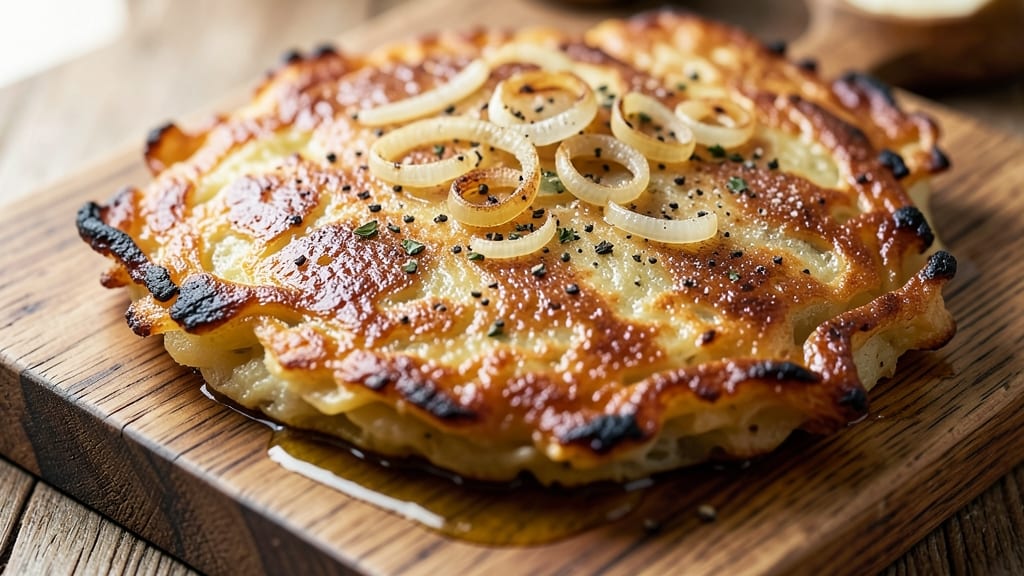
This Bavarian potato pancake recipe delivers the golden, crispy perfection of Reibekuchen with a spiced potato heart that feels like a warm hug. The secret lies in freshly grated potatoes and a shallow-frying technique that creates irresistible crunch while keeping the inside tender—just like my grandmother used to make.
What makes these special is the balance of simplicity and tradition, where every bite carries that authentic German flavor without requiring fancy equipment.
Traditional Bavarian cooking transforms humble potatoes into something extraordinary through careful grating and proper frying. I use a box grater for even shreds and let the potatoes rest briefly to remove excess moisture—a crucial step that ensures crispy edges rather than greasy pancakes.
The spices are subtle but essential: a touch of nutmeg, salt, and pepper that enhances the natural potato flavor without overpowering it.
What you'll end up with is a stack of golden-brown pancakes with a satisfying crunch that gives way to warm, fluffy potato centers. The aroma alone fills your kitchen with comfort, while the texture delivers that perfect contrast between crispy exterior and tender interior.
These pancakes are versatile enough for breakfast or dinner, and they pair beautifully with applesauce, sour cream, or even crispy bacon.
Whether you're serving them as a hearty breakfast or a satisfying side dish, this recipe captures the essence of Bavarian home cooking. The best part? They're ready in under 30 minutes, making them perfect for both weeknight dinners and special occasions. Let's get started on creating these delicious potato pancakes.
Ingredients for bavarian potato pancake
Freshly grated potatoes, crispy edges, and a spiced heart make these Bavarian pancakes unforgettable.
| Ingredient | Amount | Notes |
|---|---|---|
| Russet Potatoes 🥔 | 3 lb | Freshly grated, skin removed |
| All-Purpose Flour 🌾 | ½ cup | For binding, not frying |
| Large Eggs 🥚 | 2 whole | Beaten, room temperature |
| Unsalted Butter 🧈 | ½ cup | Melted, for frying (trust me on full-fat version) |
| Freshly Ground Black Pepper 🌶️ | ½ tsp | Freshly cracked for best flavor |
| Ground Nutmeg 🌿 | ¼ tsp | Freshly grated preferred |
| Diamond Crystal Kosher Salt 🧂 | 1 ½ tsp | Adjust to taste |
| Vegetable Oil 🫒 | ½ cup | For frying, high smoke point |
| Applesauce 🍎 | ½ cup | Unsweetened, for serving (optional) |
| Sour Cream 🥛 | ¼ cup | Full-fat for serving (optional) |
| Lemon Wedges 🍋 | 2 whole | For serving, brightens flavors |
The potatoes are everything here—Russet is the gold standard for Reibekuchen because of its low moisture and fluffy texture. Grab a box grater (the kind with medium holes) and go slow—uneven shreds mean uneven cooking. I always peel mine first, but if you're in a hurry, scrub them well and grate skin-on. The key is letting the shredded potatoes rest for 10-15 minutes in a colander while you prep—this draws out excess moisture so your pancakes don't turn greasy. For the best flavor, use freshly grated nutmeg (the kind in a jar loses potency fast).
No box grater? Food processor with shredding blade works in a pinch, but don't pulse too long or you'll get potato mash. Running low on butter? Lard or duck fat gives that authentic crispiness, but vegetable oil is fine if that's what you've got. The eggs are non-negotiable—they bind everything together, but if you're making this vegan, swap in flax eggs (2 tbsp ground flax + 6 tbsp water). For the spices, if you don't have nutmeg, a pinch of cinnamon plus cardamom can mimic that warm German flavor. And yes, you can make these ahead—they reheat beautifully in a 350°F oven for 10 minutes.
These pancakes are best served immediately, but they'll keep for 3-4 days in the fridge if you wrap them tightly in foil. Reheat in a skillet over medium heat for 2-3 minutes per side—they'll lose some crispiness but still taste amazing. Freezing works too: arrange pancakes on a tray, freeze solid, then transfer to a bag for up to 3 months. Pro tip: I always make a double batch and freeze half. Nothing beats pulling them straight from the freezer into a hot pan for a lazy weekend breakfast.
Why You'll Love This Recipe
- Crispy in Minutes: I swear by the magic of a hot pan—those pancakes hit golden perfection in under 10 minutes each. No waiting, no fuss, just the satisfying sizzle of butter and potato meeting the skillet.
- Butter-Kissed Crunch: That first bite? Crispy exterior, fluffy inside, all thanks to the butter and pepper-infused batter. Honestly, it’s the kind of dish that makes you close your eyes and savor it.
- Breakfast or Dinner: Serve them with applesauce for a cozy morning or top with smoked salmon for a fancy dinner. I’ve even turned them into a hearty lunch with a fried egg on top—no rules here.
- Budget-Friendly Staple: Russets and eggs are cheap, and one batch stretches for days. Between us, I’ve reheated these for breakfast three mornings in a row, and no one complained. (Yes, even my picky kids.)
Step-by-step instructions for Bavarian potato pancakes
Here's how to create crispy, golden potato pancakes with a spiced heart that melts in your mouth.
Grate and Squeeze the Potatoes
Peel the 3 lb Russet Potatoes and grate them using the large holes of a box grater. I like to use a mandoline for even shreds, but a box grater works too. Transfer the grated potatoes to a clean kitchen towel or cheesecloth and squeeze out every drop of moisture. This step is crucial—wet potatoes make pancakes gummy instead of crispy.
Work in batches if needed, pressing firmly to wring out all the liquid. The drier your potato mixture, the better your pancakes will turn out. I usually end up with about 4 cups of squeezed potato after starting with 3 lb—this gives you the right texture for binding with the 0.5 cup All-Purpose Flour. Don't skip this squeezing step; it makes all the difference in the final crispiness.
Mix the Batter with Eggs and Seasonings
In a large bowl, combine the squeezed potatoes with the 0.5 cup All-Purpose Flour, 2 whole Large Eggs, 1.5 tsp Diamond Crystal Kosher Salt, 0.5 tsp Freshly Ground Black Pepper, and 0.25 tsp Ground Nutmeg. Mix gently with a wooden spoon or silicone spatula until just combined—you should still see some flour streaks. Overmixing develops gluten and makes the pancakes tough.
Let the batter rest for 10 minutes at room temperature. This allows the flour to fully hydrate and the seasonings to distribute evenly. I know it seems like a short time, but trust me—this resting period ensures the pancakes hold together better when frying. The batter should be thick but still pourable, like a loose pancake batter.
Heat the Butter-Oil Mixture
In a large skillet, melt the 0.5 cup Unsalted Butter over medium heat until it foams but doesn't brown. Add the 0.5 cup Vegetable Oil and heat to 350°F—this is your frying temperature. Use a candy or deep-fry thermometer to monitor the heat. If you don't have one, test with a small piece of batter: it should sizzle and turn golden in 2-3 minutes.
Here's the thing—this butter-oil mixture gives you the perfect balance of crispiness and flavor. The butter adds richness while the oil ensures even heat distribution. If the temperature drops below 350°F, give it a minute to recover before adding more batter. Too-low heat makes soggy pancakes, and nobody wants that.
Fry the Pancakes to Golden Perfection
Using a spoon or small ice cream scoop, drop ¼-cup portions of batter into the hot oil. Flatten slightly with the back of the spoon to create ½-inch thick pancakes. Fry for 3-4 minutes per side until deep golden brown and crispy. You'll know they're ready when the edges are crisp and the center feels firm to the touch.
Don't overcrowd the pan—fry in batches if needed to maintain the 350°F temperature. Transfer the cooked pancakes to a paper towel-lined plate to drain excess oil. I like to keep them warm in a 200°F oven while I finish frying the rest. This keeps them crispy until serving time. Real talk: these pancakes are best served immediately, so don't walk away from the stove.
Serve with Classic Bavarian Toppings
Arrange the golden pancakes on a warm platter and serve immediately with 0.5 cup Applesauce, 0.25 cup Sour Cream, and the 2 whole Lemon Wedges. The applesauce adds a sweet contrast to the savory pancakes, while the sour cream cools the heat. Squeeze fresh lemon juice over the top just before serving—it brightens all the flavors and cuts through the richness.
For an extra-special touch, sprinkle with extra Freshly Ground Black Pepper and a pinch of Ground Nutmeg right before eating. These pancakes are hearty enough for breakfast or dinner, and they pair perfectly with a crisp green salad or roasted vegetables. The secret to their success lies in that perfect crispy exterior with a tender, spiced interior—worth every minute of effort!
Pro Tips For Making Bavarian Potato Pancake
- GRATE COLD POTATOES: I learned this the hard way—grating potatoes that sit out too long turns your pancakes gummy. Keep them refrigerated until the last minute, then grate them directly into your bowl. The starch stays stable, and your pancakes hold together better when frying.
- USE A MIXER FOR 30 SECONDS: This isn’t the prettiest method, but it’s the tastiest. After grating, mix the potatoes, flour, egg, and pepper with a hand mixer for 30 seconds—just until combined. Overmixing makes them dense, but skipping this step leaves raw spots. Thirty seconds guarantees even cooking without turning them into glue.
- PAT DRY THE GRATED POTATOES: I was skeptical until I tried it: squeeze the grated potatoes in a clean kitchen towel for 5 minutes before mixing. Removes excess moisture, so your pancakes crisp up instead of steaming. Works especially well if your Russets are extra wet—no one likes a soggy center.
- FRY IN SMALL BATCHES: Watch the heat—crowding the pan steams your pancakes instead of browning them. Cook 2-3 at a time in ¼-inch butter over medium-high heat, and resist the urge to flip too soon. They’re done when the edges are golden and the center holds its shape—about 4-5 minutes per side. Patience here makes all the difference.
Make-ahead tips for leftovers
Prep Ahead
Make the batter up to 24 hours in advance and store it in an airtight container in the fridge. The flavors deepen overnight, and the potatoes absorb the seasonings better. Just give it a quick stir before frying—no need to rest again.
I like to prep the batter the night before so I can enjoy these pancakes fresh for breakfast the next morning. 🌟
Freezer-Friendly
Fully cooked pancakes freeze beautifully for up to 3 months. Arrange them on a tray, freeze solid, then transfer to a freezer bag with parchment between layers to prevent sticking.
When ready to eat, thaw in the fridge overnight or reheat straight from frozen in a 350°F oven for 10-12 minutes until crispy again. The texture stays surprisingly good after freezing!
Batch Frying
For large gatherings, fry pancakes in two batches—keep the first batch warm in a 200°F oven while you finish cooking. Use a wire rack on a baking sheet to prevent sogginess.
I’ve made 20 pancakes at once this way, and they stayed crispy until serving. Just don’t overcrowd the pan—3-4 pancakes max per batch to maintain the 350°F oil temperature.
Make-Ahead Toppings
Prep toppings the day before for a stress-free morning. Store applesauce and sour cream separately in small containers, and keep lemon wedges wrapped in a damp paper towel. Refrigerate until ready to serve.
I also like to make a quick chive cream by mixing ¼ cup sour cream with 1 tbsp chopped chives—it adds a fresh pop of color and flavor. 💛
Reheating for Crisp
To revive crispiness, reheat pancakes in a skillet over medium heat for 1-2 minutes per side until golden. For extra crunch, add a pat of butter to the pan. Microwaving works in a pinch, but it’ll make them soft—not ideal for that satisfying crunch.
If you’re serving a crowd, reheat in batches and keep them warm in the 200°F oven until ready to serve.
Portion Control
Divide batter into ¼-cup portions ahead of time using a measuring cup or ice cream scoop. Store portions in a resealable bag in the fridge for up to 2 days.
This makes frying faster and ensures even-sized pancakes. I’ve even pre-portioned batter for kids’ lunches—just pop them in the toaster for a quick, crispy snack. Perfect for meal prep! ⚡
Nutrition facts
Frequently asked questions
Why do my Bavarian potato pancakes turn out greasy instead of crispy?
This usually happens when the grated potatoes aren't dry enough. Always squeeze out excess moisture using a clean kitchen towel or cheesecloth—this step is non-negotiable for crispy results. Also, make sure your frying oil stays at 350°F and don't overcrowd the pan. Too many pancakes at once will lower the temperature and make them soggy.
Can I make these potato pancakes ahead of time?
The batter can be prepped 24 hours in advance and stored in an airtight container. For fully cooked pancakes, freeze them for up to 3 months between parchment paper. Reheat in a 350°F oven for 10-12 minutes to restore crispiness. The key is keeping them dry during storage.
What's the best way to serve Bavarian potato pancakes?
Traditionally, they're served with applesauce, sour cream, and lemon wedges for brightness. For extra flavor, try a dollop of chive cream or crispy bacon bits. These pancakes work perfectly for breakfast, brunch, or even as a side dish with roasted vegetables. The warm, spiced potato flavor pairs beautifully with tangy or sweet accompaniments.
Can I use sweet potatoes instead of Russet potatoes?
While you can substitute sweet potatoes, they'll change the flavor and texture significantly. Sweet potatoes are naturally sweeter and more moist, which can make the pancakes denser and less crispy. If you must use them, grate them extra fine, squeeze out all moisture, and reduce the applesauce topping. For authentic results, stick with Russet potatoes—they're the gold standard for Reibekuchen.
How do I fix pancakes that stick to the pan?
First, ensure your pan is properly heated before adding batter. If they still stick, your oil temperature might be too low. Use a thermometer to confirm it's at 350°F. Also, make sure your pan is large enough—overcrowding lowers the temperature. For future batches, add a pinch of flour to the batter to help with release. A well-seasoned cast-iron skillet works best for crispy results.