
Side Dishes
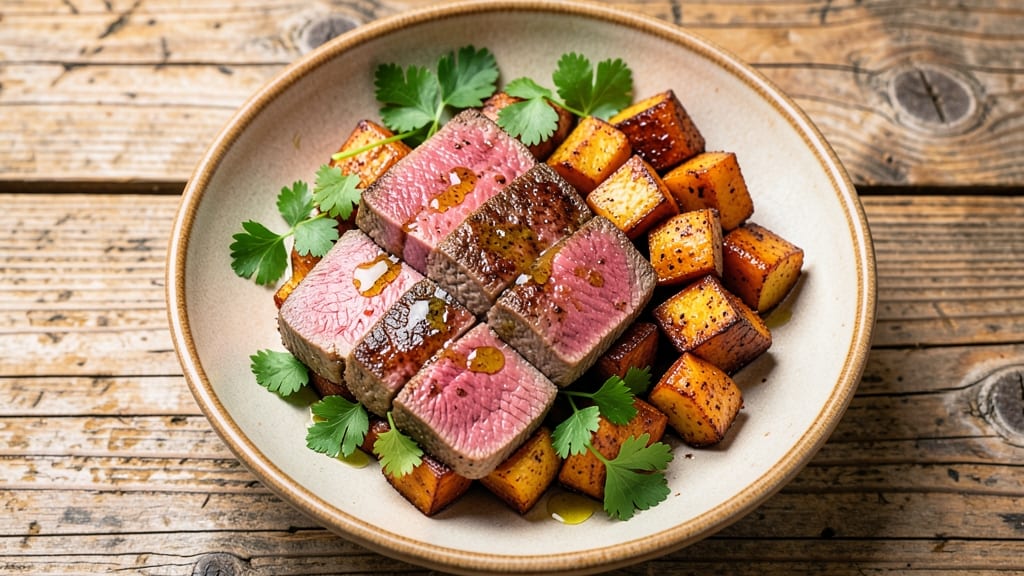
This tuna steak and sweet potato recipe delivers restaurant-quality results with minimal effort—juicy, perfectly seared tuna paired with caramelized sweet potatoes that balance earthy sweetness with umami depth.
The secret lies in high-heat searing for the tuna (just 2-3 minutes per side) while roasting the sweet potatoes until their edges turn golden and crisp. I developed this dish after realizing how often restaurant-quality seafood and sides could be replicated at home with the right techniques.
The beauty of this combination is its versatility—whether you prefer your sweet potatoes roasted with olive oil and smoked paprika for a smoky edge or mashed with a touch of brown sugar for natural caramelization, both methods complement the tuna's rich flavor.
The key to the tuna is never overcooking; using a hot, dry pan creates that coveted crust while keeping the inside tender. For the sweet potatoes, a 425°F oven transforms them from starchy to sweetly caramelized in about 30 minutes, making them ideal for meal prep or last-minute dinners.
What makes this dish truly special is how the components work together—each bite offers the contrast of tender, flaky tuna against the sweet, slightly crispy sweet potatoes. The natural sweetness of the potatoes cuts through the tuna's richness, creating a harmonious balance that feels both elegant and approachable.
This recipe is perfect for weeknight dinners when you want something healthy yet impressive, or as a centerpiece for a light lunch with a fresh salad and citrus glaze drizzle.
For those short on time, prep the sweet potatoes ahead and roast them just before serving—they reheat beautifully while the tuna sears fresh. Garnish with fresh herbs like parsley or a squeeze of lemon to brighten both components.
The result? A complete, balanced meal that feels like a chef's creation without the fuss. Let's get cooking!
Ingredients for tuna steak and sweet potato
Fresh tuna, caramelized sweet potatoes, and bright citrus—just these ingredients transform a weeknight into a restaurant-worthy meal.
| Ingredient | Amount | Notes |
|---|---|---|
| Fresh Tuna Steak 🐟 | 1 ½ lb | Sushi-grade, 1-inch thick slices |
| Sweet Potatoes 🍠 | 2 large | Organic preferred, peeled and cubed |
| Extra-Virgin Olive Oil 🫒 | ¼ cup | High-quality, fruity variety |
| Smoked Paprika 🌶️ | 1 tbsp | For smoky depth in potatoes |
| Brown Sugar 🍯 | 2 tbsp | Lightly packed, for caramelization |
| Fresh Parsley 🌿 | ¼ cup | Chopped, for garnish |
| Lemon Juice 🍋 | 2 tbsp | Freshly squeezed, for brightness |
| Sea Salt 🧂 | 1 ½ tsp | Diamond Crystal preferred |
| Freshly Ground Black Pepper 🌶️ | ½ tsp | Coarse grind for texture |
| Garlic Cloves 🧄 | 3 cloves | Minced for potato seasoning |
| Sesame Oil 🫒 | 1 tsp | For finishing tuna |
| Toasted Sesame Seeds 🌾 | 1 tbsp | For garnish |
The tuna is non-negotiable—sushi-grade quality is a must for safe, delicious searing. Whole Foods or high-end seafood markets carry the best cuts, but even your local grocery store's frozen section often has pre-sliced tuna steaks. Look for 1-inch thick slices—they sear perfectly without overcooking. Sweet potatoes should be firm and vibrant orange; avoid any with soft spots. I always buy organic when possible—they hold up better to roasting. For the garlic, freshly minced makes all the difference, but pre-minced works in a pinch (just add a splash of water to revive).
No smoked paprika? Regular paprika plus a pinch of liquid smoke gets you close. Short on brown sugar? Maple syrup or agave works, but reduce by half since they're sweeter. The sesame oil can be swapped for avocado oil if you're avoiding sesame, though you'll miss that nutty depth. For the potatoes, you can roast them whole (just poke holes first) or cube them—both methods work. If you're serving this to guests who like their potatoes mashed, set aside 2-3 cubes before roasting to mash separately with a touch of butter or olive oil.
Sweet potatoes reheat beautifully—just pop them back in the oven at 375°F for 10 minutes to crisp up again. Store them in an airtight container for 4-5 days or freeze cubed potatoes for up to 3 months. The tuna, however, is best served fresh—it loses its perfect texture when reheated. Garnish with extra lemon juice and parsley right before serving to keep everything bright. Make a double batch of potatoes and freeze half for lazy lunches later in the week.
Why You'll Love This Recipe
- One-Pan Magic: I swear by this trick—just toss the sweet potatoes in the oven while you sear the tuna. No chopping, no fuss, and the smoky paprika smell fills the kitchen like a promise of something good.
- Sweet & Smoky Crunch: That caramelized brown sugar crust on the sweet potatoes? It’s the star. The tuna stays tender with a crisp edge, and the olive oil makes every bite feel like a little luxury—no fancy sauce needed.
- Weeknight or Guest Night: Honestly, this works for both. Toss it together for a quick Tuesday dinner or double the batch for a crowd. The leftovers reheat beautifully, and the flavors even get better the next day.
- Budget-Friendly Luxury: Fresh tuna might sound fancy, but one steak stretches further than you’d think. Sweet potatoes are cheap, and a little smoked paprika transforms everything. It’s restaurant-quality without the price tag—my secret for feeling fancy on a normal day.
Step-by-step instructions for pan-seared tuna and sweet potatoes
Here's how to create perfectly caramelized sweet potatoes and seared tuna steaks with bold flavors.
Prep and Roast the Sweet Potatoes
Preheat your oven to 400°F. While it heats, toss the cubed sweet potatoes in a large bowl with 0.25 cup extra-virgin olive oil, 1 tbsp smoked paprika, 2 tbsp brown sugar, 1.5 tsp sea salt, and 0.5 tsp freshly ground black pepper. The sugar will caramelize beautifully during roasting, creating that perfect balance of sweet and smoky.
Spread the potatoes evenly on two rimmed baking sheets, making sure they're in a single layer. Roast for 25-30 minutes, stirring once halfway through, until they're tender when pierced with a fork and have developed deep golden-brown spots. You'll know they're ready when the edges are crispy and the interior is soft—almost like a cross between roasted and candied sweet potatoes.
Season and Sear the Tuna Steaks
While the potatoes roast, pat the 1.5 lb fresh tuna steak dry with paper towels—this ensures a perfect sear. Season both sides generously with 0.5 tsp freshly ground black pepper and 0.75 tsp sea salt (half the total amount). I like to press the seasoning into the flesh gently so it adheres well.
Heat a heavy skillet over high heat until it's smoking hot. Add 1 tbsp extra-virgin olive oil and swirl to coat. Place the tuna steaks in the pan and let them sear undisturbed for 2-3 minutes per side—you're looking for a deep golden crust that almost looks glossy. The tuna should release easily from the pan when it's ready to flip. Don't overcrowd the pan, or the temperature will drop and you'll lose that perfect sear.
Finish the Tuna with Sesame Oil
Once the tuna is perfectly seared, remove it from the pan and let it rest on a plate for 3-5 minutes. This resting period is crucial—it allows the juices to redistribute so you get that tender, melt-in-your-mouth texture. While it rests, reduce the heat under the skillet to medium-low and add 1 tsp sesame oil. Swirl it around the pan to coat, then carefully pour it over the tuna steaks, letting it seep into the surface.
Here's where it gets good—garnish each tuna steak with 1 tablespoon toasted sesame seeds and 1 tablespoon lemon juice. The sesame seeds add a nutty crunch while the lemon juice brightens the rich, umami flavors of the tuna. This finishing touch makes all the difference in balancing the dish.
Assemble and Serve
Divide the roasted sweet potatoes evenly among four plates. The potatoes should be warm and caramelized with crispy edges—if they've cooled too much, pop them back in the oven for 2-3 minutes to reheat. Place a seared tuna steak on top of each portion of sweet potatoes, letting the sesame oil and seeds cascade over them.
Garnish each plate with 1 tablespoon chopped fresh parsley and a final drizzle of 1 tablespoon lemon juice. The parsley adds a fresh pop of color, while the lemon juice ties everything together with its bright acidity. Serve immediately while the tuna is still warm and the sweet potatoes are at their peak texture—you'll want to dig in right away!
Pro Tips For Making Tuna Steak And Sweet Potato
- Sear Tuna Fast: Tuna steak cooks in minutes—hit the pan on high heat for 30 seconds per side max. I learned this the hard way after overcooking mine into rubbery disappointment; now I keep the flame screaming and flip once.
- Cube Sweet Potatoes Evenly: Use a knife to cut sweet potatoes into 1.5-inch cubes—no smaller, or they’ll turn to mush. My grandmother swore by this, and she was right: uniform size means even cooking and caramelization every time.
- Skip the Overcrowding: Cook the tuna steak alone first—no sweet potatoes in the pan until it’s seared. I used to toss everything in at once, and the tuna would steam instead of develop that perfect crust. Trust the process.
- Deglaze with a Splash: After searing the tuna, add a splash of water or white wine to the pan, then scrape up the browned bits. This adds depth to the sauce without extra effort—your future self will notice the difference.
Essential equipment for perfect results
Tuna Searing Essentials
For perfect tuna steaks, you'll need a heavy-duty skillet—I recommend a 10-inch cast iron like Lodge or All-Clad stainless steel. These materials retain heat exceptionally well, crucial for achieving that glossy, golden-brown crust in just 2-3 minutes per side.
A high-quality thermometer (like Thermoworks Smoke) helps monitor pan temperature—aim for 450°F+ before adding oil. 🔥
Never skip the paper towels for patting dry—excess moisture prevents proper searing. I also keep a small bowl of sesame oil nearby to finish the tuna immediately after cooking, adding that signature umami depth.
A tongs with a flat surface (like OXO Good Grips) makes flipping easier without crushing the delicate steaks.
Sweet Potato Roasting Gear
Rimmed baking sheets are non-negotiable for even roasting—half-sheet pans (like Nordic Ware) work best. Line them with parchment paper for easy cleanup, but avoid aluminum foil (it can steam the potatoes instead of crisping).
A wire cooling rack placed on top of the baking sheet during the last 5 minutes of roasting creates crispy edges by allowing air circulation. 🌡️
For tossing the potatoes, a large mixing bowl with a flexible silicone spatula ensures even coating with oil and spices. I also keep a small bowl of brown sugar nearby to adjust sweetness—it caramelizes beautifully during roasting.
A fork or meat thermometer checks doneness (aim for 205°F internal temp for perfect tenderness).
Finishing Touches Tools
Toasted sesame seeds need a small dry skillet (like Mauviel copper) heated over medium heat for 1-2 minutes—stir constantly to prevent burning. A microplane quickly zests fresh lemon for bright garnishes.
For plating, I use white ceramic plates to let the vibrant orange potatoes and dark tuna stand out. 💫
Don’t overlook a small squeeze bottle for lemon juice—it lets you drizzle precisely without over-wetting the dish. Fresh parsley gets chopped with a sharp chef's knife** (like Mac Knife) for clean, even pieces. These finishing tools elevate the dish from good to restaurant-worthy with minimal effort.
Nutrition facts
Frequently asked questions
Can I substitute regular potatoes for sweet potatoes in this recipe?
While you can use regular potatoes, the flavor and texture will differ significantly. Sweet potatoes have a natural sweetness and creamier texture that pairs beautifully with the rich tuna. For a similar effect, try purple potatoes—they hold their shape well and have a slightly sweet, earthy flavor. If you must use regular potatoes, roast them at 400°F for 20-25 minutes and add an extra 1 tbsp brown sugar to mimic the caramelization.
How do I know when the tuna steak is perfectly cooked?
The tuna should reach an internal temperature of 125°F to 130°F for medium-rare—this is the ideal doneness for tender, juicy steaks. Use an instant-read thermometer to check the thickest part. Visually, look for a deep golden-brown crust on the outside while the inside remains slightly translucent. Overcooking tuna makes it dry and tough, so resist the urge to flip too early—wait for that beautiful crust to form before turning.
Can I make this dish ahead of time?
The sweet potatoes reheat beautifully—prepare them up to 2 days ahead and store in an airtight container. Reheat in the oven at 375°F for 10-15 minutes to restore crispiness. However, the tuna steaks are best served fresh—sear them just before serving to maintain perfect texture. For a make-ahead option, prep all components except the tuna, then assemble and cook the steaks when ready to eat. Garnish with fresh lemon and herbs right before serving.
What's the best way to store leftovers?
Store any uneaten sweet potatoes in an airtight container in the fridge for up to 5 days or freeze for 3 months. Reheat in the oven at 375°F for 10-15 minutes to revive crispiness. The tuna doesn't reheat well—if you have leftovers, portion them into single servings and freeze immediately. Thaw in the fridge overnight and eat within 2 days. For best results, cook only what you'll eat fresh.
Can I use frozen tuna steaks instead of fresh?
Frozen tuna steaks can work, but the texture won't be as luxurious as fresh. Thaw them in the fridge overnight first, then pat completely dry before searing. Frozen tuna often contains more moisture, which can prevent proper crust formation. For best results, use fresh sushi-grade tuna—it's worth the investment for this recipe. If you must use frozen, look for pre-sliced steaks labeled "sushi-grade" in your grocery store's frozen section.