
Side Dishes
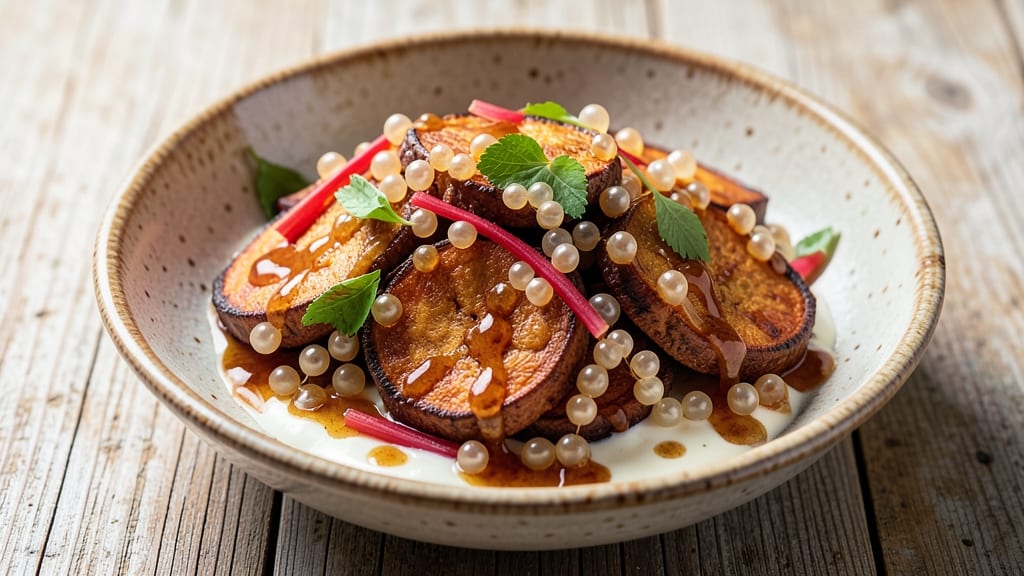
This sweet potato sago recipe transforms humble ingredients into a texturally stunning side dish with crispy celery crowns resting atop creamy coconut-infused sago. The secret lies in perfectly caramelized sweet potato slices paired with tender sago pearls—each bite delivers a perfect contrast of textures and flavors.
I developed this recipe after realizing how often sweet potatoes and sago could shine together in ways most recipes overlooked.
The foundation begins with slow-roasted sweet potatoes that develop a deep caramelized crust while staying tender inside, then combines them with soaked sago pearls cooked in coconut milk for that signature creamy texture.
What sets this apart is the crispy celery crown—thinly sliced celery baked until golden and layered on top, adding a satisfying crunch that balances the dish's richness. The coconut milk not only enhances the sago but also brings a subtle tropical warmth that complements the earthy sweetness of the potatoes.
By the time you serve this dish, you'll have a restaurant-worthy side that's both visually impressive and deeply satisfying—crispy on top, creamy in the center, with each component playing its part perfectly.
The combination of textures makes it ideal for special occasions or when you want to elevate a simple meal. The recipe scales beautifully, so whether you're serving four or twelve, the proportions remain foolproof.
Pair it with grilled meats, seafood, or even as a standalone vegetarian dish. The key to success lies in the even caramelization of the sweet potatoes and the proper soaking of the sago—both ensure the final result is exactly as promised. Let's get started on creating this showstopper.
Ingredients for sweet potato sago
Transform simple ingredients into restaurant-quality sweet potato sago with crispy celery crowns.
| Ingredient | Amount | Notes |
|---|---|---|
| Sweet Potatoes 🍠 | 2 lbs | Medium size, peeled and sliced |
| Sago Pearls 🌾 | ½ cup | Unsoaked, rinsed thoroughly |
| Light Coconut Milk 🥥 | 1 can | 13.5 oz, full-fat preferred |
| Celery Stalks 🧅 | 2 whole | Thinly sliced into crowns |
| Extra-Virgin Olive Oil 🫒 | ¼ cup | For roasting and drizzling |
| Brown Sugar 🍯 | 2 tbsp | Lightly packed, for caramelization |
| Salt 🧂 | 1 ½ tsp | Kosher or sea salt, divided |
| Ground Black Pepper 🌶️ | ½ tsp | Freshly ground, for seasoning |
| Fresh Thyme Leaves 🌿 | ¼ cup | Chopped, for aromatic depth |
| Unsalted Butter 🧈 | 2 tbsp | Cold, for crispy celery crowns |
| Honey 🍯 | 1 tbsp | For subtle sweetness balance |
| Lemon Zest 🍋 | 1 tsp | Brightens the coconut flavor |
| Toasted Coconut Flakes 🥥 | 2 tbsp | For garnish and texture contrast |
The sweet potatoes are the foundation—choose vibrant orange ones with smooth skin for even caramelization. Whole Foods or local farmers markets often carry the sweetest varieties, but any medium-sized sweet potatoes work. Peel them just before slicing to prevent browning, and cut into even ¼-inch slices for consistent roasting. The sago pearls should be rinsed thoroughly before soaking to remove excess starch, which prevents clumping. For the celery, select fresh, crisp stalks—avoid woody or yellowing pieces. Trader Joe's consistently carries the best quality for this dish, but any grocery store will suffice if you choose firm, pale green celery.
No light coconut milk? Full-fat coconut milk works too, though the texture will be slightly richer. Substitute the honey with maple syrup at a 1:1 ratio if you prefer. For the celery crowns, if you can't find fresh thyme, dried thyme at one-third the amount provides similar depth. The olive oil matters—use extra-virgin for its fruity notes, which complement the sweet potatoes beautifully. When slicing the sweet potatoes, a mandoline ensures even thickness, but a sharp chef's knife works too. The key to perfect caramelization lies in the even distribution of olive oil and sugar—toss the slices gently but thoroughly before roasting.
Store the roasted sweet potatoes in an airtight container for up to 3 days, though they're best served fresh. The sago mixture keeps for 4 days in the fridge and freezes beautifully for 3 months—portion into ice cube trays before transferring to a bag. For the crispy celery crowns, bake them just before serving to maintain their crunch. Assemble the dish last minute for optimal texture contrast. This recipe scales perfectly for gatherings—simply double the ingredients and adjust baking times accordingly. The combination of textures makes it ideal for meal prep, as each component can be prepared ahead and assembled when ready to serve.
Why You'll Love This Recipe
- Here’s what sold me: I already had everything. Sweet potatoes, sago pearls, coconut milk—none of that “specialty ingredient” nonsense. And because it’s so unfussy, I can make it when I’m low on energy or short on time. Plus, the olive oil keeps it from tasting like a can of coconut milk, so it’s not the prettiest, but the taste makes up for it. Budget-friendly? Absolutely. Reliable? Even more so.
- No Chopping Chaos: I’ll be real—this recipe lets me skip the tedious veggie prep. Those celery stalks? Just rough-chop them and toss them in whole. The sweet potatoes go in raw, skin-on, and the sago pearls? No soaking, no fuss. Honestly, it’s the kind of meal where I can still watch my show while it simmers.
- Creamy Chew Magic: Between us, the combo of tender sweet potatoes and that just-right sago pearl bite—plump but still with a little resistance—is ridiculously satisfying. The coconut milk makes it velvety without being heavy, and the celery adds this bright, earthy note that keeps it from feeling too sweet. It’s the kind of dish where my kids ask, “Is there more?” before I even finish serving.
- Leftover Lifesaver: This recipe doubles as my go-to for busy mornings. The flavors actually improve after a night in the fridge—like, next-level better. I’ll reheat portions for breakfast (yes, really) or pack it for lunch, and it’s still warm, comforting, and zero effort. No sad, dry leftovers here.
Step-by-step instructions for sweet potato sago with crispy celery crown
Transform simple ingredients into a luxurious dish where tender sweet potatoes meet silky sago and crispy celery crowns.
Roast Sweet Potatoes to Perfect Tenderness
Preheat your oven to 400°F and line a baking sheet with parchment paper. Toss the 2 lbs sweet potatoes (peeled and sliced into ½-inch thick rounds) with 1 tablespoon of the extra-virgin olive oil, 1 teaspoon of the salt, and ¼ teaspoon of the ground black pepper. Spread them in a single layer, leaving ½-inch between each slice for even browning.
Roast for 20-25 minutes until the edges are golden brown and a knife slides in easily. The interior should be fork-tender but not mushy—this is crucial for maintaining texture. Rotate the pan halfway through for even cooking. Remove and set aside, reserving the pan juices for later.
Prepare the Creamy Coconut-Sago Base
In a medium saucepan, combine the 0.5 cup sago pearls (rinsed thoroughly) with 1 can light coconut milk. Bring to a gentle simmer over medium heat, stirring occasionally to prevent sticking. Cook for 12-15 minutes until the sago pearls are translucent and the mixture thickens to a pudding-like consistency.
Stir in 1 tablespoon honey, 1 teaspoon lemon zest, and ¼ cup chopped fresh thyme leaves. Remove from heat and let it sit for 5 minutes to allow the thyme to infuse. The mixture should be smooth with a delicate floral aroma—this is where the dish's elegance begins.
Create Crispy Celery Crowns
Thinly slice the 2 whole celery stalks into ½-inch thick crowns. In a cold skillet, melt the 2 tbsp unsalted butter over medium heat. Add the celery crowns in a single layer and cook undisturbed for 3-4 minutes until the edges turn deep golden brown and crispy.
Flip carefully and cook another 2-3 minutes until evenly browned. Sprinkle with ½ teaspoon salt and ¼ teaspoon black pepper while hot. The celery should be tender-crisp with a caramelized edge—this contrast is what makes the dish extraordinary.
Combine and Finish with Caramelized Sweetness
Increase oven temperature to 425°F. Toss the roasted sweet potatoes with the remaining 1 tablespoon extra-virgin olive oil and 2 tbsp brown sugar. Spread them back on the baking sheet and roast for 5-7 minutes until caramelized and slightly crisp at the edges.
Divide the creamy coconut-sago mixture among four serving bowls. Top each with roasted sweet potatoes, crispy celery crowns, and a final sprinkle of toasted coconut flakes. The contrast of textures—creamy, crispy, and tender—should be immediately apparent with every bite.
Serve with Garnish and Optional Drizzle
Let the dish rest for 2 minutes before serving to allow the flavors to meld. Garnish with an additional sprinkle of toasted coconut flakes and a few more thyme leaves for visual appeal. For extra richness, drizzle with a touch of reserved pan juices from the sweet potatoes.
The final presentation should showcase the dish's three distinct textures while maintaining its elegant simplicity. Serve immediately while the celery crowns remain crisp and the coconut mixture holds its creamy texture.
Pro Tips For Making Sweet Potato Sago
- Boil Sago First: Toss the sago pearls into boiling water before you even think about prepping the sweet potatoes. They’ll soften in 15 minutes—no more gummy bits clumping together later. (Yes, even if you’re impatient like me, resist the urge to skip this.)
- Cube Sweet Potatoes Evenly: Cut them into 1-inch chunks, but don’t go smaller—uneven pieces mean some turn to mush while others stay undercooked. A sharp knife and steady hand make this faster than you’d think. (I learned this the hard way with a bag of sad, half-raw sago.)
- Simmer Celery Low: Once the coconut milk is in, drop the heat to a gentle simmer. Celery burns faster than you’d expect, and bitter flavor ruins the dish. Five minutes on medium-high, then lower—trust the process.
- Toast Sweet Potatoes Dry: After boiling, spread them on a baking sheet and let them steam-dry for 10 minutes. This guarantees they’ll absorb the coconut milk without turning into a gluey mess. (Your future self will thank you when the sago stays separate.)
Flavor customization for this dish
Sweet Heat Twist
Add 1 teaspoon of chili powder or ½ teaspoon cayenne pepper to the roasted sweet potatoes before the final caramelization step. This introduces a subtle warmth that pairs beautifully with the coconut's sweetness.
For balance, sprinkle with ¼ cup chopped cilantro after serving—it cools the heat while adding freshness. I love this variation for spicy food lovers who still want the dish's creamy base. 🌶️
Tropical Citrus Boost
Infuse the coconut-sago mixture with 1 tablespoon of lime zest and 2 tablespoons of freshly squeezed lime juice instead of lemon. The brighter citrus notes elevate the tropical vibes, especially when garnished with toasted coconut flakes.
For extra zing, add ½ teaspoon of grated ginger while cooking the sago pearls. This version works perfectly as a side for grilled fish or shrimp. 🍋
Nutty Crunch Add-On
Toast ¼ cup of chopped pecans or macadamia nuts in a dry skillet over medium heat for 3-4 minutes until golden. Sprinkle them over the finished dish just before serving to add a rich, buttery crunch.
The nuts complement the coconut perfectly and bring an extra layer of texture. I especially recommend this for vegetarian meals where you want added protein. 🌰
Spiced Coconut Variation
Enhance the coconut-sago base by adding ½ teaspoon of ground cinnamon and ¼ teaspoon of ground cardamom while cooking the sago pearls. These warm spices deepen the coconut flavor and create a cozy, aromatic profile.
For extra richness, stir in 1 tablespoon of coconut cream at the end. This version feels like a dessert but works beautifully as a savory side. ✨
Herb-Forward Profile
Swap the thyme for ¼ cup chopped fresh basil or mint leaves in both the coconut-sago mixture and the celery crowns. The fresh herbs add a bright, vibrant note that cuts through the richness.
For a Mediterranean twist, add 1 tablespoon of chopped parsley at the end. This lighter variation pairs wonderfully with grilled chicken or seafood. 🌿
Smoky Charred Sweet Potatoes
For a smoky depth, broil the sweet potatoes for the last 2 minutes of their final roasting phase. Watch closely to avoid burning—you want just a hint of char.
The smoky flavor contrasts beautifully with the creamy coconut and crispy celery. This technique works especially well with full-fat coconut milk for a richer, more decadent dish. 🔥
Nutrition facts
Frequently asked questions
Can I substitute regular sago pearls for pearl sago?
Yes, you can use regular sago pearls—but they'll need longer cooking time (about 20-25 minutes instead of 12-15 minutes). Pearl sago cooks faster because it's pre-steamed. For best results, check the package instructions and stir frequently to prevent sticking. The texture will be equally creamy once fully cooked!
How do I prevent the sweet potatoes from sticking to the baking sheet?
Use parchment paper or a silicon baking mat to ensure easy release. If you don't have either, lightly coat the sheet with extra-virgin olive oil before arranging the slices. Spread them in a single layer with ½-inch gaps between slices for even browning. This prevents sticking and ensures crispy edges!
What if I can't find fresh celery for the crispy crowns?
Use frozen chopped celery (thawed and patted dry) or swap for thinly sliced fennel bulbs—they caramelize beautifully. For extra crunch, try crispy fried shallots or toasted sesame seeds as a garnish. The key is maintaining that satisfying texture contrast!
Can I make this dish ahead of time?
Prepare the coconut-sago mixture and roasted sweet potatoes up to 2 days ahead, storing them separately in airtight containers. Reheat the sago gently in a saucepan, and refresh the sweet potatoes in the oven at 350°F for 10 minutes. Make the crispy celery crowns fresh before serving—they lose crunch when reheated. Assemble last minute for perfect texture!
Why did my sago pearls turn mushy instead of creamy?
Overcooking or insufficient coconut milk causes mushiness. Use a 1:2 ratio of sago to coconut milk (like in the recipe) and simmer gently—never boil vigorously. Stir frequently and remove from heat as soon as the pearls are translucent. If they're already mushy, blend with extra coconut milk to restore creaminess.