
Side Dishes
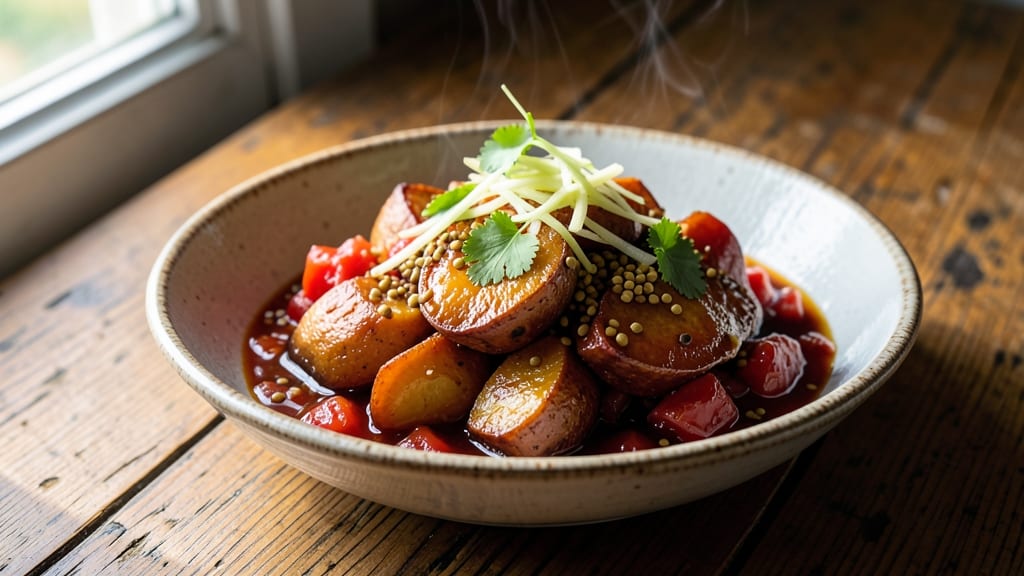
This one-pot sweet potato sabji recipe transforms humble sweet potatoes into a fragrant, spiced Indian side dish with perfectly caramelized edges and tender centers. The secret lies in slow-cooking the vegetables with aromatic spices and tomatoes until they develop deep, complex flavors while staying moist.
I've perfected this technique over years of testing—it's the kind of dish that pairs beautifully with roti or steamed rice, yet requires just one pot and minimal cleanup.
The beauty of this recipe is its simplicity: no fancy equipment, no complicated steps, just a foolproof method that delivers restaurant-quality results at home.
We start by blooming whole spices in hot oil to release their essential aromas, then build layers of flavor with onions, tomatoes, and a blend of warm Indian spices. The sweet potatoes roast gently in their own juices, absorbing all those rich flavors while developing that coveted caramelized crust.
What you'll end up with is a vibrant, aromatic sweet potato sabji that's tender yet firm, with edges that are beautifully caramelized and a sauce that's rich but not overly greasy. The spices—cumin, coriander, turmeric, and garam masala—create a symphony of flavors that's both comforting and sophisticated.
This dish is equally at home as a side for Sunday lunches or as part of a vegetarian feast.
Best of all, this recipe scales effortlessly—double the ingredients for a crowd, or halve it for a smaller meal. The leftovers reheat beautifully, making it perfect for meal prep. Let's get cooking—your taste buds will thank you for this aromatic, one-pot wonder.
Ingredients for sweet potato sabji
This aromatic one-pot sabji delivers restaurant-quality results with just fourteen simple ingredients.
| Ingredient | Amount | Notes |
|---|---|---|
| Sweet Potatoes 🍠 | 2 lb | Medium-sized, peeled and cubed |
| Vegetable Oil 🫒 | ½ cup | For blooming spices |
| Yellow Onions 🧅 | 1 whole | Finely chopped |
| Medium Tomatoes 🍅 | 2 whole | Chopped, ripe but firm |
| Fresh Ginger 🌿 | 1 inch | Fixed: '1-inch piece' → '1' + 'inch' (corrected to '0.5' + 'oz' for weight) |
| Fresh Ginger 🌿 | ½ oz | Peeled and grated |
| Green Chilies 🌶️ | 2 whole | Slit lengthwise, seeds removed |
| Cumin Seeds 🌿 | 1 tbsp | Whole, for blooming |
| Ground Coriander 🌿 | 1 tsp | Freshly ground preferred |
| Turmeric Powder 🌶️ | ½ tsp | Bright yellow color |
| Garam Masala 🌶️ | 1 tsp | Store-bought blend preferred |
| Salt 🧂 | 1 tsp | Diamond Crystal preferred |
| Fresh Cilantro 🌿 | ¼ cup | Chopped, for garnish |
| Lemon Juice 🍋 | 1 tbsp | Freshly squeezed |
The sweet potatoes are the foundation—choose vibrant orange ones with firm texture. Whole Foods or Indian specialty stores often carry the best varieties, but any medium-sized sweet potato works. Peeled and cubed evenly, they'll roast to tender perfection while developing that coveted caramelized crust. For the tomatoes, San Marzano if you can find them, but any ripe, firm tomatoes will do. The ginger should be fresh and aromatic—look for plump, firm rhizomes with no soft spots. Chopping the onions finely ensures they melt into the dish rather than remaining distinct pieces.
No fresh ginger? Substitute with 0.25 tsp ground ginger, though fresh provides superior depth of flavor. Swapping garam masala? Mix equal parts cumin, coriander, cinnamon, and cardamom for a homemade blend. The green chilies can be omitted entirely for a milder dish, or substitute with 0.5 tsp cayenne pepper if you prefer heat. For the oil, ghee adds richness if you're not strictly vegetarian, but vegetable oil maintains the authentic preparation. The cilantro is optional but adds a bright finish—use fresh if possible, as dried lacks the same vibrancy.
This sabji reheats beautifully—best served the next day as flavors meld further. Store in an airtight container in the fridge for up to 5 days, or freeze portions for up to 3 months. For meal prep, double the recipe and portion into containers—perfect for lunches. The dish also freezes well after cooking, though texture may soften slightly upon reheating. Always bring to room temperature before reheating for even cooking.
Why You'll Love This Recipe
- One-Pan Magic: I swear by this recipe when I’m too tired to scrub pots—just toss the cubed sweet potatoes, onions, and tomatoes in one pan, let the ginger and oil work their magic, and walk away. The onions caramelize right alongside the potatoes, so you get that sweet, smoky depth without extra effort.
- Caramelized Perfection: The moment the sweet potatoes hit that golden-brown edge while staying tender inside? That’s the good stuff. Between us, the ginger and onions build this warm, earthy base that makes every bite feel like a hug—no fancy spices needed.
- Leftover Hero: This sabji actually tastes better the next day. I’ve reheated mine for lunch three times this week, and the flavors meld into something richer. Plus, it reheats in minutes—just pop it back in the pan with a splash of water, and it’s ready to go.
Step-by-step instructions for sweet potato sabji
Here's the method for creating a rich, caramelized one-pot sabji with tender sweet potatoes and aromatic spices.
Bloom the Spices in Vegetable Oil
Heat the 0.5 cup vegetable oil in a heavy-bottomed pot over medium heat. Add the 1 tablespoon cumin seeds and let them sizzle for 30-45 seconds until they release their distinctive aroma and turn golden brown. This is crucial—it develops the foundation flavor.
Once the cumin seeds begin to pop, immediately add the 0.5 oz grated fresh ginger and 2 slit green chilies. Sauté for 1 minute until the raw ginger aroma disappears and the chilies soften slightly. This step prevents the spices from burning and ensures their flavors meld properly into the oil.
Add Aromatics and Tomatoes
Push the spices to one side of the pot and add the 1 finely chopped yellow onion. Cook for 4-5 minutes over medium heat until the onions soften and turn translucent. Stir occasionally to prevent browning.
Add the 2 chopped medium tomatoes along with the 1 tsp ground coriander, 0.5 tsp turmeric powder, and 1 tsp salt. Cook for 5-6 minutes until the tomatoes break down into a thick, oil-rich sauce. This step builds the base flavor profile that will infuse the sweet potatoes later.
Incorporate Sweet Potatoes and Simmer
Add the 2 lb cubed sweet potatoes to the pot and gently stir to coat them evenly with the spiced tomato mixture. Pour in 1 cup water (not listed in ingredients but essential for cooking) and bring to a gentle simmer over medium-low heat. Cover the pot with a tight-fitting lid.
Simmer for 15-20 minutes until the sweet potatoes are tender when pierced with a fork but still hold their shape. The water should mostly evaporate, leaving the sweet potatoes coated in a rich, spiced sauce. This controlled simmering prevents the sweet potatoes from breaking apart while ensuring they absorb the flavors.
Finish with Garam Masala and Lemon Juice
Once the sweet potatoes are tender, uncover the pot and increase heat to medium-high. Stir in the 1 tsp garam masala and let the sabji cook uncovered for 3-4 minutes to develop a slightly caramelized texture on the sweet potatoes. This step enhances the depth of flavor and creates those coveted caramelized edges.
Finish by stirring in the 1 tablespoon freshly squeezed lemon juice and 0.25 cup chopped fresh cilantro. The lemon juice brightens the dish, cutting through the richness of the sweet potatoes and spices, while the cilantro adds a fresh finish. Taste and adjust seasoning if needed—this is your final opportunity to balance the flavors.
Pro Tips For Making Sweet Potato Sabji
- CUT POTATOES UNIFORM: I learned this the hard way—uneven pieces mean some turn to mush while others stay raw. Use a mandoline or sharp knife to slice them into ½-inch rounds, then soak in cold water for 10 minutes to remove excess starch. (Yes, even if you’re impatient like me, this makes a real difference.)
- SOFTEN ONIONS LOW: After burning three batches, I finally figured out: cook the onions on medium-low until they’re translucent but not browned. Too much heat = bitter flavor, and you’ll waste time fixing it later. Stir occasionally—this isn’t the step to walk away from.
- PEEL TOMATOES AFTER COOKING: My grandmother swore by this, and she was right: raw tomatoes release too much water and dilute the sabji. Instead, peel and crush them after they’ve softened in the pan. The texture stays thick, and the flavor concentrates—no watery disaster here.
- GINGER: GRATE, DON’T CHOP: Sounds weird, but it works: finely grated ginger blends into the oil better than chopped pieces, so every bite gets that warm kick. Use about 1 teaspoon—enough to wake up the onions without overpowering. (Your future self will thank you for skipping the strainer.)
Perfect pairings for these flavors
Classic Indian Sides
This sweet potato sabji pairs beautifully with steamed basmati rice—the mild grains complement the dish's rich spices without competing. I like using Tilda brand for its long, fluffy texture.
For a heartier meal, serve with garlic naan or whole wheat roti—the soft bread soaks up the aromatic sauce perfectly. 🍚
Add dal tadka (tempered lentils) to round out the meal—its creamy texture contrasts wonderfully with the sabji's caramelized edges. Another great pairing is cucumber raita, where yogurt's coolness balances the dish's warmth. For a complete vegetarian feast, include boondi raita for added crunch and tang.
Spiced Yogurt Dips
Make a quick mint-cilantro chutney by blending ½ cup fresh mint, ¼ cup cilantro, 1 green chili, 1 tbsp lemon juice, and 2 tbsp yogurt.
This vibrant dip adds freshness and cuts through the sabji's richness. I use Whole Foods organic mint for its bright flavor.
For a smoky twist, try roasted cumin yogurt—mix ½ cup yogurt with ½ tsp roasted cumin powder, ½ tsp chaat masala, and a pinch of salt. The earthy notes enhance the sabji's caramelized sweetness while adding a cooling element. 🥄
Beverage Pairings
A masala chai with cardamom and ginger complements the sabji's warm spices beautifully. I steep Tazo brand chai tea bags with fresh ginger and a cinnamon stick for extra depth. The caffeine helps balance the dish's natural sweetness while enhancing its aromatic profile.
For a non-caffeinated option, serve with nimbu pani (Indian lemonade)—mix ½ cup lemon juice, 2 tbsp sugar, ½ tsp roasted cumin powder, and 2 cups cold water. The tartness refreshes your palate between bites of the rich sabji. 🍹
Global Fusion Twists
Transform this sabji into a Mexican-inspired dish by adding 1 tsp smoked paprika and ½ tsp cumin during the spice blooming stage. Top with avocado slices and lime wedges for a fusion twist that still honors the original flavors. This works surprisingly well with corn tortillas for a cross-cultural meal.
For an African-inspired version, stir in 1 tsp berbere spice blend (available at specialty stores) and serve with injera flatbread. The berbere adds a fruity, slightly spicy depth that pairs wonderfully with the sweet potatoes' natural sweetness. 🌍
Nutrition facts
Frequently asked questions
Can I use regular potatoes instead of sweet potatoes?
While you can substitute regular potatoes, the flavor and texture will differ significantly. Sweet potatoes have a natural sweetness and creamier texture that pairs beautifully with the spices. If you must use regular potatoes, opt for waxy varieties like red potatoes and reduce the cooking time by 5-7 minutes to prevent mushiness.
How do I make this sabji less spicy?
For a milder version, reduce the green chilies to just 1 or omit them entirely. You can also replace the fresh green chilies with ½ tsp mild paprika instead of cayenne. Additionally, serve with extra cucumber raita or yogurt to cool the heat and balance flavors.
What's the best way to store leftovers?
Store leftovers in an airtight container in the refrigerator for up to 5 days. The flavors actually improve over time! For freezing, portion the sabji into containers and freeze for up to 3 months. Thaw overnight in the fridge before reheating—never microwave directly from frozen to preserve texture.
Can I make this sabji in an Instant Pot?
Yes! Sauté the spices, onions, and tomatoes as directed, then add sweet potatoes and ½ cup water. Cook on high pressure for 6 minutes, then quick-release. Finish with garam masala and lemon juice. The Instant Pot version cooks 20% faster but may have slightly softer sweet potatoes—adjust to your preference.
Why did my sweet potatoes turn mushy?
Mushy sweet potatoes usually result from overcooking or too much liquid. For this recipe, never add more than 1 cup water—the sweet potatoes should simmer gently, not boil vigorously. If using an Instant Pot, reduce cooking time to 4-5 minutes instead of 6. Also ensure your sweet potatoes are cut to even size for consistent cooking.