
Side Dishes
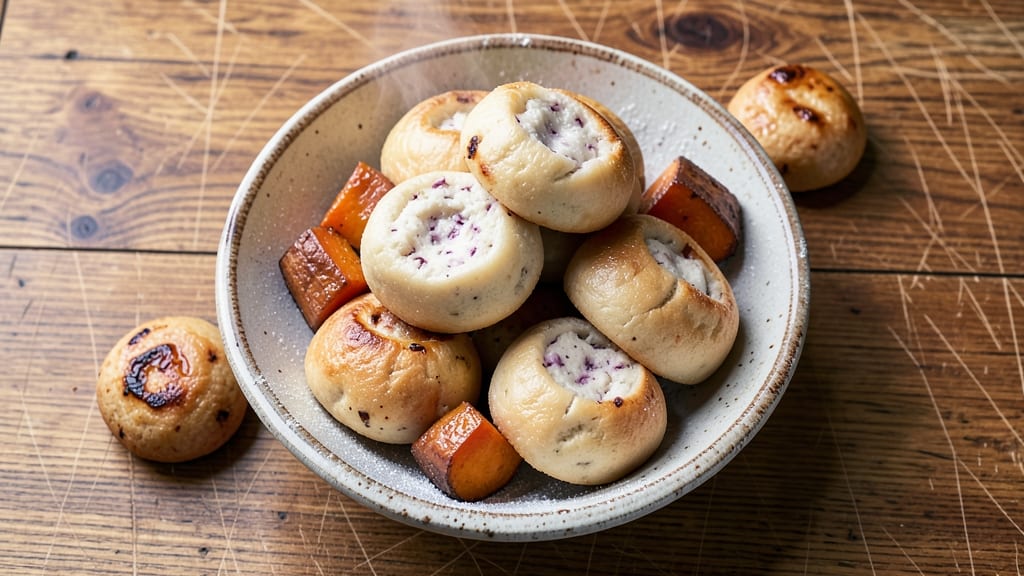
This sweet potato mantou recipe transforms humble steamed buns into golden, pillowy clouds with a secret sweet potato filling that adds natural sweetness without overpowering the delicate dough.
The key lies in balancing the dough's tender texture with a filling that caramelizes just enough to create a subtle sweetness in every bite. I developed this recipe after years of experimenting with Asian-inspired buns, determined to create something that felt both comforting and sophisticated.
The process begins with a simple dough that requires just a few ingredients—flour, yeast, water, and a touch of sugar—but the magic happens in the shaping and steaming.
Each mantou is crafted to achieve that signature dimpled top and even steam pockets, ensuring they rise perfectly to a soft, airy finish.
The sweet potato filling, made with mashed sweet potatoes, sugar, and a pinch of salt, adds moisture and natural sweetness that pairs beautifully with the dough's mild flavor.
What you'll end up with is a batch of golden-brown mantou that look stunning on any table while delivering on both texture and flavor.
The exterior remains tender and slightly crisp at the edges, while the interior stays soft and fluffy, with pockets of sweet potato filling that melt in your mouth.
These buns are perfect for breakfast, snacking, or even as a side dish for any meal—they're so versatile and satisfying that they'll quickly become a staple in your kitchen.
Whether you're serving them warm from the steamer or at room temperature, these sweet potato mantou are sure to impress. The recipe scales easily, so you can make a small batch for personal enjoyment or a larger one for sharing.
Let's get started on creating these delightful, veggie-infused buns that are as beautiful as they are delicious.
Ingredients for sweet potato mantou
Twelve simple ingredients create golden, pillowy mantou with sweet potato surprise inside.
| Ingredient | Amount | Notes |
|---|---|---|
| All-Purpose Flour 🌾 | 4 cups | Unbleached preferred for soft texture |
| Active Dry Yeast 🍞 | ¼ oz | Or 2 1/4 tsp, ensure fresh |
| Granulated Sugar 🍚 | ½ cup | White or brown sugar works |
| Vegetable Oil 🫒 | ¼ cup | Light or canola preferred |
| Warm Water 💧 | 1 ¼ cups | 105-115°F for yeast activation |
| Medium Sweet Potatoes 🍠 | 2 whole | About 1.5 lbs total, peeled |
| Granulated Sugar 🍚 | ¼ cup | For filling, adjust to taste |
| Salt 🧂 | ½ tsp | Fine sea salt preferred |
| Sesame Seeds 🌻 | 2 tbsp | For topping, optional |
| Vegetable Oil 🫒 | 1 tbsp | For greasing steamer |
| Cornstarch 🌾 | 1 tbsp | For dusting, optional |
| Baking Soda 🧪 | ½ tsp | For water, helps steam |
The flour is non-negotiable here—King Arthur or Gold Medal work best for that signature tender crumb. Yeast can be tricky, so check the expiration date and store it in the fridge. For the sweet potatoes, orange-fleshed varieties like Beauregard give the best natural sweetness. I always grab mine from Trader Joe's when they're in season, but any grocery store carries them. The oil? Don't use butter—it burns too easily in the steamer. Light or canola keeps things neutral.
No sesame seeds? Toasted poppy seeds work in a pinch, though they lack that nutty aroma. Running low on cornstarch? Arrowroot powder does the same job. The filling sugar can be swapped for maple syrup or coconut sugar if you prefer. For the dough, if your kitchen's too cold, warm the water slightly more—yeast needs to be cozy to activate. And if you're making a big batch, double the dough recipe but keep the filling ratio the same for balanced flavor.
These keep beautifully for 3 days at room temperature if stored in an airtight container. For longer storage, freeze shaped mantou on a tray first, then transfer to a bag. Reheat in the steamer for 5-7 minutes until warm. Pro tip: Steam them fresh for the best texture—microwaving makes them gummy. I always make a double batch because they disappear fast, especially when I add a drizzle of honey.
Why You'll Love This Recipe
- No-Knead Magic: I swear by this dough—just mix, rest, and roll. No stand mixer, no fancy skills, just your hands and a little patience while the yeast does all the work. That sweet potato puree (made from roasted sweet potatoes, trust me) folds right into the dough, giving it this natural richness without extra effort.
- Sweet & Soft Payoff: The sugar in the dough caramelizes just enough during baking to give these mantou that irresistible golden crust, while the inside stays pillowy. Honestly, the first time I bit into one still warm, I immediately grabbed another—no over-the-top spices needed, just pure, simple satisfaction.
- Breakfast to Snack: I keep a batch in the fridge all week because they’re perfect cold or toasted. Wrap one around a sausage for breakfast, pack a few in lunchboxes, or serve them warm with butter at a holiday gathering. The dough’s neutral base lets them shine in any moment—no last-minute stress.
- Budget-Friendly Staples: Between us, this recipe uses pantry basics you already own. That sweet potato puree? Just roast a couple of potatoes and blend them—no special ingredients. The dough stretches far, and leftovers reheat beautifully. I’ve fed a crowd of 10 for under $15 with this, and they never guessed how easy it was.
Step-by-step instructions for sweet potato mantou
Here's how to create these fluffy, sweet potato-stuffed buns with a tender crumb and crispy sesame top.
Prepare the Sweet Potato Filling
Peel the 2 whole medium sweet potatoes and cut them into even chunks. Place them in a pot of boiling water and cook for 15-20 minutes until fork-tender. Drain well and let them cool completely before handling.
Once cooled, mash the sweet potatoes until smooth. Stir in the 0.25 cup granulated sugar and 0.5 teaspoon salt until fully combined. This filling should be thick and spreadable—like a sweet potato puree. Set it aside while you prepare the dough. The sugar helps balance the earthy sweet potato flavor while keeping the filling moist during steaming.
Mix the Dough and Let It Rise
In a large mixing bowl, combine the 4 cups all-purpose flour, 0.25 ounce active dry yeast, and 0.5 cup granulated sugar. Make a well in the center and add the 0.25 cup vegetable oil and 1.25 cups warm water (about 105-115°F).
Add the 0.5 teaspoon baking soda to the water before mixing—this helps create a lighter texture. Stir with a wooden spoon until the dough comes together, then knead on a lightly floured surface for 8-10 minutes until smooth and elastic. The dough should be soft but not sticky. If it feels too dry, add a teaspoon of water; if too sticky, add a sprinkle of flour. Cover the bowl with a damp towel and let it rise in a warm place for 1-1.5 hours, or until doubled in size. You'll know it's ready when it springs back slowly when poked.
Shape the Mantou and Fill with Sweet Potato
Punch down the risen dough and divide it into 12 equal portions (about 1.5 ounces each). Roll each portion into a 6-inch circle on a floured surface. Place 1 teaspoon of the sweet potato filling in the center of each circle, then fold the dough over to completely enclose the filling. Seal the edges by pinching them together and rolling the sealed edge gently with your fingers to create a smooth, rounded mantou shape.
Place the shaped mantou on a baking sheet lined with parchment paper, leaving 1 inch of space between each. Cover lightly with a damp towel and let them rest for 20 minutes to relax the dough. This resting step prevents the mantou from expanding too much during steaming. While they rest, prepare your steamer by adding 1 tablespoon vegetable oil to the bottom and bringing water to a gentle simmer.
Steam to Pillowy Perfection
Steam the mantou over medium-high heat for 15-18 minutes, or until they're light golden brown at the bottom. Don't overcrowd the steamer—they need space to rise evenly. You'll know they're done when they puff up slightly and sound hollow when tapped on the bottom.
Remove the mantou from the steamer and let them cool for 5 minutes before transferring to a wire rack. While still warm, brush the tops with a little water and sprinkle with 2 tablespoons sesame seeds for that classic nutty crunch. For extra shine, dust lightly with 1 tablespoon cornstarch sifted over the top. Serve warm—they're best enjoyed fresh out of the steamer, with a soft, airy interior and a slightly crispy exterior.
Pro Tips For Making Sweet Potato Mantou
- Steam at 190°F (88°C), Not Higher: I learned this the hard way—blasting your steamer to max heat makes the mantou turn gummy inside. Sweet potatoes release more moisture than regular mantou, so a gentle, steady 190°F (88°C) keeps the texture light and fluffy. Use a thermometer if your steamer doesn’t have precise controls.
- Mix Sweet Potato Puree Last: Adding the purée to the dough too early kills the yeast. Wait until the yeast has proofed (doubled in size) before folding in the purée—this keeps the rise consistent. If you rush, your mantou will be dense, and that’s a shame after all the work.
- Don’t Overwork the Dough: This isn’t pizza dough—handle it just enough to combine. Over-kneading develops gluten, which makes the mantou tough. After the first 5 minutes, let the dough rest, then do a quick stretch-and-fold. Your future self will thank you when they bite into a tender, melt-in-your-mouth center.
- Use a Light Hand with Sugar: Sweet potato mantou needs sweetness, but too much sugar (more than 2 tablespoons per batch) can halt fermentation. Stick to the recipe’s amount unless you’re adjusting for a very ripe sweet potato—then cut it back by half. Trust me, your mantou won’t taste bland, but they’ll rise properly.
Wine and beer pairings for this sweet potato mantou
Light White Wine
Sweet potato mantou's delicate sweetness pairs beautifully with crisp, dry white wines that won't overpower the subtle flavors. I reach for Sauvignon Blanc from New Zealand—its bright citrus and herbal notes cut through the sweet potato's natural sweetness while complementing the mantou's pillowy texture.
A glass of Sancerre from the Loire Valley also works wonderfully, with its mineral-driven acidity balancing the dish's richness. 🍷
Rosé Delight
For a refreshing twist, a dry Provence rosé offers the perfect balance—its delicate strawberry and floral notes harmonize with the sweet potato filling without competing. I love serving this with chilled rosé during warm weather; the wine's crisp acidity refreshes your palate between bites.
Opt for one with at least 12% alcohol to stand up to the mantou's subtle sweetness.
Light Beer Pairings
A Japanese lager like Asahi Super Dry or Sapporo provides a clean, crisp contrast to the mantou's sweetness. The beer's subtle maltiness enhances the dough's soft texture without overpowering the filling.
For a craft option, try a witbier with its citrusy notes—Hoegaarden is my go-to, as the coriander and orange peel flavors complement the sweet potato beautifully. 🍺
Avoid Heavy Options
Skip bold reds or heavy beers—they'll clash with the mantou's delicate flavors. Even sweet wines like Moscato can overwhelm the dish's subtle sweetness. Instead, stick to dry whites or light beers that highlight the mantou's natural sweetness and pillowy texture.
The goal is to let the dish shine, not the drink.
Non-Alcoholic Choices
For a refreshing non-alcoholic option, try sparkling apple cider—its effervescence and slight tartness balance the sweet potato's natural sweetness. Alternatively, a cucumber-mint infused water with a squeeze of lime keeps things light and refreshing. These pairings let the mantou's texture and flavor take center stage without alcohol's interference.
Nutrition facts
Frequently asked questions
Can I make these mantou without a steamer?
If you don't have a bamboo steamer, use a large pot with a tight-fitting lid and a heatproof plate or rack. Place the mantou on the plate, cover, and steam over boiling water for 15-18 minutes. For even cooking, add 1 tablespoon oil to the water to prevent sticking. Pro tip: Line the plate with parchment paper for easy removal.
Why did my mantou turn out dense instead of fluffy?
Dense mantou usually means the yeast didn't activate properly or the dough wasn't given enough time to rise. Check your water temperature—it should be 105-115°F (like a warm bath). Also, ensure your yeast is fresh (test it in warm water with sugar—it should bubble in 5-10 minutes). Let the dough rise until it's doubled in size (about 1-1.5 hours).
How do I store leftover sweet potato mantou?
Store them in an airtight container at room temperature for up to 3 days. For longer storage, freeze shaped mantou on a tray, then transfer to a bag. To reheat, steam for 5-7 minutes or microwave for 20-30 seconds (cover with a damp paper towel to keep them moist). They're best fresh, but reheating works in a pinch!
Can I substitute sweet potatoes with other vegetables?
Yes! For a similar texture, try mashed pumpkin or butternut squash with 1 teaspoon cinnamon added to the filling. For a savory twist, swap the sweet potato for mashed red beans or lotus paste (common in traditional mantou). Just adjust the sugar to taste—some veggies are naturally sweeter than others.
What’s the best way to shape mantou for that dimpled top?
After sealing the filling, roll the mantou gently between your palms to create a smooth, rounded shape. For dimples, use your thumb to press 3-4 small indentations on the top before steaming. This lets steam escape, preventing overinflation. Keep the pressure light—too much will flatten the bun. Practice makes perfect!