
Side Dishes
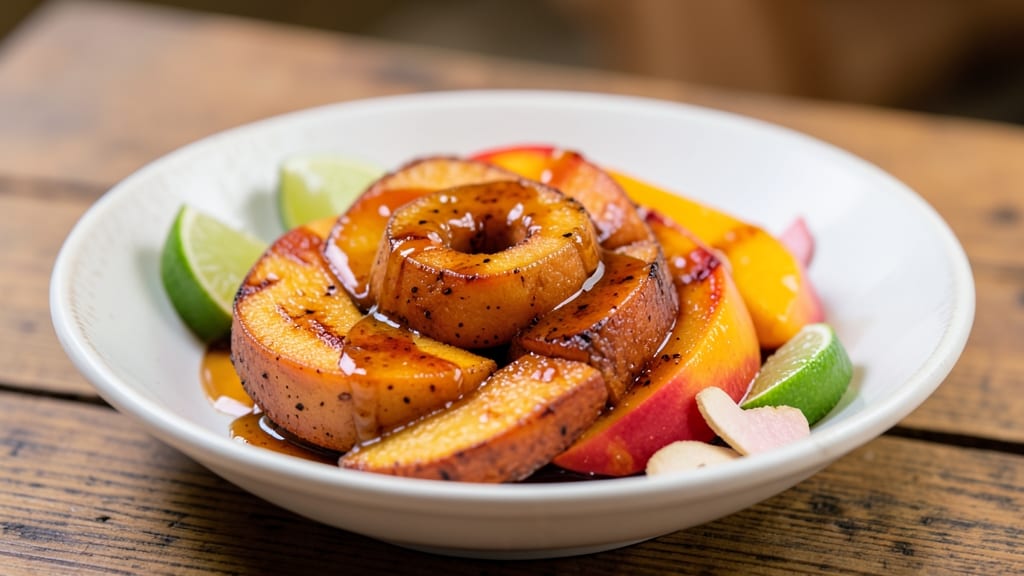
This sweet potato and mango recipe transforms humble ingredients into a tropical masterpiece with caramelized edges and velvety sweetness. 🌟 The secret lies in roasting sweet potatoes until crispy while balancing their natural sweetness with fresh mango's vibrant acidity—creating a dish that feels both comforting and exciting.
What makes this recipe special is how it bridges savory and sweet flavors without overwhelming either, making it perfect for vegetarian meals or as a side that steals the show.
The process is straightforward yet impressive: sweet potatoes are roasted to perfect crispness while mango is simmered into a glossy, slightly sticky glaze that clings beautifully to their edges. This technique ensures every bite delivers both texture and flavor harmony—no soggy sides or bland sweetness here.
The dish comes together in about 45 minutes, making it ideal for weeknight dinners or special occasions where you want to impress without spending hours in the kitchen.
What you'll end up with is a plate of golden-brown sweet potatoes glistening with a caramelized mango glaze, their edges crisp enough to hold up to the creamy fruit coating.
The contrast between the two creates a sensory experience that's both familiar and unexpected—sweet potatoes feel luxurious, while the mango adds a refreshing brightness that cuts through their richness. This dish works equally well as a standalone vegetarian main or paired with grilled chicken or fish for a complete meal.
For extra flair, finish with toasted coconut flakes or a sprinkle of chili powder to add depth. The possibilities for customization are endless—swap in pineapple for a different tropical twist or add a touch of lime zest for brightness.
This recipe proves that simple ingredients can create something extraordinary when prepared with intention. Let's get cooking!
Ingredients for sweet potato and mango
Transform tropical flavors with these 12 ingredients for a dish that balances crispy sweet potatoes and velvety mango glaze.
| Ingredient | Amount | Notes |
|---|---|---|
| Sweet Potatoes 🍠 | 2 lb | Medium size, organic preferred |
| Ripe Mangoes 🥭 | 2 whole | Ripe but firm, peeled and diced |
| Extra-Virgin Olive Oil 🫒 | ¼ cup | High quality, fruity variety |
| Coconut Sugar 🍯 | ½ cup | For caramelized depth |
| Fresh Lime Juice 🍋 | ¼ cup | Freshly squeezed, seeds removed |
| Fresh Ginger 🌿 | 1 tbsp | Grated, aromatic variety |
| Coconut Milk 🥥 | ¼ cup | Full-fat for creaminess |
| Unsalted Butter 🧈 | 2 tbsp | For extra richness |
| Toasted Coconut Flakes 🥥 | ¼ cup | For garnish and texture |
| Chili Powder 🌶️ | ½ tsp | Smoked for subtle heat |
| Sea Salt 🧂 | 1 tsp | Fine grain preferred |
| Fresh Cilantro 🌿 | ¼ cup | Chopped, for brightness |
The sweet potatoes are the foundation—organic varieties like Beauregard or Jewel deliver the best texture and sweetness. Whole Foods or local farmers' markets often carry these, and they're worth seeking out for their vibrant color and natural sweetness. For the mangoes, ripe but firm fruit is critical—overripe will turn mushy when simmered. Look for varieties like Ataulfo or Kent, which have a smooth texture and perfect balance of sweetness and acidity. The coconut sugar adds depth without overpowering, while the lime juice ensures the glaze stays bright and tangy rather than cloying.
No coconut sugar? Brown sugar or maple syrup works in a pinch, though coconut sugar's caramel notes are ideal. Substitute mango with pineapple or papaya for a different tropical twist, but adjust the lime juice to balance sweetness. Fresh ginger is non-negotiable for the glaze's complexity, but if you're short on time, 1 tsp ground ginger can substitute. The coconut milk adds creaminess—full-fat is essential for that velvety texture, though light coconut milk will work in a bind. For extra richness, add 1 tbsp tahini to the glaze, but keep it balanced with the acidity of lime.
Sweet potatoes keep 5-7 days in the fridge, but roast them fresh for best results—they lose moisture over time. Mangoes ripen quickly; store them at room temperature until ready to use, then refrigerate to slow ripening. The glaze can be made 2 days ahead and reheated gently, though it's best fresh. Toast the coconut flakes in a dry pan for 2-3 minutes until golden—this enhances their flavor dramatically. Portion the dish with the glaze drizzled over the top for the most impressive presentation, and garnish with cilantro just before serving.
Why You'll Love This Recipe
- One-Pan Magic: I swear by this recipe when I’m too tired to scrub pots—just slice the sweet potatoes, toss them in olive oil and coconut sugar, and roast while you dice the mango. No flipping, no fuss, just hands-off perfection.
- Sweet & Savory Balance: That caramelized sweet potato meets juicy mango? It’s like dessert and dinner had a baby. The lime brightens it up so it doesn’t feel heavy, and the olive oil adds a richness that’s ridiculously satisfying.
- Lunchbox Superstar: Between us, this is my go-to for meal prep—packs like a dream and holds up for days. Roast a big batch of sweet potatoes, toss in cubed mango the next morning, and you’ve got a snack or light lunch that’ll impress even your pickiest friend.
- Budget-Friendly Luxury: Sweet potatoes and mangoes are affordable, but this tastes like a fancy dinner. Honestly, I’ve served it at BBQs, potlucks, and lazy Sundays, and no one ever guesses it’s not some overpriced restaurant dish. Plus, leftovers? Even better the second day.
Step-by-step instructions for tropical sweet potato mango dish
Master the balance of caramelized sweetness and crispy edges with this precise method.
🔥 Step 1: Roast Sweet Potatoes for Crispy Edges
Preheat your oven to 400°F and line a baking sheet with parchment paper. Peel the sweet potatoes and cut them into 1-inch thick rounds or wedges. Toss them with 0.25 cup extra-virgin olive oil and 0.5 tsp chili powder, ensuring each piece is evenly coated. Spread them in a single layer on the baking sheet.
Roast for 25-30 minutes until the edges are deep golden brown and crispy while the centers remain tender. You'll know they're done when a knife slides in easily with just slight resistance. The crispy exterior contrasts beautifully with the soft interior—this is the foundation of our dish.
🍳 Step 2: Create the Tropical Caramelized Glaze
While the sweet potatoes roast, combine 0.5 cup coconut sugar, 0.25 cup fresh lime juice, 1 tbsp fresh ginger, and 0.25 cup coconut milk in a saucepan. Bring to a gentle simmer over medium heat, stirring constantly to dissolve the sugar completely.
Continue cooking for 8-10 minutes until the mixture thickens into a glossy, amber-colored syrup. You'll see the liquid reduce and the aroma become intensely tropical—this is when the magic happens. The glaze should coat the back of a spoon smoothly but still be pourable. Remove from heat and let it cool slightly for 5 minutes.
🥘 Step 3: Prepare the Mango and Assemble
Peel and dice the 2 whole ripe mangoes into ½-inch cubes. In a separate bowl, gently toss the mango with 2 tbsp unsalted butter (melted) and 1 tsp sea salt to enhance their natural sweetness. The butter adds richness that balances the tropical flavors perfectly.
Return the roasted sweet potatoes to the baking sheet and drizzle the warm caramelized glaze evenly over the top. Arrange the mango cubes on top, pressing them slightly into the glaze so they absorb some of the sweet, tangy mixture. The contrast of crispy sweet potatoes with juicy mango creates a textural masterpiece.
🔥 Step 4: Finish with Toasted Coconut and Cilantro
Transfer the baking sheet to the broiler for 2-3 minutes to lightly caramelize the glaze on top. Watch carefully—you want just a touch of color, not burning. Remove from the broiler and immediately sprinkle with 0.25 cup toasted coconut flakes and 0.25 cup chopped fresh cilantro.
The toasted coconut adds a delightful crunch that cuts through the richness, while the cilantro brings a bright, herbal finish. Serve immediately while the edges remain crispy and the glaze is still warm. Each bite delivers a perfect harmony of textures and flavors—sweet, tangy, creamy, and crispy all at once.
Pro Tips For Making Sweet Potato And Mango
- CUT SWEET POTATOES EVENLY: Use a mandoline or sharp knife to slice them ¼-inch thick—any thicker and they’ll stay tough, any thinner and they’ll burn before cooking through. I learned this the hard way after serving rubbery slices to guests who politely lied about how delicious they were.
- TEST MANGO RIPENESS WITH FINGERPRESS: Press the mango gently near the stem—it should give slightly, like a ripe avocado. Overripe ones turn mushy and ruin the texture, while underripe ones stay hard and bitter. If yours are too firm, leave them at room temperature overnight (yes, even in winter).
- ROAST SWEET POTATOES AT 400°F: Hotter temps caramelize the edges faster, but 400°F is the sweet spot—low enough to avoid burning the sugar, high enough to get that crispy skin. Toss them in olive oil before hitting the oven, not after (trust me, you’ll regret it).
- ZEST LIME BEFORE JUICING: Grate the zest over the sweet potatoes and mango while they’re still warm—it brightens the dish more than just adding juice later. Save the zest for garnish if you’re feeling fancy, but don’t skip it in the mix. (Your taste buds will notice the difference.)
Troubleshooting perfect results
Glaze Too Thin?
If your glaze ends up too runny after simmering, simply return it to medium-low heat and cook for an additional 3-5 minutes, stirring constantly. The sugar needs more time to fully caramelize.
For extra thickness, mash 1 tsp of the diced mango directly into the glaze while it cools—this adds natural pectin that helps bind the mixture. 💡
Sweet Potatoes Overcooked?
If your sweet potatoes turn out too soft with no crispy edges, try this fix: After roasting, place them on a wire rack for 5 minutes to cool slightly, then return to the oven at 425°F for 3-5 minutes to crisp the edges again.
For future attempts, reduce oven temperature to 375°F and roast for 15 minutes before increasing to 400°F for the final 10-15 minutes.
Mango Too Watery?
If your mango releases too much liquid when diced, pat the cubes dry with a paper towel before tossing them with butter and salt.
For extra flavor without excess moisture, lightly sear the mango cubes in a dry skillet over medium heat for 1-2 minutes until they release their juices and develop a slight caramelization. This step intensifies their sweetness and reduces water content. 🌶️
Glaze Too Sweet?
Balance an overly sweet glaze by adding 1-2 extra tablespoons of fresh lime juice while it's still warm. The acidity will cut through the sugar and brighten the flavors.
For a more complex profile, stir in ½ teaspoon of grated lime zest—this adds aromatic depth without altering the texture. Taste as you go to avoid over-acidifying.
Coconut Flakes Not Crispy?
To achieve perfectly toasted coconut flakes, spread them in a single layer on a baking sheet and toast in a 350°F oven for 4-5 minutes, stirring once halfway through.
For a quicker method, use a dry skillet over medium heat and toast for 2-3 minutes, shaking the pan frequently to prevent burning. Keep an eye on them—they go from golden to burnt in seconds! 🥥
Glaze Separating?
If your glaze separates into oily and sugary layers, whisk in 1 tablespoon of coconut milk (or any milk) while the mixture is still warm. The fat in the milk helps emulsify the ingredients.
For a smoother texture, blend the glaze briefly with an immersion blender—this breaks up any lumps and creates a silky consistency. Stirring vigorously while reheating can also help reintegrate separated components.
Nutrition facts
Frequently asked questions
Can I make this recipe without coconut sugar?
Swap ½ cup coconut sugar for ½ cup brown sugar or maple syrup—both work well. For a more complex flavor, use ¼ cup honey plus ¼ cup white sugar instead. Just note that coconut sugar's caramel notes give the glaze its signature depth, so the texture might be slightly less rich.
How do I store leftovers?
Store the dish in an airtight container in the fridge for up to 3 days. Reheat gently in the oven at 350°F for 10-15 minutes to restore crispiness. The glaze may thicken slightly—add 1 tsp water or coconut milk while reheating if needed. For longer storage, freeze the components separately (sweet potatoes and glaze) for up to 1 month.
Can I use canned mango instead of fresh?
Fresh mango is ideal for texture, but you can use drained canned mango in a pinch. Pat it dry thoroughly with a paper towel to reduce moisture. For extra flavor, stir in ½ tsp vanilla extract or lime zest to compensate for the lack of freshness. The glaze will still work, but the dish won't have the same vibrant juiciness.
What makes this dish vegetarian-friendly?
This recipe is naturally vegetarian because it relies on plant-based ingredients like sweet potatoes, mango, coconut milk, and butter. The tropical flavors and rich textures make it satisfying without needing meat. For a vegan version, replace butter with coconut oil or vegan butter and ensure coconut milk is unsweetened.
How can I adjust the sweetness level?
If you prefer less sweetness, reduce the coconut sugar to ¼ cup and add 1 extra tbsp lime juice to balance. For a more pronounced tropical flavor, increase the ginger to 1½ tsp or add ½ tsp cardamom to the glaze. Always taste as you go—adjustments can be made at any stage.