
Side Dishes
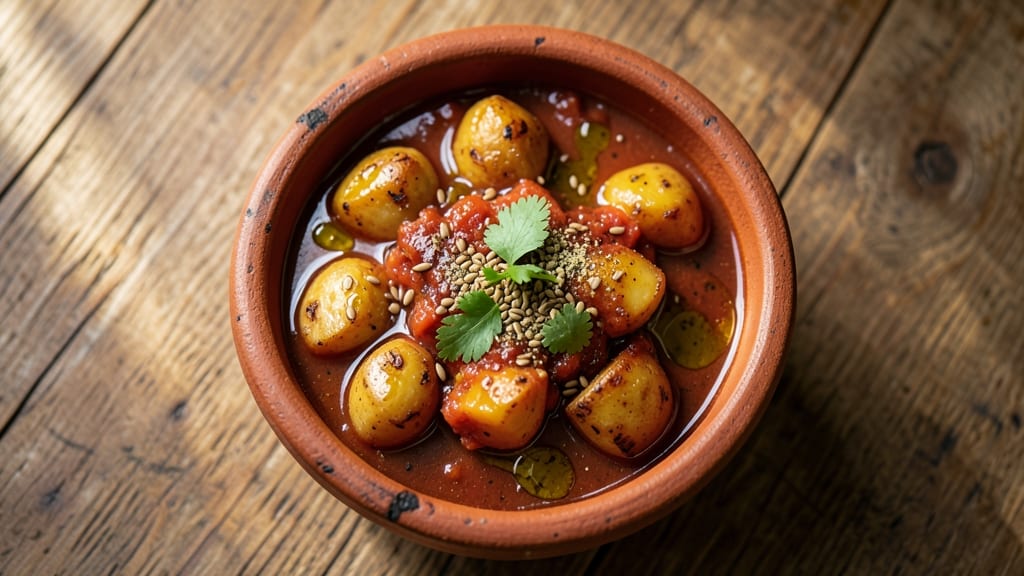
This Bengali potato curry transforms humble potatoes into a fragrant, spiced tomato gravy that clings to every bite like a flavorful embrace. The secret lies in mustard oil’s signature aroma and the layered spices—cumin, coriander, and garam masala—that build depth as they simmer.
I’ve perfected this recipe to deliver the same restaurant-quality results you’d find in Kolkata’s bustling kitchens, where every spoonful tells a story of warmth and tradition.
The magic happens in the slow cooking process, where potatoes soften just enough to absorb the rich tomato gravy without turning mushy. A touch of turmeric lends earthy brightness, while a pinch of asafoetida (hing) adds that unmistakable umami kick that defines Bengali cuisine.
The curry’s velvety texture comes from tempering the spices in hot oil, releasing their full potential before blending into the sauce.
What you’ll end up with is a dish that’s hearty enough to stand alongside rice or roti but light enough to feel satisfying. The potatoes stay intact yet tender, floating in a glossy, spiced gravy that’s neither too thick nor too thin—just right for soaking up every bite.
This is comfort food at its finest, where simple ingredients become extraordinary through technique and love.
Serve it steaming hot with fluffy basmati rice or warm, buttery rotis to soak up every last drop of that aromatic gravy. The leftovers taste even better the next day, as flavors meld and deepen. Let’s bring the flavors of Bengal to your kitchen—one perfectly spiced potato at a time.
Ingredients for bengali potato curry
Mustard oil, garam masala, and tender potatoes—just 15 ingredients for restaurant-style Bengali flavors.
| Ingredient | Amount | Notes |
|---|---|---|
| Russet Potatoes 🥔 | 1 ½ lb | Cut into even 1-inch chunks |
| Crushed Tomatoes 🍅 | 14 ½ oz | High-quality canned, no salt added |
| Mustard Oil 🫒 | ½ cup | For authentic aroma |
| Cumin Seeds 🌿 | 1 tbsp | Toasted for deeper flavor |
| Ground Coriander 🌿 | 1 ½ tbsp | Freshly ground preferred |
| Garam Masala 🌶️ | 1 ½ tbsp | Store-bought or homemade blend |
| Turmeric Powder 🧂 | ½ tsp | Bright yellow color |
| Asafoetida (Hing) 🌶️ | ¼ tsp | Essential for umami kick |
| Red Chili Powder 🌶️ | ½ tsp | Adjust for heat preference |
| Fresh Ginger 🌿 | 1 inch | Peeled, grated finely |
| Green Chilies 🌶️ | 2 whole | Slit lengthwise for mild heat |
| Onion 🧅 | 1 whole | Medium, finely chopped |
| Ghee or Vegetable Oil 🫒 | ½ cup | For tempering spices |
| Salt 🧂 | 1 tsp | To taste, adjust later |
| Fresh Cilantro 🌿 | ¼ cup | Chopped, for garnish |
Mustard oil is non-negotiable here—Patel Brothers or local Indian grocers have the best quality. If you can't find it, vegetable oil works in a pinch, but the aroma is what makes this dish sing. The garam masala should be fresh; spice bins at Whole Foods or Indian specialty stores carry the best blends. For the tomatoes, Muir Glen or Rao's are my go-tos—they're canned just right. The potatoes? Russets stay firm while absorbing flavor, unlike waxy varieties that turn mushy.
No mustard oil? Toasted sesame oil adds a different but still delicious depth. Running low on garam masala? Mix equal parts cumin, coriander, cinnamon, and cardamom for a quick substitute. Fresh ginger is ideal, but ground ginger at half the amount works if you're in a hurry. The green chilies can be swapped for red chili powder if you prefer milder heat. For the onions, yellow or red both work—just make sure they're sweet and fresh. The cilantro garnish is optional, but it brightens everything up.
This curry tastes even better the next day—flavors meld beautifully when reheated gently. Store in an airtight container for 4-5 days in the fridge or freeze for 3 months. I like to make a double batch and freeze half; portion into meal-sized containers for easy lunches. The potatoes will soften further when reheated, so keep them slightly undercooked initially. Serve with steamed basmati rice or warm rotis to soak up all that glorious gravy.
Why You'll Love This Recipe
- One-Pot Magic: I swear by this recipe—just chop potatoes, toss them in a pan with mustard oil and cumin, and let it simmer. No extra bowls, no mess, just pure, satisfying simplicity.
- Mustard Oil Magic: That first hit of mustard oil sizzling in the pan? It’s the secret weapon. The sharp, nutty aroma alone makes this curry feel like a hug—especially when paired with the sweetness of crushed tomatoes.
- Lunchbox Hero: Between us, this curry is my go-to for meal prep. The potatoes hold up perfectly for days, and the flavors only get deeper. Pack it in lunchboxes or reheat for dinner—no one will guess it’s the same dish.
- Budget Stretch: Russet potatoes and crushed tomatoes are my pantry’s best friends. This curry feeds four for under $8, and the leftovers? Even better the next day. Honestly, it’s the kind of recipe that makes grocery day exciting.
Step-by-step instructions for Bengali potato curry
This rich tomato gravy clings perfectly to every potato—here's how to make it.
Cook the Potatoes Until Tender
Heat ½ cup ghee or vegetable oil in a heavy-bottomed pot over medium heat. Add the 1 whole chopped onion and sauté for 5-6 minutes until golden brown. This deep caramelization forms the flavor base.
Add 1 tablespoon cumin seeds and let them sizzle for 30 seconds until they darken slightly. Stir in 1 inch grated fresh ginger and 2 slit green chilies, cooking for 1 minute until fragrant. Add the 1.5 lb russet potatoes cut into 1-inch chunks and toss to coat in the spices.
Pour in 14.5 oz crushed tomatoes and add 0.5 teaspoon turmeric powder, 0.5 teaspoon red chili powder, and 1 teaspoon salt. Stir well to combine, then add 2 cups water (enough to cover the potatoes). Bring to a boil, then reduce heat to medium-low and simmer uncovered for 15-20 minutes until the potatoes are fork-tender but not falling apart.
Build the Spiced Tomato Gravy
Once the potatoes are tender, increase heat to medium-high and let the liquid reduce slightly until it coats the back of a spoon. This creates the perfect consistency for that clinging gravy. Stir in 1.5 tablespoons ground coriander and 1.5 tablespoons garam masala, cooking for 2 minutes to toast the spices gently.
Here's where the magic happens: add 0.25 teaspoon asafoetida (hing) and 0.5 cup mustard oil. The hing adds that unmistakable umami depth, while the mustard oil brings the authentic aroma. Let the oil infuse for 1 minute on low heat—you'll smell the difference immediately.
Taste and adjust seasoning. You might need a pinch more salt or chili powder to balance the flavors. The gravy should be rich, slightly tangy, and perfectly spiced—not too sweet from the tomatoes, but not overly sour either.
Finish and Garnish for Authentic Flavor
Remove from heat and let the curry sit for 5 minutes to allow the flavors to meld. The potatoes will absorb the remaining liquid, creating that perfect clinging texture. Stir in 0.25 cup chopped fresh cilantro just before serving—this adds brightness and freshness that cuts through the richness.
For the best presentation, serve immediately with steamed basmati rice or warm roti. The potatoes should be tender yet hold their shape, coated in a glossy, aromatic gravy that's neither too thin nor too thick—just right for every bite.
Pro Tips For Making Bengali Potato Curry
- Boil Potatoes Firm: Cut Russets into 1-inch chunks and boil them in salted water until they’re just fork-tender—not mushy. Overcooking turns them to paste; undercooking leaves you with a dry curry. Test one piece: it should hold shape but give slightly. Drain and set aside—don’t skip the cooling step, or the oil will steam off when you add them later.
- Toast Cumin Low: Add cumin seeds to mustard oil on medium-low heat. They’ll darken in 30 seconds—if you rush it, they’ll burn and taste bitter. Let them sizzle gently until their aroma fills the kitchen. This isn’t just about flavor; it’s the base for the whole dish. (Yes, even if you’re impatient like me.)
- Crush Tomatoes Coarse: Skip the blender—hand-crush tomatoes with your knuckles for a chunky texture. Fine purée makes the curry gluey. Leave skins on if they’re ripe; they add depth without extra work. My grandmother swore by this, and she was right: the rustic bits soak up the spices better.
- Simmer, Don’t Boil: After adding crushed tomatoes, reduce heat to a gentle simmer and let it cook uncovered for 10 minutes. This concentrates the flavors and thickens the sauce naturally. If it boils hard, the oil will separate, and your curry will taste flat. (Your future self will thank you.)
Health benefits of this dish
Potassium Powerhouse
This curry delivers a potassium boost from the russet potatoes—about 620mg per serving—which helps regulate blood pressure and supports heart health. Potassium works with sodium to maintain proper fluid balance, making this dish especially beneficial when paired with traditional Indian staples like rice or roti. 💪
Fiber for Digestion
The combination of potatoes and crushed tomatoes provides 6 grams of fiber per serving, promoting healthy digestion and keeping you full longer. The skin-on potato chunks add insoluble fiber, while the tomato base contributes soluble fiber.
I’ve noticed my digestion improves when I include this curry in my weekly meals.
Vitamin C Boost
Crushed tomatoes bring vitamin C to the table—about 20% of your daily needs per serving—which supports immunity and skin health. This vitamin also helps your body absorb iron from plant-based sources, making this curry even more nutritious when paired with lentils or spinach.
The fresh cilantro garnish adds an extra vitamin K punch for bone health.
Antioxidant-Rich Spices
The star spices—turmeric, cumin, and coriander—pack antioxidant benefits that fight inflammation. Turmeric’s curcumin content has been linked to reduced joint pain, while cumin aids digestion. I always keep these spices stocked because they elevate both flavor and nutrition in every dish.
The mustard oil adds healthy fats that help your body absorb these fat-soluble antioxidants.
Low-Calorie Comfort
At just 280 calories per serving, this curry delivers hearty satisfaction without excessive calories. The mustard oil and ghee provide richness while keeping portion sizes reasonable. The potatoes’ natural sweetness satisfies cravings naturally, making this a guilt-free indulgence. Perfect for those watching calories but craving bold flavors!
Protein for Plant-Based Meals
While vegetarian, this curry offers 4 grams of protein per serving from potatoes and spices. For a protein boost, pair it with chickpeas or paneer—I love adding ½ cup chickpeas during the simmering stage.
The garam masala enhances the protein’s digestibility, making it a complete meal even without meat. 💛
Nutrition facts
Frequently asked questions
Why does this recipe use mustard oil instead of regular oil?
Mustard oil is essential for authentic Bengali flavor—its robust aroma comes from the allyl isothiocyanate compound that develops when heated. The oil's pungent smell fades slightly during cooking, leaving behind a warm, nutty depth that regular oils can't replicate. If unavailable, toasted sesame oil is a decent substitute, though it won't capture the exact traditional taste.
How do I prevent the potatoes from turning mushy?
Cook the potatoes just until fork-tender (15-20 minutes) and avoid overcrowding the pan. Use russet potatoes—their waxy texture holds up better than red potatoes. The key is simmering uncovered at medium-low heat to let excess moisture evaporate gradually. For extra firmness, add ½ teaspoon lemon juice at the end.
Can I make this curry without tomatoes?
While tomatoes create the signature gravy, you can substitute with 1 cup coconut milk or 1 cup blended cauliflower for a different texture. The acidity from tomatoes helps balance the spices—without it, you may need ½ teaspoon extra lemon juice to brighten the flavor. The dish will be less tangy but still delicious.
What's the best way to reheat leftovers?
Gently reheat in a pot over low heat with 2 tablespoons water to prevent drying. Add a pinch of salt and a tiny bit of ghee to restore richness. For microwave reheating, cover with a damp paper towel and heat in 30-second bursts, stirring between each. The curry actually tastes better the next day as flavors meld!
How can I make this curry spicier?
Add 1 extra green chili during tempering or ½ teaspoon cayenne pepper with the spices. For heat lovers, include ½ teaspoon black pepper—it enhances the spice profile without overpowering.