
Side Dishes
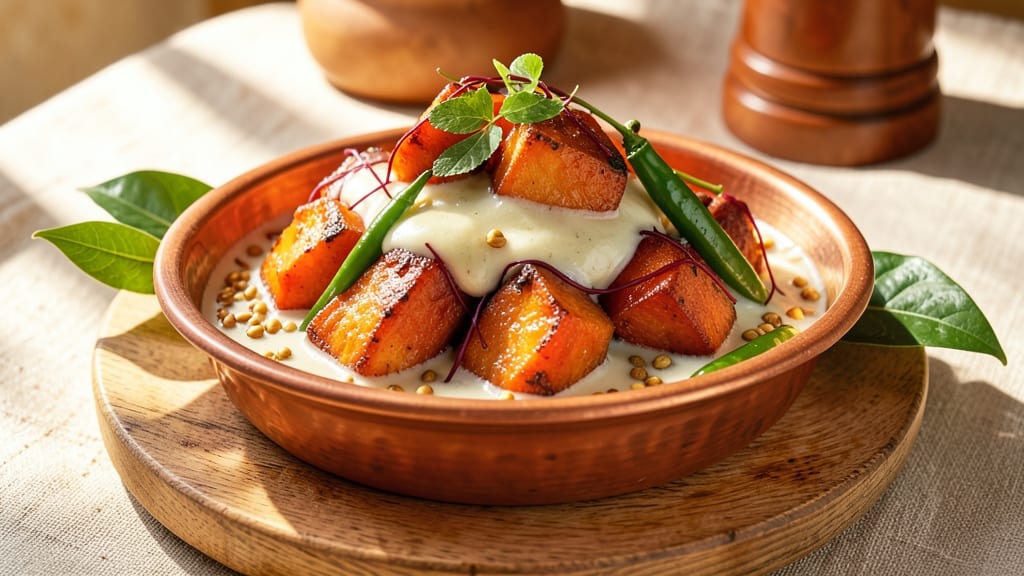
This Mangalorean sweet potato recipe delivers the perfect balance of crispy edges and tender centers in a fragrant coconut curry. The traditional technique involves roasting the sweet potatoes until caramelized, then simmering them in a spiced coconut gravy that's rich yet light.
I've adapted the classic method to ensure modern kitchens can achieve authentic results without special equipment.
The key to this dish lies in the spice blend—mustard seeds, curry leaves, and kokum create that signature Mangalorean flavor profile that's both tangy and aromatic.
What sets this apart is the two-stage cooking process: first roasting the sweet potatoes for natural sweetness and texture, then gently simmering them in the coconut curry until perfectly tender. The result is a dish that's hearty enough to stand alone but elegant enough for special occasions.
By the time you're done, you'll have a pot of golden-brown sweet potatoes swimming in a velvety coconut curry that's infused with warm spices. The crispy edges contrast beautifully with the soft interior, while the coconut gravy adds a luxurious creaminess.
This recipe captures the essence of Mangalorean cuisine while being approachable for home cooks.
The beauty of this dish is its versatility—serve it alongside steamed rice for a complete meal or pair it with grilled fish for a coastal-inspired spread. The flavors develop as it sits, making it perfect for meal prep or feeding a crowd.
Here's how to make this traditional Mangalorean sweet potato curry that will transport you to the coastal regions of Karnataka.
Ingredients for sweet potato mangalorean
These 15 ingredients bring Mangalorean coastal flavors to your kitchen with crispy edges and aromatic coconut gravy.
| Ingredient | Amount | Notes |
|---|---|---|
| Sweet Potatoes 🍠 | 2 lbs | Medium-sized, peeled, cut into even chunks |
| Coconut Milk 🥥 | 1 can (13.5 oz) | Full-fat for creaminess, unsweetened |
| Mustard Seeds 🌶️ | 1 tbsp | Whole, for tempering |
| Curry Leaves 🌿 | 10 whole | Fresh, dried if unavailable |
| Kokum 🍇 | 3 pieces | Dried, soaked in warm water |
| Green Chilies 🌶️ | 2 whole | Slit lengthwise for mild heat |
| Onion 🧅 | 1 medium | Finely chopped, yellow or red |
| Garlic Cloves 🧄 | 6 cloves | Minced, fresh preferred |
| Ginger 🌿 | 1 inch | Fresh, grated |
| Coconut Oil 🫒 | 3 tbsp | For roasting, virgin preferred |
| Salt 🧂 | 1 ½ tsp | Adjust to taste, kosher preferred |
| Turmeric Powder 🌶️ | ½ tsp | Freshly ground preferred |
| Cumin Seeds 🌿 | ½ tsp | Toasted for deeper flavor |
| Coriander Powder 🌶️ | ½ tsp | Freshly ground if possible |
| Fresh Cilantro 🌿 | ¼ cup | Chopped, for garnish |
The sweet potatoes are the star—look for firm, vibrant orange ones with no soft spots. Indian grocery stores often carry the best variety, but regular supermarkets work too. For the kokum, specialty spice shops or online retailers are your best bet if you can't find it locally. Curry leaves can be tricky to find fresh; dried works at half the amount. The coconut milk should be full-fat—canned brands like Goya or Thai Kitchen are reliable. Roast the sweet potatoes first for that signature crispy texture, then simmer gently to avoid breaking them apart.
No kokum? Lemon juice or tamarind paste adds tanginess, though it won't be identical. Substitute dried curry leaves with half the amount of dried thyme or oregano in a pinch. For the green chilies, jalapeños work well if you can't find fresh ones. The spices are non-negotiable—toast your cumin seeds in a dry pan for 30 seconds before grinding for maximum flavor. If you're short on time, pre-made garam masala can replace the individual spices (use 1 tsp). The coconut oil adds richness—don't substitute with vegetable oil for authentic flavor.
Roasted sweet potatoes keep their crispiness for 2 days in the fridge, but the curry reheats best the next day as flavors meld. Store in airtight containers with a thin layer of coconut milk on top to preserve moisture. The curry freezes beautifully for up to 3 months—portion into single servings before freezing. For meal prep, make a double batch and freeze half immediately. Garnish with fresh cilantro right before serving to keep it vibrant.
Why You'll Love This Recipe
- One-Pot Magic: I swear by this recipe when I’m too tired to wash dishes—just roast the sweet potatoes, simmer the coconut milk, and toss in the mustard seeds and curry leaves. The kokum adds that tangy magic without extra bowls.
- Tangy-Creamy Bliss: That first bite of sweet potato in the rich, slightly sour coconut gravy? It’s like a hug in a bowl. The mustard seeds pop with every spoonful, and the kokum keeps it bright—not too heavy, not too sweet.
- Leftover Hero: Honestly, this dish begs to be made extra. The flavors deepen overnight, and reheating it the next day is just as good—perfect for lazy lunches or when you need a quick, satisfying dinner.
- Budget Pantry Staples: Between us, this recipe uses ingredients you’re likely already stocking. Sweet potatoes are cheap, coconut milk adds richness without breaking the bank, and kokum (if you can’t find it fresh) comes dried for pennies. Frugal but far from basic.
Step-by-step instructions for sweet potato Mangalorean curry
Transform humble sweet potatoes into a rich, spiced coconut curry with perfectly crispy edges.
Temper the Spices for Maximum Flavor
Heat 3 tablespoons coconut oil in a heavy-bottomed pot over medium heat. Add the 0.5 teaspoon cumin seeds and let them sizzle for 30 seconds until they turn golden and fragrant. This is the foundation of the flavor—don't rush this step or you'll burn the spices.
Next, add the 1 tablespoon mustard seeds and let them pop audibly. Immediately stir in the 10 whole curry leaves, 2 whole green chilies, and 1 medium finely chopped onion. Cook for 4-5 minutes until the onion softens to a translucent golden color. The aroma should be intoxicating—this is where the Mangalorean magic begins.
Roast the Sweet Potatoes for Crispy Edges
Transfer the sweet potato chunks to a separate skillet and cook over medium-high heat for 8-10 minutes, stirring occasionally, until they develop golden brown spots and begin to soften slightly. The key here is to create a slight crust while keeping the centers tender. You want them to be firm but not mushy—they'll finish cooking in the sauce.
Once roasted, transfer the sweet potatoes to the pot with the spices. Add the 1 inch grated ginger, 6 minced garlic cloves, 0.5 teaspoon turmeric powder, and 1.5 teaspoons salt. Stir well to coat the sweet potatoes in the spice mixture. Let this cook for 2 minutes to allow the flavors to meld together.
Build the Coconut Curry Base
Pour in the 1 can (13.5 oz) coconut milk and bring the mixture to a gentle simmer. The sauce should thicken slightly as it reduces. Here's the thing—you want the sweet potatoes to absorb just enough of the coconut flavor without becoming waterlogged. Simmer for 10-12 minutes until the sweet potatoes are tender when pierced with a fork but still hold their shape.
While simmering, add the 3 soaked kokum pieces (drained) to the pot. These tart berries add a unique tangy depth to the curry. Stir gently and continue cooking until the sauce reaches a smooth, velvety consistency—it should coat the back of a spoon but still be light enough to cling to the sweet potatoes.
Finish with Fresh Herbs and Garnish
Remove the pot from heat and stir in the 0.5 teaspoon coriander powder. This final touch adds a bright, citrusy note that balances the richness of the coconut. Let the curry rest for 2 minutes to allow the flavors to settle.
Garnish with the 0.25 cup chopped fresh cilantro just before serving. The cilantro not only adds freshness but also creates a beautiful contrast against the deep golden color of the curry. Serve immediately with steamed rice or roti to enjoy the perfect balance of textures—crispy sweet potatoes, creamy coconut sauce, and fragrant spices.
Pro Tips For Making Sweet Potato Mangalorean
- SOFTEN POTATOES FIRST: DESCRIPTION:
- TOAST MUSTARD SEEDS: DESCRIPTION:
- SOAK KOKUM PROPERLY: DESCRIPTION:
- STIR IN COCONUT MILK LAST: DESCRIPTION:
Storing and reheating this dish
Fridge Storage Secrets
Let your curry cool completely before storing—this prevents condensation that makes the coconut sauce watery. Transfer to an airtight container with a tight lid, leaving ½-inch headspace for expansion. The crispy edges stay intact for 2 days in the fridge, but the sauce actually improves overnight as flavors meld.
I like using glass Pyrex containers because they're microwave-safe and show off the golden curry. 🥥
Freezer-Friendly Tips
This curry freezes beautifully for 3 months—portion into single servings before freezing to avoid thawing entire batches. Use quart-sized freezer bags (lay flat to save space) or glass containers with parchment paper between layers.
Label with dates! The texture remains perfect when reheated, though the edges may soften slightly. 🧊
Stovetop Reheating
My preferred method: Heat on medium-low with 2 tbsp water to prevent sticking. Cover and simmer for 8-10 minutes, stirring occasionally, until heated through (165°F internal temp).
The coconut sauce will thicken slightly—add a splash of water if needed. For extra crispiness, broil for 2 minutes at the end (watch closely!). 🔥
Microwave Revival
For quick meals, transfer to a microwave-safe bowl with a splash of water, cover loosely, and heat on 50% power for 2-3 minutes. Stir, then continue in 30-second bursts until hot.
The edges won't be as crispy as stovetop, but the coconut sauce stays luscious. Garnish with fresh cilantro right before eating for that restaurant-quality finish. ✨
Reviving Crispy Edges
If the edges lose their crunch after reheating, here's my trick: Spread the curry on a baking sheet and broil for 3-4 minutes until edges crisp again. The coconut sauce will separate slightly—just stir before serving. This works especially well for leftovers that need a texture boost. 💫
Nutrition facts
Frequently asked questions
What makes this Mangalorean sweet potato curry different from other coconut-based dishes?
The signature Mangalorean flavors come from the kokum and mustard seeds tempered with curry leaves—this tart, aromatic combination sets it apart. Unlike generic coconut curries, this recipe uses a two-stage cooking method: roasting the sweet potatoes first for crispy edges, then simmering in the spiced coconut gravy for perfect tenderness.
Can I substitute kokum if I can't find it?
Yes! Use 1 tablespoon lemon juice or ½ teaspoon tamarind paste for the tangy element, though it won't be identical. The kokum's unique sourness balances the coconut's richness—without it, the dish will taste more like a standard coconut curry. For best results, try to find dried kokum at Indian specialty stores or online.
How do I get the sweet potatoes extra crispy?
Roast them at medium-high heat for 10-12 minutes until golden brown spots form. The secret is using coconut oil (not vegetable oil) and stirring occasionally to ensure even browning. For extra crunch, broil the cooked curry for 2 minutes before serving—just watch closely to avoid burning.
Is this curry spicy? Can I make it milder?
The recipe includes 2 green chilies for mild heat, but you can remove the seeds and membranes for less spice. For a completely mild version, omit the chilies entirely and add ½ teaspoon sugar to balance the flavors. The coconut and kokum naturally provide enough depth without extra heat.
What's the best way to serve this dish?
Pair it with steamed basmati rice or fluffy roti to soak up the coconut gravy. For a complete Mangalorean meal, add a side of coconut chutney or a simple sambar. The crispy sweet potatoes also make a fantastic appetizer when served with a dollop of yogurt and extra cilantro.