
Side Dishes
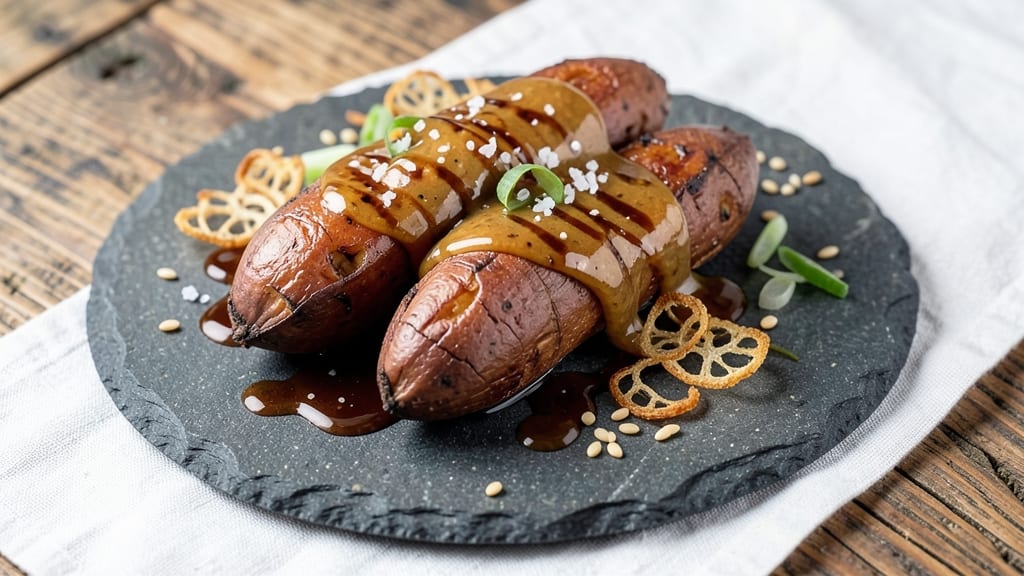
This baked Okinawan sweet potato recipe transforms humble tubers into a dish steeped in tradition and comfort, where miso caramel glaze adds a sticky-sweet depth that balances earthy flavors. 🌟 The process begins with tenderizing the sweet potatoes—whether boiled or roasted—before glazing them in a rich miso-butter blend that caramelizes beautifully in the oven.
What sets this apart is the cultural touch: inspired by Okinawan imugwa (a beloved local dish), this version keeps the soul of the original while adapting it for home cooks.
The magic lies in the 375°F oven, where sweet potatoes develop a tender interior and crisp edges, all while the miso glaze clings like molten amber. This isn’t just a side dish—it’s a celebration of Okinawan roots, where umami from the miso meets the natural sweetness of the potatoes.
The result? A dish that’s equally at home on a holiday table or a weeknight dinner, with a depth of flavor that lingers long after the last bite.
What makes this recipe stand out is its versatility: serve it as a standalone dish with a sprinkle of sesame seeds, or pair it with grilled meats and steamed greens for a full Okinawan-inspired meal.
The miso glaze isn’t just for show—it’s the heart of the dish, transforming simple ingredients into something extraordinary. Ready to bring a taste of Okinawa to your kitchen?
Here’s the secret: no shortcuts. The miso glaze requires patience—simmering until thick and glossy—but the effort pays off in a dish that’s rich, caramelized, and impossible to resist.
Whether you’re recreating a family tradition or exploring Okinawan cuisine for the first time, this recipe delivers authenticity with ease. Let’s get started.
Ingredients for baked okinawan sweet potato
Authentic Okinawan flavors meet home kitchen simplicity with these carefully chosen ingredients.
| Ingredient | Amount | Notes |
|---|---|---|
| Okinawan Sweet Potatoes 🍠 | 4 whole | Medium-sized, organic preferred |
| White Miso Paste 🧈 | ¼ cup | High-quality, fermented |
| Unsalted Butter 🧈 | ½ cup | Cold, cubed for texture |
| Brown Sugar 🍯 | ¼ cup | Light or dark variety |
| Soy Sauce 🍶 | 2 tbsp | Kosher-style preferred |
| Sesame Oil 🌾 | 1 tbsp | Toasted for aroma |
| Toasted Sesame Seeds 🌿 | 2 tbsp | For garnish |
| Garlic Cloves 🧄 | 3 cloves | Minced for glaze |
| Fresh Ginger 🌿 | 1 tbsp | Finely grated |
| Honey 🍯 | 1 tbsp | For subtle sweetness |
| Diamond Crystal Kosher Salt 🧂 | 1 tsp | For seasoning |
| Ground Black Pepper 🌶️ | ½ tsp | Freshly cracked |
| Olive Oil 🫒 | 1 tbsp | For brushing potatoes |
The Okinawan sweet potatoes are the foundation—look for vibrant orange flesh at specialty Asian markets or well-stocked grocery stores like H Mart or Trader Joe's. Their natural sweetness pairs perfectly with the umami depth of white miso. For the miso paste, Miso Master brand delivers consistent quality, but any high-quality fermented miso works. The butter should be cold and cubed to create a rich, caramelized glaze when combined with brown sugar. Fresh ginger and garlic from the produce section add bright, aromatic notes that elevate the dish beyond basic sweetness.
No white miso? Red miso works in a pinch, though it'll add a slightly deeper color. Substitute brown sugar with maple syrup at a 1:1 ratio if you prefer. For sesame oil, toasted sesame oil is ideal, but regular sesame oil can be lightly toasted in a dry pan for 30 seconds to mimic the flavor. The honey adds subtle complexity—avoid clover honey if possible, as its mild flavor won't contrast as well with the miso. Fresh ginger and garlic can be swapped for powdered versions at half the amount, though fresh is preferred for authentic flavor. If you're short on time, pre-minced garlic from the freezer section works fine.
Store uncooked sweet potatoes in a cool, dark place for up to 2 weeks, or refrigerate for longer shelf life. The miso glaze mixture can be made 1 day ahead and stored in an airtight container in the fridge. Reheat gently before using. Cooked sweet potatoes reheat beautifully—place them in a 350°F oven for 10-15 minutes with a splash of water to restore moisture. The glaze keeps for 1 week refrigerated, making it perfect for quick weeknight dinners. For meal prep, portion the glazed potatoes into individual containers and store with a sprinkle of sesame seeds to maintain freshness.
Why You'll Love This Recipe
- Five-Ingredient Magic: The pantry staples you already own—miso, butter, sugar—turn into something special with zero fuss. Just slice, toss, and bake while you handle the rest of dinner. (Yes, even on a Tuesday night.)
- Umami Caramel Bliss: That white miso paste? It’s the secret weapon—deep, savory, and just sweet enough to make your taste buds sing. The soy sauce adds a little edge, while the brown sugar caramelizes into a sticky, irresistible crust.
- Office Lunch Hero: Make a big batch on Sunday, and you’ve got perfect portions for the week. Cool them down, pack them in containers, and reheat in seconds—no sad, soggy leftovers here.
- Budget Stretch: Okinawan sweet potatoes are cheaper than regular ones, and a little butter and miso go a long way. This recipe feeds four for under $10, and the flavors feel like a fancy meal. Honestly, who knew comfort could be this affordable?
Step-by-step instructions for baked Okinawan sweet potatoes with miso-caramel glaze
Transform humble sweet potatoes into restaurant-worthy bites with this umami-rich glaze.
🔥 Step 1: Prep and Roast the Sweet Potatoes
Preheat your oven to 400°F. Scrub the 4 whole Okinawan sweet potatoes clean with a vegetable brush, removing any dirt but leaving the skin intact—this helps trap moisture during baking. Using a sharp knife, pierce each potato 4-5 times with a fork to allow steam to escape and prevent bursting.
Place the potatoes directly on the middle rack of your oven (no need for a baking sheet). Roast for 45-55 minutes until a knife slides in easily and the flesh is tender when pierced. The skin should be slightly wrinkled but not charred. Real talk: if you cut into one early and it's still firm, give them another 10-15 minutes—undercooked potatoes will turn mushy under the glaze.
👨🍳 Step 2: Make the Miso-Caramel Glaze
While the potatoes roast, combine 0.25 cup white miso paste, 0.5 cup unsalted butter, 0.25 cup brown sugar, 2 tbsp soy sauce, 1 tbsp sesame oil, 1 tbsp honey, 1 tbsp finely grated fresh ginger, and 3 minced garlic cloves in a small saucepan. Place over medium-low heat and whisk constantly for 8-10 minutes until the mixture thickens to a glossy, syrupy consistency.
Here's the thing—you want the glaze to coat the back of a spoon but still flow smoothly. If it starts to separate or burn, reduce the heat immediately. The miso will give it that deep umami flavor, while the butter and brown sugar create that perfect sticky-sweet balance. Taste as you go and adjust sweetness with more honey if needed, or saltiness with a pinch of the 1 tsp Diamond Crystal kosher salt.
🥘 Step 3: Assemble and Glaze the Potatoes
Carefully transfer the roasted potatoes to a serving platter. Using a spoon, gently open each potato lengthwise (they should split easily at this point). Brush the insides and outsides of each potato half with the miso-caramel glaze, working quickly so the glaze doesn't harden. The potatoes should be hot enough to help the glaze melt and cling beautifully.
Return the glazed potatoes to the oven (no need to preheat) for 5-7 minutes to let the glaze set and caramelize slightly. Watch closely—the glaze should develop a glossy sheen and lightly caramelize at the edges. If it starts to darken too quickly, remove them sooner. The contrast between the tender potato and the sticky-sweet glaze is what makes this dish special.
🍽️ Step 4: Garnish and Serve
Remove the potatoes from the oven and let them cool for 2-3 minutes to allow the glaze to set slightly. Sprinkle evenly with 2 tbsp toasted sesame seeds and a final pinch of 0.5 tsp ground black pepper. The sesame seeds add a nutty crunch that cuts through the richness of the glaze, while the pepper brightens the flavors.
Serve immediately while the glaze is still warm and sticky. Each bite should deliver a perfect balance of sweet, salty, and umami flavors with a satisfying contrast between the soft potato and the caramelized glaze. For an extra touch, drizzle any remaining glaze over the top before serving—it's that good.
Pro Tips For Making Baked Okinawan Sweet Potato
- Pierce Before Baking: Use a fork or skewer to poke holes all over the sweet potatoes—about 12-15 per potato—before baking. I learned this the hard way: skipping it means steam gets trapped, turning your dish into a sad, gummy mess instead of caramelized perfection.
- Whisk Miso First: Mix the white miso paste with the soy sauce and brown sugar before adding butter—this ensures even distribution. My first few batches had clumpy miso pockets; now I stir it into a smooth paste like hummus first.
- Don’t Overmix Butter: Fold the melted butter into the miso mixture just until combined—overworking it turns it greasy. Think "marbled," not "smooth," for that rich, balanced flavor.
- Bake at 375°F: Too hot (400°F+) burns the edges before the centers cook; too low (350°F) leaves them doughy. 375°F is the sweet spot—about 45-55 minutes, depending on size. Use a thermometer: 205°F internal is perfect.
Perfect pairings for these flavors
Okinawan-Inspired Mains
Pair your glazed sweet potatoes with Okinawan-style pork belly slow-cooked with miso and soy sauce—it mirrors the dish's umami depth. I like using 4-6 oz slices per person, braised until tender. The contrast of crispy exterior and tender interior complements the potatoes beautifully. 🥓
For a vegetarian option, serve alongside miso-glazed eggplant—simmer 2 medium eggplants in the same glaze for 20 minutes until caramelized. The earthy eggplant absorbs the sweet-savory sauce, creating a harmonious plate. Both dishes share the same cultural roots while offering different textures.
Japanese Comfort Sides
Add steamed bok choy with a sprinkle of toasted sesame seeds—its peppery bite balances the sweet potatoes' richness. Toss 2 bunches with 1 tbsp sesame oil and a pinch of salt before steaming for 5 minutes. The simplicity lets the potatoes shine while adding freshness. 🥬
For heartier meals, include miso soup with tofu and wakame seaweed. Use 1 cup dashi stock, 2 tbsp white miso, and ½ block silken tofu cubed. The soup's umami echoes the glaze, creating a cohesive Okinawan-inspired meal. Serve in small bowls alongside the potatoes for a complete experience.
Protein Pairings
Grilled Okinawan awamori-marinated chicken thighs elevate the dish. Marinate 4 thighs in ¼ cup awamori, 1 tbsp soy sauce, and 1 tsp grated ginger for 2 hours, then grill until 165°F internal. The citrusy marinade cuts through the sweet potatoes' caramelized richness. 🍗
For seafood lovers, try miso-butter shrimp—sauté 1 lb shrimp in 2 tbsp butter, 1 tbsp white miso, and 1 tsp honey until pink. The shrimp's sweetness mirrors the potatoes while adding a luxurious touch. Serve with a squeeze of lemon to brighten the plate.
Beverage Harmony
Pair with Okinawan awamori (a local distilled spirit) served chilled. Its herbal notes complement the dish's umami-sweet balance. For non-alcoholic options, try genmaicha green tea—its toasted rice flavor adds warmth without overpowering. 🍶
Avoid heavy wines; opt for dry Riesling instead. Its crisp acidity cleanses the palate between bites of rich, glazed potatoes. The wine's citrus undertones mirror the ginger in the glaze, creating a perfect match.
Nutrition facts
Frequently asked questions
Why does this recipe use whole Okinawan sweet potatoes instead of peeled and cubed ones?
Roasting whole potatoes preserves their natural moisture and creates a satisfying contrast between tender flesh and crisp skin. The skin also adds fiber and nutrients while preventing the potatoes from drying out under the glaze. Plus, it's a traditional Okinawan preparation method that keeps the dish authentic.
Can I substitute regular sweet potatoes for Okinawan ones?
Yes, but expect slightly different results. Okinawan sweet potatoes have a creamier texture and less natural sweetness, which balances the miso glaze perfectly. Regular sweet potatoes will be sweeter and may need 1 extra tablespoon of honey in the glaze to match the flavor profile. Choose orange-fleshed varieties for the closest texture.
How do I fix the glaze if it separates or burns while cooking?
If the glaze separates, immediately remove from heat and whisk vigorously. For burned bits, strain through a fine-mesh sieve to remove charred particles. To prevent burning next time, reduce heat to low-medium and stir constantly. The glaze should thicken gradually—it's ready when it coats the back of a spoon but still flows smoothly.
What's the best way to reheat leftover glazed sweet potatoes?
Place potatoes in a 350°F oven for 10-15 minutes with 1 tablespoon water in the pan to restore moisture. Avoid microwaving—the glaze may become rubbery. For extra crispiness, broil for 2-3 minutes at the end, watching closely to prevent burning.
Can I make this recipe without miso paste?
For a similar umami depth, substitute with 1 tablespoon soy sauce + 1 teaspoon white vinegar plus ½ teaspoon fish sauce (for authentic Okinawan flavor). The glaze will be less complex but still delicious. For a vegetarian option, use 1 tablespoon nutritional yeast mixed with 1 teaspoon garlic powder instead.