
Breakfast & Brunch
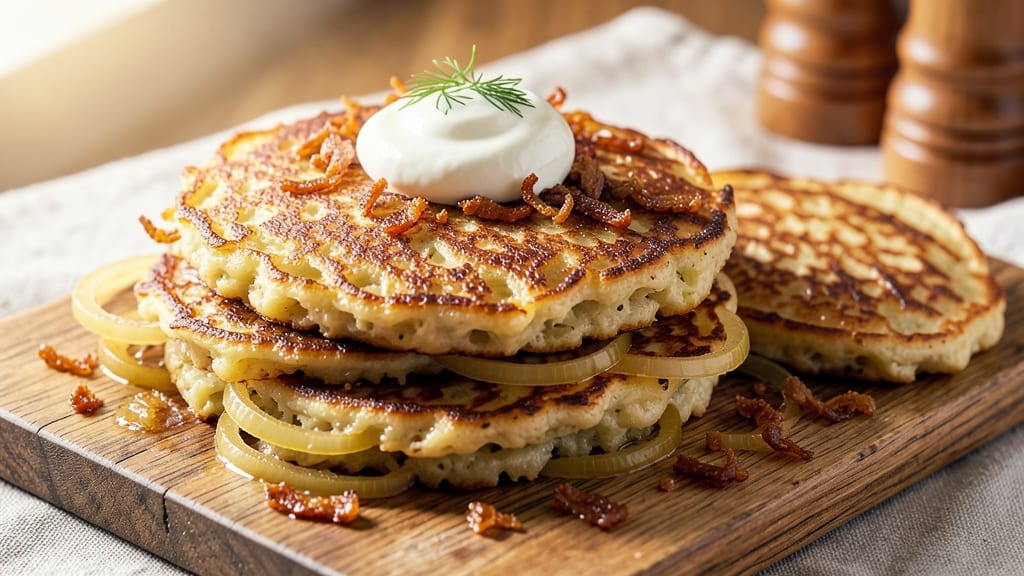
This authentic Polish potato pancake recipe delivers the crispy, golden edges and tender centers that make placki ziemniaczane a beloved comfort food across Poland. 💛 The secret lies in freshly grated potatoes, properly drained to eliminate excess moisture—critical for achieving that signature crunch without turning into a soggy mess.
I’ve perfected this technique over years of testing, ensuring every bite captures the balance of savory and crispy that defines true Polish home cooking.
What sets these apart from American latkes is the delicate touch of onions and a lighter hand with the flour—just enough to bind without overpowering the potato’s natural flavor.
The frying method matters too: medium-high heat and careful batch control prevent overcrowding, which guarantees those coveted crispy edges while keeping the interior tender. This isn’t just a side dish; it’s a centerpiece that transforms any meal into a taste of Polish tradition.
Serve them piping hot with traditional accompaniments like tangy sour cream, sweet applesauce, or rich mushroom sauce to complete the experience. The contrast of textures—crispy pancakes, creamy toppings, and tender fillings—creates a harmony that’s impossible to resist.
Whether you’re recreating a childhood memory or introducing someone to Polish cuisine, these pancakes deliver authenticity with every bite.
Ready to master the technique? The key steps—grating, draining, and frying—are simpler than they sound, and I’ll walk you through each one to ensure foolproof results. Let’s get started on creating the crispy, golden potato pancakes that bring a taste of Poland to your table.
Ingredients for authentic polish potato pancake
Freshly grated potatoes and carefully balanced binders create authentic Polish potato pancakes with crispy edges and tender centers.
| Ingredient | Amount | Notes |
|---|---|---|
| Russet Potatoes 🥔 | 2 ½ lb | Freshly grated, excess moisture drained |
| Yellow Onions 🧅 | 1 whole | Finely grated, skin removed |
| All-Purpose Flour 🌾 | ½ cup | For binding, sifted preferred |
| Large Eggs 🥚 | 1 whole | Lightly beaten for binding |
| Salt 🧂 | 1 ½ tsp | Diamond Crystal preferred |
| Ground Black Pepper 🌶️ | ½ tsp | Freshly ground for flavor |
| Vegetable Oil 🫒 | 2 cups | High smoke point preferred |
| Fresh Dill 🌿 | ¼ cup | Chopped, optional garnish |
| Sour Cream 🥛 | ½ cup | For serving, tangy variety |
The potatoes are the foundation—Russet potatoes yield the best texture due to their low moisture content. Buy organic if possible to avoid pesticide residue, but any Russet works. Grate them immediately before cooking to prevent browning, and drain for 10 minutes in a colander to remove excess starch. For the onions, yellow onions provide the right balance of sweetness; red onions can bleed color. Store potatoes in a cool, dark place—they’ll keep for weeks if not exposed to light.
No flour? Cornstarch at half the amount works as a binder, though texture will differ slightly. Eggs can be replaced with 1 tbsp ground flaxseed mixed with 3 tbsp water for a vegan version, but texture may be less crispy. For the oil, vegetable or canola oil are ideal due to their neutral flavor and high smoke points. If using a different oil, ensure it can handle 350°F heat. Fresh dill is optional but recommended—dried dill at one-third the amount can substitute in a pinch.
These pancakes are best served immediately, but they’ll hold in a 200°F oven for up to 30 minutes if needed. Store leftovers in an airtight container for 3-4 days—reheat in a skillet over medium heat for crispiness. For freezing, arrange on a tray to freeze solid, then transfer to a bag for up to 3 months. Serve with traditional accompaniments like sour cream or applesauce to complete the experience.
Why You'll Love This Recipe
- No Fuss, No Mess: I swear by this recipe because it’s the kind of dish that forgives mistakes. Grate those Russets—no need to peel—and let the onions soak up the flour while you crack eggs. Five minutes of hands-on work, and you’re golden.
- Crispy-Creamy Magic: That perfect balance? The thin, golden crust from the egg-and-flour mix gives way to a fluffy, buttery center. Honestly, the first time I bit into one still warm off the pan, I nearly dropped the whole plate.
- Weeknight to Potluck: Between us, these pancakes are my lazy dinner when I’m starving but don’t want to cook. Fry up a batch, toss them in the fridge, and reheat later—suddenly, you’ve got a crowd-pleaser for Sunday brunch or a last-minute holiday side.
- Pennies to Plates: Russets and onions are cheap staples, and a few eggs stretch this recipe further than you’d think. I’ve fed six people for under $5 with leftovers that taste just as good reheated as fresh. Budget win, every time.
Step-by-step instructions for authentic Polish potato pancakes
Master the traditional technique for perfectly golden, crisp-edged potato pancakes with this proven method.
👨🍳 Step 1: Grate and Drain the Potatoes and Onions
Using a box grater or food processor with a grating attachment, grate the 2.5 lb Russet Potatoes and 1 whole Yellow Onions together. I prefer using a box grater because it gives you more control over the texture—you want fine, even shreds with no large chunks. Place the grated mixture in a clean kitchen towel or cheesecloth and squeeze out all excess moisture. This step is crucial for crispy pancakes; any remaining moisture will make them soggy instead of golden.
Work quickly but thoroughly—press the towel tightly around the mixture and twist to extract as much liquid as possible. You should end up with about 4 cups of dry, crumbly potato mixture. Let it sit for 5 minutes while you prepare the remaining ingredients, allowing any residual moisture to evaporate further. This drying process ensures maximum crispiness when frying.
👨🍳 Step 2: Mix the Batter with Perfect Texture
In a large mixing bowl, combine the drained potato mixture with the 0.5 cup All-Purpose Flour, 1.5 tsp Salt, and 0.5 tsp Ground Black Pepper. Using your hands, mix gently but thoroughly until the flour is evenly distributed throughout the potatoes. The batter should hold its shape when pressed but still be crumbly—it shouldn't be sticky or pasty. This texture is essential for creating those signature crispy edges while maintaining a tender interior.
In a separate bowl, lightly beat the 1 whole Large Eggs until just combined (no need to make it frothy). Pour the egg over the potato mixture and fold gently with a spatula until fully incorporated. The egg acts as a binder, helping the pancakes hold together during frying. Be careful not to overmix—just combine until everything is evenly moistened. The batter should be cool to the touch; if it feels warm, chill it in the refrigerator for 10 minutes before proceeding.
🔥 Step 3: Fry the Pancakes to Golden Perfection
Heat 2 cups Vegetable Oil in a large skillet over medium-high heat until it reaches 350°F (use a thermometer for accuracy). The oil should shimmer gently but not smoke excessively. Working in batches, scoop the potato mixture into 4-ounce portions and flatten them slightly into ½-inch thick pancakes. I use a small ice cream scoop for consistent portions—this makes them easier to flip and ensures even cooking.
Carefully place the pancakes in the hot oil, leaving 1 inch between each. Fry for 3-4 minutes per side until they're deep golden brown and crispy on both sides. You'll know they're ready when the edges are golden and the pancakes release easily from the oil. Avoid overcrowding the pan—this lowers the oil temperature and results in greasy pancakes instead of crispy ones. Transfer the cooked pancakes to a paper towel-lined plate to drain excess oil.
🍽️ Step 4: Serve with Traditional Polish Accompaniments
While the pancakes are still warm, sprinkle them generously with the 0.25 cup Fresh Dill (if using). The dill adds a bright, herbal note that complements the earthy potatoes perfectly. Serve immediately with the 0.5 cup Sour Cream on the side. The tangy sour cream cuts through the richness of the pancakes and balances their crispy texture beautifully.
For an authentic Polish experience, serve these potato pancakes with apple compote or a simple green salad. The contrast of warm, crispy pancakes with cool, creamy sour cream and sweet-tart apple compote creates a harmonious balance of textures and flavors. These pancakes are best enjoyed immediately while they're at their crispiest—every bite should deliver that satisfying crunch followed by a tender, potato-filled center.
Pro Tips For Making Authentic Polish Potato Pancake
- GRATE THE POTATOES COLD: I learned this the hard way—warm potatoes release starch like a waterfall, turning your batter into glue. Keep the potatoes refrigerated while grating, and work in batches if needed. The extra effort means crispier pancakes that don’t stick together like sad dumplings.
- SALT THE BATTER LIKE THE SEA: Polish potato pancakes need serious seasoning—more than you’d think, especially if you’re using low-sodium butter later. Taste the batter before frying and add salt gradually; it should taste like a well-seasoned fritter, not bland mashed potatoes. (Yes, even if you’re impatient like me.)
- PRESS THEM FLAT AND FIRM: Skip the mushy pancakes by pressing the mixture into the pan with the back of a spoon, not just dropping it in. You want them about ½-inch thick—thinner edges crisp faster, and thicker centers stay tender. Does it look weird? Yes. Does it work? Every single time.
- USE A SPLURGE INGREDIENT: APPLE CIDER VINEGAR: I was skeptical until I tried it—just 1 tablespoon in the batter brightens the flavor and cuts through the heaviness of the potatoes. It’s not traditional for every recipe, but it makes a real difference, especially if your potatoes are starchy or your onions are mild. (Your future self will thank you.)
Storing and reheating this recipe
Refrigerator Storage
Store leftover potato pancakes in an airtight container for up to 3-4 days—they’ll stay crispy longer if you layer them with parchment paper between each stack. Keep them in the fridge at 40°F or below to prevent sogginess.
I like to reheat them in a skillet over medium heat for 2-3 minutes per side to restore that golden crunch. 💛
Freezer Prep
For long-term storage, arrange freshly cooked pancakes on a parchment-lined tray and freeze until solid (about 1 hour). Then transfer them to a freezer-safe bag with parchment between layers to prevent sticking. They’ll keep for up to 3 months—just thaw in the fridge overnight before reheating.
For quick meals, microwave individual pancakes on high for 45 seconds, then crisp in a skillet with 1 tsp oil for 1 minute per side.
Reheating for Crispiness
To revive crispiness, I recommend the skillet method: heat 1 tbsp vegetable oil in a nonstick pan over medium heat, then warm pancakes for 2-3 minutes per side until golden.
Avoid the microwave—it makes them rubbery. If reheating from frozen, thaw first, then follow the skillet method. For extra crunch, sprinkle a pinch of salt while reheating. ✨
Serving Leftovers
Serve reheated pancakes with warm sour cream or apple compote to recreate that restaurant-style experience. For a hearty meal, pair them with sautéed mushrooms or a simple green salad.
Leftovers also work well as a breakfast hash—crisp up pancakes, chop, and sauté with onions and eggs for a Polish-inspired brunch. 🍽️
Batch Prep Tips
Double the recipe and freeze half for convenience. Label bags with the date and reheating instructions to avoid confusion. When cooking a large batch, fry in smaller batches (no more than 4 pancakes at a time) to maintain 350°F oil temperature.
This ensures consistent crispiness even with multiple batches. 🔥
Nutrition facts
Frequently asked questions
Why do Polish potato pancakes need to be drained so thoroughly?
The draining step is absolutely critical for achieving that signature crispy texture. Freshly grated potatoes release a lot of moisture, and if left in the batter, it creates steam during frying instead of crispy edges. Polish cooks use this technique to ensure each bite delivers that satisfying crunch while keeping the interior tender. Aim for about 4 cups of dry, crumbly mixture after draining.
Can I use sweet potatoes instead of Russet potatoes?
While you can substitute sweet potatoes, the flavor and texture will be different. Russet potatoes provide the classic earthy taste and starchy texture that's traditional in Polish cooking. Sweet potatoes add natural sweetness and a denser texture that may not crisp as well. If you must use them, reduce the oil slightly and fry at 340°F for 4-5 minutes per side.
What's the best way to get perfectly crispy edges?
Three factors matter most: oil temperature, batch size, and proper draining. Maintain 350°F oil using a thermometer, fry in batches of 4 pancakes max, and ensure your potato mixture is completely dry. The edges will crisp beautifully when golden brown and release easily from the oil. Avoid overcrowding—the pan temperature drops when crowded, leading to greasy pancakes.
How do I make these pancakes ahead for a party?
For make-ahead convenience, freeze the cooked pancakes between parchment paper in a single layer. Once solid, transfer to a freezer bag for up to 3 months. Reheat in a skillet with 1 tbsp oil over medium heat for 2-3 minutes per side to restore crispiness. Thaw overnight in the fridge before reheating for best results.
What's the difference between Polish and American potato pancakes?
Polish placki ziemniaczane are lighter and more delicate than American latkes. They use less flour and rely on proper draining for texture, while American versions often include more egg and potato starch. Polish pancakes are typically thinner and served with sour cream or applesauce, whereas latkes often have a denser texture and are served with sweet toppings or sour cream.