
Side Dishes
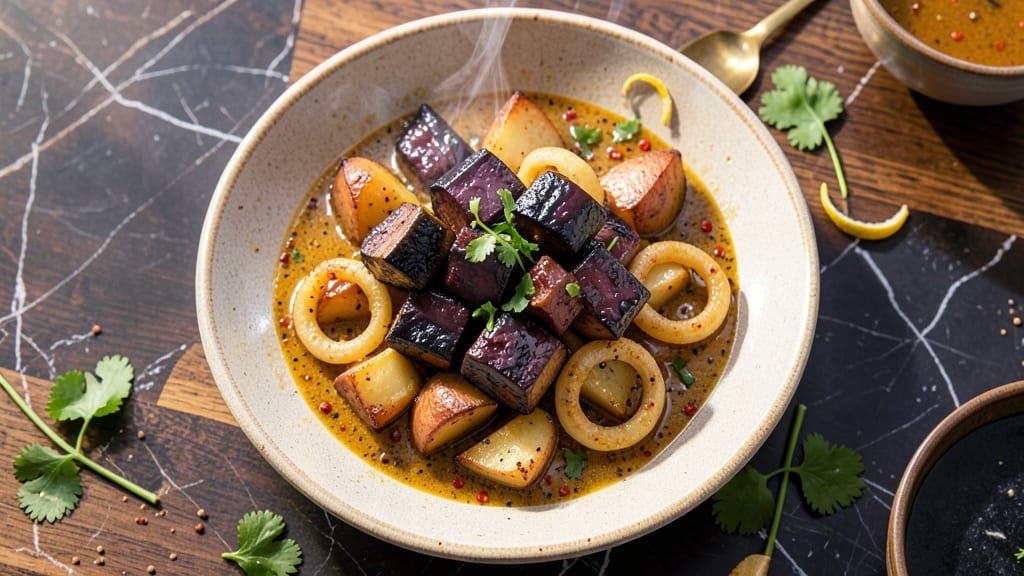
This aubergine and potato curry recipe transforms humble vegetables into a rich, spiced tomato velouté with charred eggplant at its heart. The secret lies in slow-cooked spices that deepen into aromatic layers, while the charred eggplant adds smoky depth.
What makes this dish special is how it balances traditional techniques—like tempering whole spices—with modern twists, such as a velvety coconut milk finish.
The process begins with charring the eggplant over an open flame, unlocking its natural sweetness and adding a smoky complexity. Sautéed onions and garlic form the base, while a blend of warm spices—cumin, coriander, and turmeric—infuse the tomato sauce with layers of flavor.
The potatoes absorb the spiced velouté, becoming tender yet firm, while the charred eggplant pieces melt into the sauce, creating a harmonious texture.
By the end, you’ll have a curry that’s deeply flavorful yet balanced, with a velvety sauce that coats every bite. The dish is adaptable—swap coconut milk for yogurt for a tangier twist or add a splash of cream for extra richness.
It’s the kind of meal that feels both comforting and sophisticated, perfect for a weeknight dinner or a special gathering.
Serve with basmati rice or warm naan to soak up every last drop of that spiced tomato velouté. The charred eggplant and tender potatoes make this curry a standout vegetarian dish that’s sure to become a staple in your recipe collection.
Ingredients for aubergine and potato curry
Charred eggplant and spiced potatoes create this velvety tomato-coconut curry with deep aromatic layers.
| Ingredient | Amount | Notes |
|---|---|---|
| Aubergine (Eggplant) 🍆 | 1 ½ lb | Chopped into 1-inch cubes |
| Russet Potatoes 🥔 | 1 ½ lb | Cut into 1-inch chunks |
| Yellow Onion 🧅 | 1 whole | Finely chopped |
| Garlic Cloves 🧄 | 6 cloves | Minced |
| Canned Crushed Tomatoes 🍅 | 14 ½ oz | San Marzano preferred |
| Coconut Milk 🥥 | 13 ½ oz | Full-fat canned |
| Ground Cumin 🌿 | 1 tsp | Toasted for depth |
| Ground Coriander 🌿 | 1 tsp | Freshly ground preferred |
| Turmeric Powder 🌶️ | ½ tsp | Bright yellow color |
| Ginger Root 🌿 | 1 tbsp | Freshly grated |
| Vegetable Oil 🫒 | ¼ cup | For charring eggplant |
| Salt 🧂 | 1 ½ tsp | Kosher or sea salt |
| Black Pepper 🌶️ | ½ tsp | Freshly ground |
| Fresh Cilantro 🌿 | ¼ cup | Chopped for garnish |
| Lemon Juice 🍋 | 1 tbsp | Freshly squeezed |
The eggplant needs to be charred properly—direct flame or broiler gives that smoky depth. Indian grocery stores often carry the best aubergines, but any firm, glossy-skinned eggplant works. For the potatoes, Russets or Yukon Golds hold up best to the long cooking time. The San Marzano tomatoes? Worth the splurge—they’re sweeter and less acidic, letting the spices shine. If you can’t find them, any high-quality crushed tomatoes will do, just taste and adjust the salt accordingly.
No coconut milk? Full-fat yogurt or cashew cream adds richness, though the texture will be slightly thicker. Fresh ginger is ideal, but powdered works at half the amount if you’re in a pinch. The spices should be toasted lightly before adding—dry toast in a pan for 30 seconds to wake up their flavors. For extra depth, add a pinch of cinnamon or cardamom if you have them. The charred eggplant can be prepped ahead—just store it in the fridge until ready to cook.
This curry tastes even better the next day as flavors meld. Store in an airtight container for up to 5 days in the fridge. Freezes beautifully for 3 months—portion into containers for easy reheating. The sauce thickens as it cools, so add a splash of water or coconut milk when reheating. Garnish with fresh cilantro and a squeeze of lemon just before serving to brighten the dish.
Why You'll Love This Recipe
- One-Pan Magic: I swear by this recipe when I’m too tired to scrub pots—just chop, toss everything on a sheet pan, and roast. The potatoes caramelize right alongside the aubergine, so you’re not stuck with two separate dishes.
- Garlic Bomb Depth: That crushed tomato base with fresh garlic? It’s the kind of flavor that lingers. The aubergine soaks it up like a sponge, giving it this smoky-sweet richness that’s impossible to resist.
- Lunchbox Hero: Between us, this curry is my go-to for meal prep. Pack it in containers with rice or naan, and it stays delicious for days—no sad, soggy leftovers here. My kids actually eat their veggies this way.
- Pantry Staple Power: Honestly, this recipe won’t break the bank. Russets and aubergines are cheap, canned tomatoes last forever, and you’re using basic spices. It’s the kind of dish that makes grocery day feel like a victory.
Step-by-step instructions for spiced aubergine and potato curry
Here's how to create a rich, aromatic curry with perfectly charred eggplant and tender potatoes.
Char the Aubergine and Potatoes for Depth of Flavor
Heat the 0.25 cup vegetable oil in a large skillet over medium-high heat until shimmering. Add the 1.5 lb chopped aubergine in batches, working in batches to avoid crowding. Cook undisturbed for 3-4 minutes per side until deeply charred with blackened spots—this develops intense smoky flavor. Transfer to a plate.
In the same skillet, add the 1.5 lb cut russet potatoes and cook for 4-5 minutes, turning occasionally, until golden brown in spots. The potatoes will finish cooking later, but this step builds flavor. Transfer to join the aubergine.
Build the Spiced Tomato Base
In the same skillet, reduce heat to medium and add the 1 whole finely chopped yellow onion. Cook for 5-6 minutes until softened and translucent. Add the 6 minced garlic cloves and 1 tbsp freshly grated ginger root, cooking for 30 seconds until fragrant—don't let the garlic burn.
Stir in the 1 tsp ground cumin, 1 tsp ground coriander, and 0.5 tsp turmeric powder, toasting for 30 seconds until aromatic. Pour in the 14.5 oz canned crushed tomatoes and 1.5 tsp salt, scraping up any browned bits. Simmer uncovered for 10 minutes until the sauce thickens slightly and the raw tomato taste disappears.
Simmer the Vegetables in Spiced Sauce
Return the charred aubergine and potatoes to the skillet. Add 0.5 tsp black pepper and 1 cup water, then bring to a gentle simmer. Cover and cook for 20-25 minutes, stirring occasionally, until the potatoes are fork-tender with no resistance. The sauce should coat the vegetables but remain slightly loose.
Here's the thing—if the sauce thickens too much, add 2-3 tablespoons water to maintain the velouté consistency. The potatoes should be soft enough to mash slightly between your fingers when tested.
Finish with Coconut Milk and Brighten with Lemon
Reduce heat to low and stir in the 13.5 oz coconut milk, mixing gently to combine. Simmer uncovered for 5-7 minutes until the sauce reaches your desired creaminess—it should coat the back of a spoon but remain pourable. Taste and adjust seasoning with additional salt if needed.
Remove from heat and stir in the 1 tbsp freshly squeezed lemon juice. This brightens the rich flavors and balances the coconut milk's sweetness. Let the curry sit covered for 5 minutes to allow the flavors to meld before serving.
Garnish and Serve with Fresh Herbs
Transfer the curry to serving bowls and garnish with 0.25 cup chopped fresh cilantro. The herbs add a fresh contrast to the deep, spiced flavors. Serve immediately with basmati rice or warm naan bread to soak up the velouté sauce.
Each spoonful should deliver smoky charred eggplant, tender potatoes, and a balance of warm spices with bright citrus notes. The sauce should cling to the vegetables and coat your spoon with a luxurious, velvety texture.
Pro Tips For Making Aubergine And Potato Curry
- CHAR THE AUBERGINE FIRST: I learned this the hard way—skipping the char on the eggplant leaves it soggy in curry. Cut into 1-inch chunks, toss with 1 teaspoon salt, and sear in a dry pan over medium-high for 8-10 minutes until blackened in spots. The smoky depth is the thing that matters most, not just the color.
- CUBE POTATOES UNIFORMLY: Russets break unevenly, and that means some pieces stay hard while others turn to mush. Aim for 1.5-inch cubes—big enough to hold shape but small enough to cook through. Soak in cold water for 10 minutes first, then drain; this guarantees even cooking and prevents a gummy texture.
- SOFTEN ONIONS LOW AND SLOW: After burning three batches, I finally figured out: onions need patience. Cook them in 1 tablespoon oil over medium-low heat for 10-12 minutes until translucent but not browned. Rushing this step adds bitterness that no amount of spices can fix—yes, even if you’re impatient like me.
- SIMMER TOMATOES UNTIL THICK: Dump in the crushed tomatoes early, but don’t walk away. Simmer uncovered for 15 minutes on medium heat, stirring occasionally, until the sauce reduces by half. This concentrates the flavor and makes the curry richer—skip this, and you’ll end up with a watery mess.
Essential equipment for this recipe
Heavy-Bottomed Pot
Your 5-6 quart heavy-bottomed pot is the workhorse of this curry—I swear by my All-Clad Stainless Steel Dutch Oven for even heat distribution. The thick base prevents scorching when you're charring the eggplant and simmering the potatoes.
If you don't have one, a cast-iron skillet works beautifully, though it requires more attention to heat control. 🔥
Tongs for Charred Veggies
Use a pair of long-handled tongs (I recommend OXO Good Grips) to safely flip the eggplant and potatoes during charring. The long handles keep your fingers away from the open flame or broiler, and the grips prevent slipping when handling hot, charred vegetables.
This is especially important when working with batches to avoid crowding.
Fine-Mesh Strainer
A fine-mesh strainer becomes handy if you want to strain the sauce for a smoother consistency. I like the EZ Clean Stainless Steel Strainer because it's durable and easy to clean.
You can strain the sauce after simmering to remove any potato skins or eggplant bits, creating a velvety texture that's perfect for drizzling over rice or dipping naan.
Immersion Blender
For an ultra-smooth sauce, an immersion blender is a game-changer. I use the Ninja Professional to blend the sauce directly in the pot, which preserves all the flavors and aromatics.
This step isn't necessary but elevates the dish to restaurant-quality. Just pulse for 10-15 seconds until smooth, then return to the heat to warm through. ✨
Spice Toasting Pan
A small non-stick skillet (like my Calphalon Classic) is perfect for toasting the spices before adding them to the curry. Toasting whole spices in a dry pan for 30 seconds intensifies their flavors and reduces bitterness.
If you don't have a small skillet, toast them directly in the large pot before adding the onions—just be sure to scrape up all the toasted bits for maximum flavor.
Lid for Even Cooking
Your pot's lid is just as important as the pot itself. A tight-fitting lid helps trap steam, which is key for tender potatoes and deeply infused flavors.
If your lid doesn't fit snugly, cover with a parchment paper circle secured with a rubber band to prevent water from dripping onto the flame. This ensures even cooking and prevents the sauce from drying out during the simmering phase. 💫
Nutrition facts
Frequently asked questions
Can I make this curry without coconut milk?
For a tangier version, replace the coconut milk with 1 cup full-fat yogurt or ½ cup cashew cream (blend soaked cashews with water). The sauce will be thicker but still delicious. If using yogurt, stir it in at the very end to prevent curdling from the heat.
How do I prevent the eggplant from getting bitter?
Salting and draining the eggplant before cooking removes excess moisture and bitterness. Sprinkle 1 tsp salt over the chopped eggplant, let sit for 10 minutes, then pat dry thoroughly. This step is especially important for larger eggplants. The charring process also helps neutralize any bitterness by caramelizing the natural sugars.
Can I use sweet potatoes instead of russets?
Yes, but the texture will differ. Sweet potatoes add natural sweetness and a softer, creamier consistency to the curry. Use the same amount and expect them to cook slightly faster (15-20 minutes instead of 20-25 minutes). The dish will have a richer, caramelized flavor profile that pairs beautifully with the smoky eggplant.
What's the best way to reheat leftovers?
Reheat gently on the stove over low-medium heat with 1-2 tablespoons water or coconut milk to restore the velvety texture. Avoid microwaving as it can make the sauce watery. For extra richness, add a splash of coconut milk when reheating. The curry tastes even better the next day as flavors meld!
Can I make this curry spicier?
Certainly! Add ½ tsp cayenne pepper or 1 tsp chili flakes when toasting the spices. For heat with depth, include 1 chopped green chili with the onions. Always taste as you go—you can adjust heat levels, but you can't remove it once added!