
Side Dishes
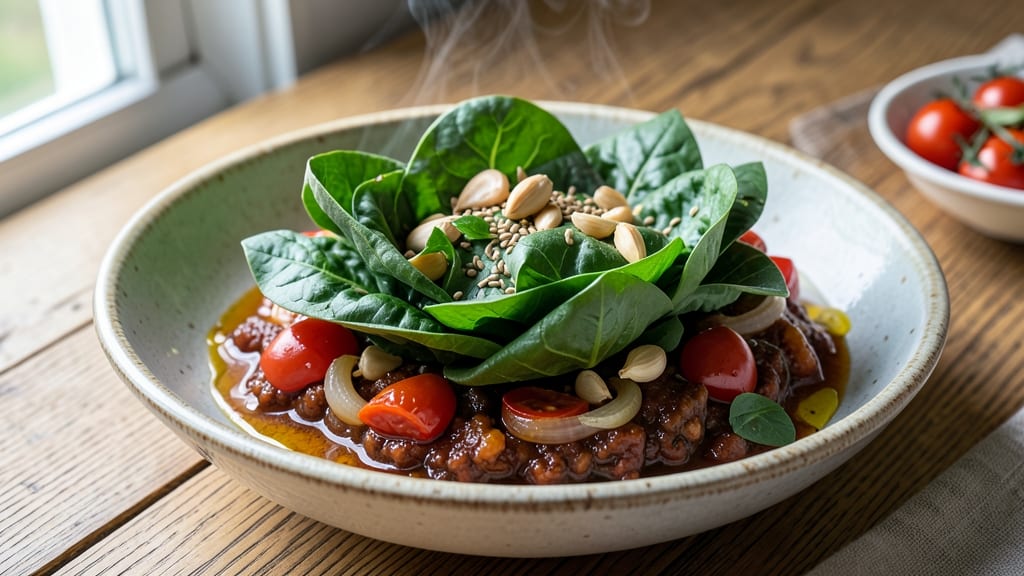
African potato leaves transform humble greens into a vibrant, nutrient-packed side dish that carries the bold flavors of East African cuisine. This recipe captures the essence of traditional preparations like Kenyan sukuma wiki, where tender leaves are simmered with onions, garlic, and tomatoes until wilted into a rich, savory stew. The earthy, slightly peppery notes of the leaves pair perfectly with spices like curry powder or chili, creating a dish that’s both comforting and deeply flavorful.
What sets this recipe apart is its versatility—serve it as a standalone side with ugali or rice, or use it as a hearty base for a vegetable stew.
The leaves soften beautifully while retaining their vibrant green color, absorbing the aromatic flavors of onions, garlic, and a touch of berbere spice blend. Unlike typical greens, African potato leaves hold their texture even when cooked, delivering a satisfying bite with every spoonful.
The process is straightforward yet rewarding: wash and chop the leaves, then sauté them with onions, garlic, and tomatoes until tender. A splash of vegetable broth or water helps develop a sauce-like consistency, while a pinch of salt and chili powder elevates the dish to restaurant-quality.
The result is a dish that’s not only nutritious but also deeply satisfying, perfect for weeknight dinners or special occasions.
Whether you’re exploring African flavors for the first time or refining your plant-based cooking repertoire, this recipe delivers a taste of East Africa’s culinary traditions. Pair it with grilled meats, fried fish, or simply enjoy it as a filling, flavorful side. Let’s get cooking!
Ingredients for african potato leaves
Earthy greens meet bold spices in this vibrant African-inspired side dish.
| Ingredient | Amount | Notes |
|---|---|---|
| African Potato Leaves 🌿 | 12 oz | Fresh, stems removed |
| Yellow Onions 🧅 | 1 whole | Medium size, sliced thin |
| Garlic Cloves 🧄 | 4 cloves | Minced or finely chopped |
| Roma Tomatoes 🍅 | 2 whole | Diced, seeds removed |
| Vegetable Oil 🫒 | 2 tbsp | For sautéing |
| Berbere Spice Blend 🌶️ | 1 ½ tbsp | Traditional Ethiopian blend |
| Ground Cumin 🌿 | ½ tsp | Toasted for deeper flavor |
| Salt 🧂 | ½ tsp | Adjust to taste |
| Red Chili Powder 🔥 | ½ tsp | Adjust for heat preference |
| Vegetable Broth 💧 | 1 cup | Low-sodium preferred |
| Lemon Juice 🍋 | 1 tbsp | Freshly squeezed |
| Fresh Cilantro 🌿 | ¼ cup | Chopped, for garnish |
The African potato leaves are the star here—look for them in African specialty stores or well-stocked grocery sections. If you can't find them, collard greens or kale work as a substitute, though the flavor won't be identical. The berbere spice blend is essential for that authentic East African kick—Penzeys or African Market carry it, or make your own with paprika, cayenne, fenugreek, and coriander. For the onions, yellow onions add sweetness, while red onions bring a sharper bite. If you're using dried berbere, toast it lightly in a dry pan first to deepen the flavor.
No berbere? Mix 1 tsp smoked paprika, 0.25 tsp cayenne, 0.5 tsp ground coriander, and 0.25 tsp fenugreek for a close approximation. Fresh tomatoes are ideal, but canned diced tomatoes work in a pinch—just drain well. The vegetable broth can be swapped for water, though the broth adds depth. For extra richness, stir in 1 tbsp tomato paste at the end. The cilantro garnish is optional but adds a bright finish—skip it if you're sensitive to cilantro's flavor.
This dish tastes even better the next day as flavors meld, so make extra and store in an airtight container for up to 4 days in the fridge. Freezes beautifully for 3 months—just thaw overnight in the fridge before reheating. To serve, spoon over steamed rice or ugali, or use as a hearty base for a vegetable stew. The leaves soften as they sit, so reheat gently with a splash of water or broth.
Why You'll Love This Recipe
- One-Pot Magic: I swear by this recipe—just sauté onions, add garlic, toss in those tender potato leaves, and let the tomatoes work their sauce magic. No fancy gadgets, no extra bowls, and honestly? The cleanup is just wiping one pan.
- Umami Bomb: That first bite when the leaves hit your tongue—savory, slightly tangy, with the garlic and tomatoes caramelizing into a rich base? It’s like a hug for your taste buds. The leaves hold their texture better than spinach ever could, and the oil keeps everything luscious.
- Lunchbox Hero: Between us, this stuff reheats like a dream. Pack it in containers for work or school lunches, and it’ll still taste fresh hours later. My kids actually ask for it—yes, even over pizza. (Don’t tell them I said that.)
- Budget Stretch: African potato leaves are a steal compared to other greens, and a single bunch stretches across meals. Double the batch, freeze half, and you’ve got a cheap, hearty side ready for whenever. I’ve fed six people for under $10 with this—no joke.
Step-by-step instructions for African potato leaves
Transform these vibrant greens into a flavorful dish using traditional Ethiopian techniques.
Prepare the Greens and Aromatics
Begin by thoroughly washing the 12 oz African potato leaves to remove any dirt or sand. Carefully separate the leaves from their stems, discarding the tough stems while keeping the tender leaves. You should have about 4 cups of cleaned leaves after this process.
Next, slice the 1 whole yellow onion into thin half-moons, creating even pieces that will cook quickly. Finely mince the 4 cloves garlic until you have a paste-like consistency—this ensures even distribution of flavor throughout the dish. Dice the 2 whole Roma tomatoes, removing seeds to prevent excess moisture in your cooking process.
Sauté the Base Ingredients
Heat 2 tablespoons vegetable oil in a large skillet over medium heat. Add the sliced onions and cook for 3-4 minutes until they become translucent and slightly golden. This step develops the foundational flavor of your dish.
Add the minced garlic, diced tomatoes, 1.5 tablespoons berbere spice blend, 0.5 teaspoon ground cumin, 0.5 teaspoon salt, and 0.5 teaspoon red chili powder. Stir continuously for 2-3 minutes until the tomatoes soften and the spices release their aromatic oils. You'll notice the mixture darken slightly and fill your kitchen with a warm, spicy fragrance.
Build the Flavorful Broth
Pour in the 1 cup vegetable broth and bring the mixture to a gentle simmer. Reduce the heat to low and let it cook for 5-7 minutes, allowing the flavors to meld together. Stir occasionally to prevent sticking and ensure even cooking.
After simmering, add the 1 tablespoon lemon juice and taste the mixture. Adjust the seasoning if needed—you might want to add a pinch more salt or chili powder to suit your preference. This step is crucial for balancing the complex flavors of the berbere and cumin.
Wilt the Greens
Carefully add the prepared African potato leaves to the skillet, working in batches if needed to avoid overcrowding. Stir gently to distribute the sauce evenly over the leaves. Cover the skillet and cook for 3-4 minutes on medium-low heat, allowing the leaves to wilt and absorb the flavorful broth.
After the leaves have softened and reduced in size, remove the skillet from heat. The leaves should be tender but still vibrant in color, with a slight curl at the edges. This indicates they've absorbed enough of the spiced broth to create a harmonious blend of flavors.
Finish and Serve
Transfer the cooked African potato leaves to a serving dish and sprinkle with 0.25 cup chopped fresh cilantro. The cilantro adds a bright, fresh contrast to the rich, spiced leaves. Toss gently to distribute the cilantro evenly.
Serve immediately while the leaves are still warm and vibrant. This dish pairs beautifully with injera or crusty bread to soak up the flavorful sauce. The combination of earthy greens with the complex berbere spice creates a satisfying and aromatic meal that captures the essence of Ethiopian cuisine.
Pro Tips For Making African Potato Leaves
- Wilt Leaves Properly: After chopping African potato leaves, give them a quick 2-3 minute blanch in boiling water—then shock in ice water. This softens the tough fibers and makes them cook faster, so they don’t turn to mush later. (I used to skip this and ended up with a watery stew every time.)
- Sear Onions Low: Cook onions on medium-low heat until they’re golden, not browned. High heat burns them fast, and you’ll taste the bitterness in every bite. A gentle simmer keeps the sweetness intact—this is the base flavor, so don’t rush it.
- Crush Garlic Lightly: Smash garlic cloves with the flat side of your knife instead of mincing them. Whole cloves release flavor gradually, while minced garlic burns in seconds. This keeps the aroma balanced and prevents a harsh aftertaste.
- Simmer Tomatoes Slow: Reduce Roma tomatoes to a thick paste (about 10 minutes) before adding them to the leaves. This cuts down on excess liquid and concentrates the flavor—no more watery, bland sauce. (Yes, it takes longer, but the result is worth it.)
Essential equipment for great african potato leaves
Skillet Essentials
Start with a 10-inch cast-iron skillet or stainless steel sauté pan—both distribute heat evenly and handle the high heat needed for sautéing onions and tomatoes. I love my Lodge cast-iron skillet for its natural non-stick properties after seasoning.
If you prefer lighter options, a Mauviel M’Cook stainless steel pan works beautifully for quick cooking. Avoid non-stick pans with PTFE coatings, as they can't handle the medium-high heat needed for proper browning. 🔥
Knife and Cutting
A sharp chef's knife (like the Wüsthof Classic 8-inch) is essential for efficiently chopping 12 oz African potato leaves and slicing 1 yellow onion. The 4 garlic cloves should be minced finely—use a microplane or garlic press for speed.
For the 2 Roma tomatoes, a serrated knife helps remove skins cleanly. Keep your cutting board stable; I recommend a walnut or bamboo board to prevent slipping during prep.
Spice Blends
The berbere spice blend is non-negotiable for authentic flavor. Purchase it pre-made from Penzeys Spices or African Market stores, or make your own with 1 tsp smoked paprika, 0.25 tsp cayenne, 0.5 tsp ground coriander, and 0.25 tsp fenugreek.
Toast the spices in a dry pan for 30 seconds before adding to deepen their aroma. A spice grinder like the Spice & Tea brand ensures even consistency. Store opened berbere in an airtight container away from light to preserve freshness. ✨
Heat Control Tools
Precision is key when cooking African potato leaves. Use a digital thermometer (like the Thermoworks Thermapen) to monitor skillet temperature—ideal range is 325-350°F for sautéing. A heat-resistant silicone spatula helps stir without scratching your pan.
For the 1 cup vegetable broth, a measuring cup with a pour spout prevents spills. If you don’t have one, a liquid measuring cup with markings works fine. 🌡️
Storage Containers
For leftovers, transfer the cooked leaves to glass storage containers (like Pyrex)—they’re microwave-safe and won’t absorb flavors. Label with the date to track freshness. If freezing, use quart-sized freezer bags (like Stasher bags) to save space.
Leave 1 inch headspace for expansion, and squeeze out excess air to prevent freezer burn. Reheat gently on the stove with a splash of water to restore moisture. ❄️
Garnish Tools
Fresh cilantro deserves a proper presentation. Use sharp scissors to chop 0.25 cup cilantro quickly, or a microplane for fine texture. A small bowl with a slotted spoon makes garnishing effortless—simply lift the leaves and sprinkle cilantro on top.
For extra flair, add a zest of lemon using a zester tool or fine grater. These small touches elevate the dish from homemade to restaurant-worthy. 💫
Nutrition facts
Frequently asked questions
Where can I find African potato leaves if my local store doesn't carry them?
Look for them in African specialty stores or well-stocked international markets. Online retailers like African Market or Penzeys Spices often sell them fresh or frozen. As a last resort, collard greens or kale work in a pinch, though they won't have the same delicate texture or flavor profile.
Can I make this recipe without berbere spice?
Yes! Create a substitute by mixing 1 tsp smoked paprika, 0.25 tsp cayenne, 0.5 tsp ground coriander, and 0.25 tsp fenugreek. Toast these spices in a dry pan for 30 seconds before adding to deepen their flavor. The dish will still taste delicious, just with a slightly different spice profile.
How do I know when the African potato leaves are cooked properly?
The leaves are done when they've wilted to about half their original size and have a tender, slightly curled appearance. They should be bright green but soft to the touch—like cooked spinach. Overcooking can make them mushy, so keep an eye on them during the final 3-4 minutes of cooking.
What's the best way to store leftovers?
Transfer to glass containers and store in the fridge for up to 4 days. For longer storage, freeze in airtight containers or freezer bags with 1 inch headspace. Thaw overnight in the fridge before reheating with a splash of water or broth to restore moisture. The flavors actually improve after a day or two!
Can I add protein to this recipe?
This dish pairs beautifully with grilled chicken, fish, or even chickpeas. For a complete meal, add 1 cup cooked chickpeas during the final 2 minutes of cooking, or serve alongside grilled meats. The spiced leaves complement both plant-based and meat proteins wonderfully.