
Side Dishes
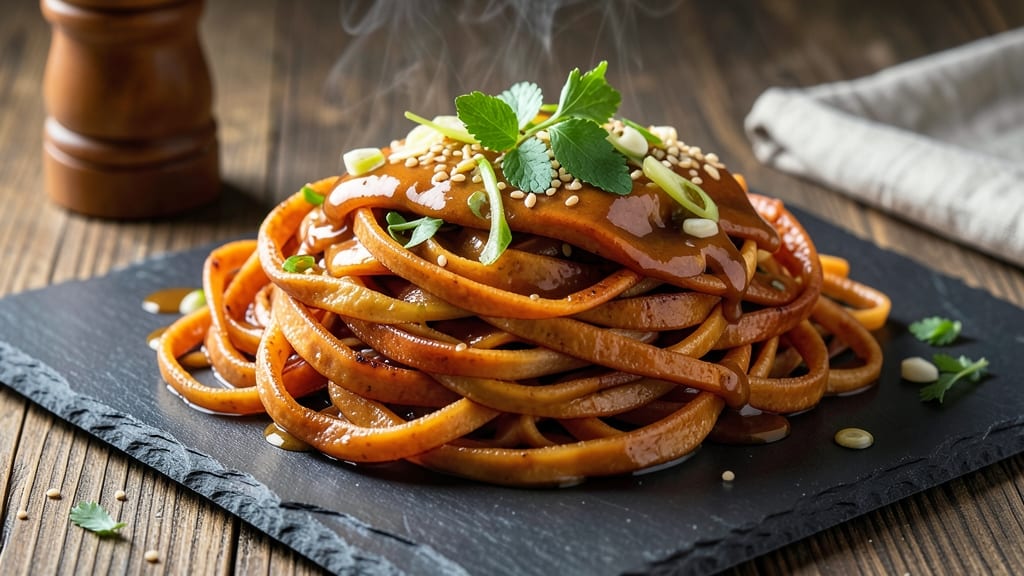
Transforming humble wide sweet potato noodles into these silky ribbons is a game-changer for anyone craving a nutty, satisfying side that feels like a main dish. 🔥 The secret lies in their width—thick enough to hold shape yet tender enough to melt in your mouth, offering that perfect balance of sweetness and earthiness that pairs beautifully with everything from grilled meats to fresh salads.
This recipe skips the spiralizer drama and delivers foolproof results with just a mandoline or sharp knife, ensuring perfectly even noodles every time. The cooking method is simple: a quick sauté in olive oil until tender but still holding its shape, preserving that vibrant orange hue and natural sweetness.
No boiling required—just simple, hands-off technique that yields restaurant-quality results in under 15 minutes.
What you’ll end up with is a dish that’s rich in flavor, naturally vegan, and packed with nutrients—ideal for anyone looking to elevate their meals without sacrificing simplicity. The nutty undertones deepen as they cook, creating a satisfying texture that’s crisp at the edges and velvety inside.
Serve them warm with a drizzle of soy-ginger sauce or toss with toasted sesame seeds for extra depth.
Perfect for meal prep or last-minute sides, these noodles reheat beautifully and stay fresh in the fridge for up to 3 days.
Whether you’re hosting a dinner party or just treating yourself to a cozy weeknight meal, this recipe delivers on both flavor and convenience—no fancy equipment or complicated steps required.
Ingredients for wide sweet potato noodles
These twelve ingredients transform humble sweet potatoes into restaurant-quality noodles with perfect texture.
| Ingredient | Amount | Notes |
|---|---|---|
| Large Sweet Potatoes 🍠 | 2 whole | Organic preferred, orange-fleshed |
| Extra-Virgin Olive Oil 🫒 | ½ cup | High quality, fruity variety |
| Fresh Garlic Cloves 🧄 | 4 cloves | Peeled, minced for sautéing |
| Fresh Ginger 🌿 | 1 tbsp | Grated, aromatic variety |
| Soy Sauce 🍶 | 2 tbsp | Low-sodium preferred |
| Sesame Oil 🫒 | 1 tbsp | Toasted, for finishing |
| Toasted Sesame Seeds 🌰 | 1 tbsp | Lightly toasted in dry pan |
| Diamond Crystal Kosher Salt 🧂 | ½ tsp | Fine grain preferred |
| Freshly Ground Black Pepper 🌶️ | ¼ tsp | Freshly cracked |
| Lemon Juice 🍋 | 1 tbsp | Freshly squeezed |
| Maple Syrup 🍯 | 1 tsp | Grade B for depth |
| Nutritional Yeast 🧀 | 1 tbsp | For umami richness |
The sweet potatoes are the foundation—organic, orange-fleshed varieties like Jewel or Garnet yield the best texture and sweetness. Local farmers markets often carry these in season, or check the organic produce section at Whole Foods for consistent quality. Avoid green-tinted sweet potatoes, as they can have a bitter aftertaste. For the best results, select potatoes that are firm to the touch with smooth, unblemished skin. The wider the noodles, the more satisfying the texture—aim for about ¼-inch width when slicing, which balances tenderness with structure during cooking.
No mandoline? A sharp chef's knife and steady hand work perfectly—just keep the knife parallel to the cutting board for even slices. Substituting regular potatoes? Absolutely not—the starch content and moisture levels differ dramatically. For the ginger, freshly grated is non-negotiable—powdered lacks the aromatic complexity. The sesame oil should be toasted, not regular cooking oil—Trader Joe's carries an excellent version at a reasonable price. Need to skip nutritional yeast? White miso paste at half the amount provides similar umami depth. The maple syrup enhances natural sweetness without overpowering, but agave nectar works equally well if preferred.
Sweet potatoes keep 2 weeks in a cool, dark place—don't refrigerate until ready to use. Once sliced, store in airtight containers with a paper towel to absorb excess moisture for up to 2 days. These noodles reheat beautifully in a dry skillet over medium heat for 2-3 minutes, or microwave with a splash of water covered for 45 seconds. For meal prep, cook a batch ahead and store in single portions—they hold their texture remarkably well. The sauce components (soy, sesame oil, maple) can be pre-mixed and stored in the fridge for 1 week, though fresh is always better.
Why You'll Love This Recipe
- No Peel Required: I swear by this shortcut—just scrub those sweet potatoes, slice them thick, and roast. No peeling, no spiralizer drama, just pure, satisfying noodles that hold their shape. The edges get this gorgeous caramelized crust while staying tender inside, and honestly? That’s the magic.
- Umami-Packed Bite: That combo of soy sauce and fresh ginger? Chef’s kiss. The garlic cloves roast into sweet, jammy perfection while the ginger adds a bright kick that cuts through the richness. It’s the kind of flavor that makes you want to eat it straight from the pan—no sauce needed, though I won’t judge if you add one.
- Meal Prep MVP: Between us, this is my lazy Sunday night prep. Roast a big batch of noodles, store them in the fridge, and reheat with a splash of water or oil—zero sogginess. Toss them into bowls with protein, greens, or just eat them as-is. My kids grab them for school lunches, and they’re back for seconds every time.
- Budget-Friendly Flex: Sweet potatoes are my secret weapon for stretching meals without breaking the bank. A few big ones feed four, and the rest? Freeze the extras for another night. Plus, olive oil and garlic are pantry staples—this recipe costs next to nothing but tastes like you slaved over it. (Spoiler: You didn’t.)
Step-by-step instructions for silky sweet potato noodles
Transform humble sweet potatoes into elegant, nutty ribbons with this precise technique.
🔪 Step 1: Prepare and Peel the Sweet Potatoes
Wash the 2 whole large sweet potatoes thoroughly under cool water to remove any dirt. I use a vegetable brush for stubborn spots—this ensures clean, blemish-free skin for perfect spiralizing. Pat them completely dry with paper towels; any moisture makes them slippery and difficult to handle.
Using a sharp chef's knife, carefully peel the sweet potatoes lengthwise, removing the skin completely. The goal is to expose the vibrant orange flesh while maintaining the potato's structural integrity. Cut each potato into 3-inch lengths—this size works perfectly for most spiralizers and prevents the noodles from breaking during extraction.
🍳 Step 2: Spiralize with Precision
Set up your spiralizer on a sturdy surface with a large mixing bowl positioned underneath to catch the noodles. I recommend using a wide blade attachment—this creates those signature thick, ribbon-like strands that hold their shape beautifully when cooked. Feed one sweet potato length through the spiralizer, applying gentle but firm pressure.
Work in stages: spiralize one potato completely before starting the second. This prevents the noodles from sticking together and makes cleanup easier. You should yield about 4 cups of sweet potato noodles total—enough for 4 generous servings. Immediately transfer the noodles to a large bowl and lightly toss with the 0.5 cup extra-virgin olive oil to prevent browning while you prepare the sauce.
👨🍳 Step 3: Cook the Noodles to Al Dente Perfection
Heat a large skillet over medium heat and add the sweet potato noodles in batches—don't overcrowd the pan or they'll steam instead of crisp. Cook for exactly 3-4 minutes, stirring gently with a silicone spatula, until the edges turn golden and the strands become tender yet still hold their shape. You're aiming for al dente texture here—they should yield slightly when pressed but maintain structure.
Remove the noodles from the pan and set aside. Here's the thing—sweet potato noodles continue cooking from residual heat, so they'll finish perfectly when combined with the warm sauce. Keep them covered with a clean kitchen towel to prevent drying while you prepare the remaining elements.
🥘 Step 4: Create the Umami-Packed Sauce
In the same skillet (no need to clean it—the fond adds flavor), add the 4 cloves minced garlic and 1 tbsp grated ginger. Cook over medium heat for 1 minute until fragrant—this releases their essential oils and forms the aromatic base. Add the 2 tbsp soy sauce and stir for 30 seconds to deglaze the pan, scraping up any browned bits that contain concentrated flavor.
Pour in the 1 tbsp lemon juice and 1 tsp maple syrup, then reduce heat to low. Stir in the 1 tbsp nutritional yeast and 0.5 tsp kosher salt, letting the mixture simmer gently for 2 minutes. The sauce should coat the back of a spoon with a glossy sheen. Remove from heat and stir in the 1 tbsp sesame oil and 0.25 tsp black pepper—this adds depth and balances the sweetness.
🔥 Step 5: Finish and Serve with Textural Contrast
Return the cooked sweet potato noodles to the skillet with the sauce and toss gently to combine. Cook for an additional 1 minute over medium-low heat, allowing the noodles to absorb the sauce's flavors without becoming mushy. The final texture should be silky yet with slight resistance—a perfect balance between tender and al dente.
Transfer to serving plates and immediately sprinkle with 1 tbsp toasted sesame seeds. Serve while hot, garnished with extra sesame seeds and a drizzle of sesame oil. The contrast of crisp seeds against the silky noodles, combined with the nutty-sweet flavor profile, makes this dish truly special. Each bite delivers that perfect harmony of textures and flavors we're after.
Pro Tips For Making Wide Sweet Potato Noodles
- PEEL AND SPIRAL COLD: Sweet potatoes are stubborn when hot—let them cool 10 minutes after roasting before spiraling. I learned this the hard way when my spiralizer jammed on a still-warm tuber. The difference in texture? Smooth, clean strands instead of gummy, uneven messes.
- SALT THE SPIRALS: Toss the noodles with a pinch of salt immediately after cutting. The starch softens faster, and it prevents them from turning mushy when stir-frying. (Yes, even if you’re impatient like me—wait 2 minutes, then rinse if needed.)
- GINGER GRATE, DON’T CHOP: Use a microplane for ginger—it releases more flavor and blends better into the oil. I used to dice it, and the pieces would sit like tiny rocks in the pan. Freshly grated ginger also caramelizes faster, giving that subtle sweetness the noodles crave.
- STOP WHEN GOLDEN: Take the noodles off heat the second they hit golden brown, not crispy. They’ll keep cooking from residual heat, and you’ll end up with dry, brittle strands. A quick toss with a splash of water or soy sauce fixes them, but it’s easier to pull them out early.
Storing and reheating this wide sweet potato noodles
Fridge Storage Tips
Store cooked sweet potato noodles in an airtight container with a paper towel to absorb excess moisture. They'll keep fresh in the fridge for up to 3 days—the texture remains surprisingly intact when reheated properly. I like using glass Pyrex containers because they're microwave-safe and don't retain odors. 🥄
For best results, let the noodles cool completely before refrigerating to prevent condensation buildup. The oil coating helps preserve their silky texture, but I still recommend reheating gently to maintain that al dente quality.
Freezer-Friendly Method
These noodles freeze beautifully for up to 2 months—perfect for meal prep! Spread them on a baking sheet in a single layer and freeze for 1 hour to prevent sticking, then transfer to quart-sized freezer bags. Label with the date for easy tracking. 🧊
When ready to eat, thaw overnight in the fridge. Reheat directly from frozen in a skillet over medium heat for 4-5 minutes, adding a splash of water if they seem dry. The texture recovers surprisingly well!
Reheating Perfection
My go-to method is a quick dry skillet reheat over medium heat for just 2-3 minutes. This preserves their crisp edges while warming through evenly. Avoid microwaving unless absolutely necessary—it tends to make them rubbery. 🔥
For extra flavor recovery, add ½ tsp sesame oil and 1 tsp water to the pan while reheating. The oil helps restore that silky sheen, while the water prevents sticking. Toss with fresh sesame seeds after reheating for that restaurant-quality finish.
Sauce Prep Ahead
Make the sauce components separately and store them in small jars in the fridge for up to 1 week. Keep the garlic-ginger base in one container, soy-lemon mixture in another, and nutritional yeast with salt in a third.
When ready to eat, simply combine and heat through—this saves time without sacrificing flavor. ✨
The sauce keeps its vibrant color and umami depth when stored properly. Just give it a quick stir before using to distribute any settled ingredients evenly. This is especially handy for busy weeknights when you want that restaurant-quality flavor with minimal effort.
Nutrition facts
Frequently asked questions
Can I use regular potatoes instead of sweet potatoes?
No, you should always use sweet potatoes for this recipe. Regular potatoes have a much higher starch content and different moisture levels, which will result in gummy, mushy noodles instead of the silky texture you're aiming for. Sweet potatoes provide that perfect balance of natural sweetness and nutty flavor that makes these noodles so special.
What's the best way to cut wide sweet potato noodles without a spiralizer?
Use a sharp chef's knife and steady hand! Cut the peeled sweet potato lengthwise into ¼-inch thick slices, then stack 3-4 slices and slice horizontally to create wide ribbons. Keep the knife parallel to the cutting board for even thickness. This method takes a little practice but yields beautiful, restaurant-quality noodles.
How do I prevent the noodles from sticking together?
Toss the freshly cut noodles immediately with 0.5 cup extra-virgin olive oil to create a protective barrier. Work in small batches and keep them covered with a clean kitchen towel while you prepare the sauce. This prevents them from drying out or sticking together while you cook.
Can I make these noodles ahead of time?
Cook the noodles up to 1 day ahead and store them in an airtight container with a paper towel to absorb moisture. Reheat gently in a skillet over medium heat for 2-3 minutes with a splash of water to restore their texture. The sauce components can be prepped separately and stored for up to 1 week.
What's the secret to getting that perfect al dente texture?
The key is cooking them just until the edges turn golden—about 3-4 minutes in a hot skillet. They should yield slightly when pressed but still hold their shape. Overcooking turns them mushy, while undercooking leaves them too firm. The residual heat will finish cooking them when combined with the warm sauce.