
Side Dishes
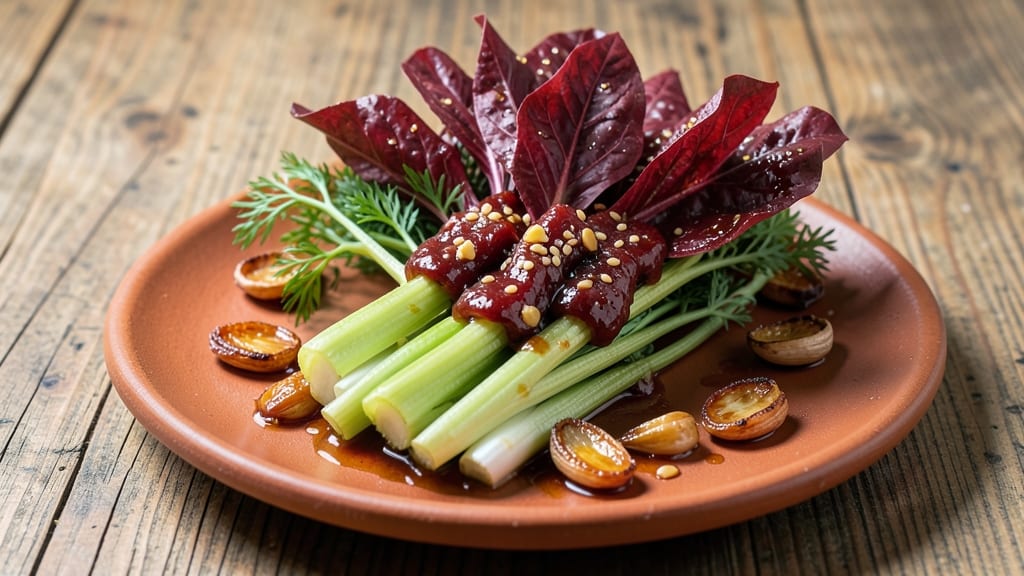
This sweet potato stem Korean recipe transforms humble celery crowns into crispy, golden bites that balance earthy sweetness with nutty gochujang depth. 🌟 A staple in Korean banchan culture, these stems—often discarded—become a star when stir-fried with garlic, sesame oil, and fermented chili paste.
The secret lies in high-heat searing for crispy edges while keeping the centers tender, creating a textural contrast that makes every bite satisfying. Traditionally served alongside rice and grilled meats, this dish highlights the resourcefulness of Korean cuisine, where every part of the vegetable is utilized.
The gochujang adds a rich, umami backbone, while toasted sesame seeds contribute nutty aroma. Preparation is straightforward: clean, blanch briefly, and stir-fry until caramelized—no fancy techniques required, just attention to timing for that perfect crispy finish.
What sets this recipe apart is its ability to elevate simple ingredients into something restaurant-worthy. The sweetness of the stems pairs beautifully with the spicy-sweet gochujang, creating a harmonious balance that’s both comforting and complex.
Serve warm as a side dish or as a standalone snack—it’s equally at home on a weeknight table or festive spread. For those new to Korean flavors, this dish is an excellent introduction.
The combination of textures—crispy stems, tender centers, and creamy gochujang—delivers a multi-sensory experience that’s hard to resist. Ready in under 20 minutes, it’s the perfect way to add authentic Korean flavor to your meals without the fuss. Let’s get cooking!
Ingredients for sweet potato stem korean
Transform humble celery crowns into crispy, golden Korean banchan with these twelve essential ingredients.
| Ingredient | Amount | Notes |
|---|---|---|
| Sweet Potato Stems (Celery Crowns) 🥔 | 1 ½ lb | Trimmed, cut into 2-inch pieces |
| Sesame Oil 🫒 | 2 tbsp | Toasted for nutty aroma |
| Gochujang (Korean Chili Paste) 🌶️ | 2 tbsp | High-quality, fermented paste |
| Garlic Cloves 🧄 | 4 cloves | Minced for bold flavor |
| Toasted Sesame Seeds 🌰 | 1 tbsp | For garnish and crunch |
| Soy Sauce 🍶 | 1 tbsp | Korean-style preferred |
| Rice Vinegar 🍶 | 1 tbsp | For brightness |
| Sugar 🍚 | 1 tsp | Balances spiciness |
| Vegetable Oil 🫒 | 2 tbsp | High smoke point |
| Salt 🧂 | ½ tsp | Kosher or sea salt |
| Black Pepper 🌶️ | ¼ tsp | Freshly ground |
| Green Onions 🧅 | 2 whole | Sliced, for garnish |
The sweet potato stems are the star—look for vibrant, firm crowns at Asian markets or the produce section. H Mart and Korean grocery stores often carry them pre-trimmed, but if you're using whole celery, cut off the leafy tops and use just the thick stems. For the gochujang, Maesil Gochujang or Dongsuh brands deliver authentic depth. Toast your sesame seeds in a dry pan until golden for maximum flavor—30 seconds is all it takes. Garlic should be fresh and pungent; Korean garlic, if available, adds a milder but more aromatic profile.
No gochujang? Substitute 1 tbsp sriracha plus 1 tbsp soy sauce for heat, though you'll miss the fermented complexity. Short on sesame oil? Avocado oil or peanut oil works in a pinch, but the nutty aroma is key. Swap rice vinegar for apple cider vinegar if needed, but reduce to 0.75 tbsp—it's tangier. The sugar can be omitted if you prefer less sweetness, but it helps balance the spicy-sweet gochujang. For extra crispiness, blanch the stems for 1 minute before frying—this ensures they caramelize perfectly without burning.
Stems keep for 5 days in the fridge, wrapped in a damp towel to maintain crispness. Gochujang stays potent for up to a year unopened, but once opened, store it in the fridge. For meal prep, fry the stems in batches and store separately from the sauce—reheat in a dry pan for 2 minutes to revive crispiness. Garnish with sesame seeds and green onions just before serving to preserve freshness. This dish reheats beautifully, making it perfect for leftovers—3-4 days in the fridge or 3 months frozen.
Why You'll Love This Recipe
- I’ll be real: this recipe costs next to nothing but delivers big. Sweet potato stems are free if you buy whole sweet potatoes, and the other ingredients? A tiny jar of gochujang, a bulb of garlic, sesame oil—stuff you’ll use for everything. Plus, it reheats like a dream, so you can make a big batch and eat it all week without breaking the bank.
- No Waste, All Flavor: I swear by this recipe because it turns something most people toss into something ridiculously good—no fancy prep, just chop those fibrous stems into bite-sized pieces and let the gochujang and garlic work their magic. The stems caramelize into crispy little pockets that soak up all the sesame oil and spice, like a crunchy, savory hug.
- One-Pan Magic: Honestly, this is my lazy-night secret weapon. Toss everything in one pan—no chopping boards, no extra dishes—and walk away while it sizzles. The garlic sizzles in sesame oil first, then the stems get that perfect char, and the gochujang ties it all together. Twenty minutes later, you’ve got dinner.
- Spicy-Savory Flex: Between us, this recipe works anywhere. Slap it on rice for a quick bowl, pile it into lettuce wraps for a no-fuss lunch, or serve it as a side that’ll make your whole meal sing. The gochujang gives it heat, the sesame seeds add nutty crunch, and the sweetness of the stems balances it out—like a Korean BBQ party in every bite.
Step-by-step instructions for crispy celery crowns with gochujang glaze
Transform humble sweet potato stems into restaurant-worthy crispy bites with this precise Korean-inspired method.
🔥 Step 1: Parboil for Maximum Crispiness
Fill a large pot with water and bring to a rolling boil. Add the 1.5 lb sweet potato stems (celery crowns) and cook for exactly 5 minutes. This brief parboil softens the stems slightly while preserving their structure—critical for achieving that signature crispy texture later.
Drain immediately and transfer the stems to a clean kitchen towel. Gently pat dry between the towel layers, pressing firmly to remove all surface moisture. Any remaining water will steam instead of crisp during frying. Work quickly—damp stems lead to soggy results.
🍳 Step 2: Build the Gochujang Glaze
In a small bowl, whisk together the 2 tbsp gochujang, 1 tbsp soy sauce, 1 tbsp rice vinegar, 1 tsp sugar, 0.5 tsp salt, and 0.25 tsp black pepper. The gochujang should be fully dissolved with no lumps—this ensures an even coating on each stem. Add 2 tbsp sesame oil last and mix until emulsified. Set aside.
In a separate small bowl, combine the 4 minced garlic cloves with 1 tbsp toasted sesame seeds. This aromatic blend will be used as a finishing garnish after frying. The toasted sesame seeds add nutty depth that complements the spicy-sweet glaze.
🔥 Step 3: Fry Until Golden and Crisp
Heat 2 tbsp vegetable oil in a large skillet over medium-high heat until shimmering but not smoking. Add the dried sweet potato stems in a single layer, leaving space between each piece. Fry for 3-4 minutes per side until they develop deep golden brown spots and begin to crisp.
Here's the pro tip: Press down gently on the stems during the first minute of frying—this prevents curling and ensures even contact with the hot oil. You'll know they're ready when they release easily from the pan and the edges turn crispy with slight char marks. Transfer to a paper towel-lined plate to drain excess oil.
🥘 Step 4: Glaze and Garnish
Working quickly, toss the hot crispy stems with the prepared gochujang glaze until fully coated. The residual heat will help the glaze adhere and slightly thicken. Return the stems to the skillet over low heat for 1-2 minutes to meld the flavors and develop a glossy finish.
Garnish each serving with the garlic-sesame mixture and 2 sliced green onions. The green onions add fresh contrast to the rich, spicy-sweet glaze. For maximum impact, sprinkle with an additional ½ teaspoon toasted sesame seeds right before serving.
⏰ Step 5: Serve Immediately for Peak Texture
Serve the crispy celery crowns while still hot and sizzling. The glaze should be sticky yet not dripping, with visible gochujang flecks clinging to each crispy stem. Pair with a cold Korean lager or steamed jasmine rice to balance the spicy-sweet flavors.
Pro tip: If making ahead, fry the stems completely through but glaze them just before serving. The texture degrades within 15 minutes of frying, so timing matters. Each bite should deliver crispy exterior, tender interior, and complex umami-spicy-sweet flavor harmony.
Pro Tips For Making Sweet Potato Stem Korean
- TRIM THOSE STEMS RIGHT: Sweet potato stems are tough and fibrous—strip away the thick outer layers first, then slice the tender inner stalks at a sharp angle. I learned this the hard way after biting into a chewy mouthful that ruined the whole dish.
- COOK LOW AND SLOW: These stems take longer to soften than you’d think. Simmer them in a light broth or water at a gentle boil (small bubbles, not a rolling pot) for 8–10 minutes, or until they’re fork-tender but not mushy. Rushing this step turns them to mush, and nobody wants that.
- DON’T SKIP THE GARLIC TOAST: Crisp the garlic cloves in sesame oil for 30 seconds before mincing—it deepens the flavor and prevents that raw, bitter bite. Sounds like extra work, but trust me: the difference is noticeable.
- SAVE TIME WITH GARLIC INFUSED OIL: Make a quick batch of garlic-infused sesame oil by heating 2 tablespoons of sesame oil with 3 smashed garlic cloves for 2 minutes, then straining. Use it for both cooking and finishing—the aroma alone makes the dish taste more restaurant-worthy. (Yes, even if you’re impatient like me.)
Serving suggestions for this dish
Banchan Pairings
Serve these crispy sweet potato stems alongside classic Korean banchan like kimchi (its tangy heat cuts through the richness) or oyster kimchi (briny and sweet). I always include spicy cucumber salad (oi muchim) for freshness—its cool crunch balances the gochujang’s warmth.
For a complete meal, add braised tofu (dubu jorim) or quick-pickled radish (danmuji) to round out the flavors. 🌱
Protein Pairings
Pair with grilled bulgogi beef—the sweet-savory marinade complements the stems’ crispy texture perfectly. For seafood lovers, try grilled mackerel (sancheon senggeok) with a squeeze of lemon.
If you’re vegetarian, tofu stew (sundubu jjigae) adds hearty protein while keeping the meal light. The stems’ crispiness contrasts beautifully with soft tofu. 🍽️
Rice Pairings
Steamed jasmine rice is the classic choice, but I also love short-grain sushi rice for its slight stickiness—it soaks up the gochujang glaze beautifully. For a heartier option, try brown rice to add fiber.
Pro tip: Serve the stems in a small stone bowl (gamchi) alongside rice to keep everything warm and separate flavors. 🍚
Drink Pairings
A cold Korean lager like Hite or Cass refreshes the palate after each spicy bite. For something lighter, soju (chilled) or makgeolli (fermented rice wine) adds a creamy, slightly sweet contrast. Non-alcoholic? Try yuja tea (citrusy and floral) or barley tea (boricha) for a crisp finish. 🍺
Garnish Upgrades
Boost presentation with crispy fried shallots (tossed in at the end for extra crunch) or toasted nori strips (for umami depth). I also love a drizzle of sesame oil just before serving—it enhances the nutty aroma.
For a pop of color, add red pepper flakes (gochugaru) on the side so guests can adjust spice levels. ✨
Meal Prep Serving
If prepping ahead, store the fried stems and sauce separately. Reheat stems in a dry pan for 2 minutes to revive crispiness, then toss with sauce. Serve in small cast-iron skillets for a restaurant-style presentation.
For a family-style spread, arrange stems on a large wooden board with rice and other banchan in the center. 🍴
Nutrition facts
Frequently asked questions
What are sweet potato stems (celery crowns) and where can I find them?
Sweet potato stems are the leafy green tops of sweet potatoes, often called celery crowns. They're packed with nutrients and used in Korean cuisine for their crispy texture. Look for them in Asian markets or the produce section of larger grocery stores. If unavailable, use regular celery stems or kale stems as a substitute.
Can I make this recipe without gochujang?
Yes! For a substitute, mix 1 tbsp sriracha with 1 tbsp soy sauce and 1 tsp honey. While it won't have the same fermented depth, it'll still give you that spicy-sweet flavor. The dish will taste different but still delicious with this alternative.
How do I get the sweet potato stems extra crispy?
The secret is thorough drying and high heat. After parboiling, pat the stems completely dry with a kitchen towel, then let them air dry for 5 minutes. Use a well-heated skillet and don't overcrowd the pan—this ensures even crispiness. For extra crunch, fry them for 1-2 minutes longer until golden brown.
Can I make this ahead of time?
Yes, but with a trick! Fry the stems completely through and store them separately from the sauce. When ready to serve, reheat in a dry pan for 2 minutes to revive crispiness, then toss with the sauce. The texture degrades quickly, so wait to glaze until serving. This keeps them crispy for up to 4 days in the fridge.
What's the best way to store leftover gochujang glaze?
Transfer any leftover glaze to an airtight container and refrigerate for up to 1 week. The flavors will deepen over time. When reheating, warm it gently in a saucepan over low heat until smooth. You can also freeze the glaze for 3 months—just thaw in the fridge overnight.