
Side Dishes
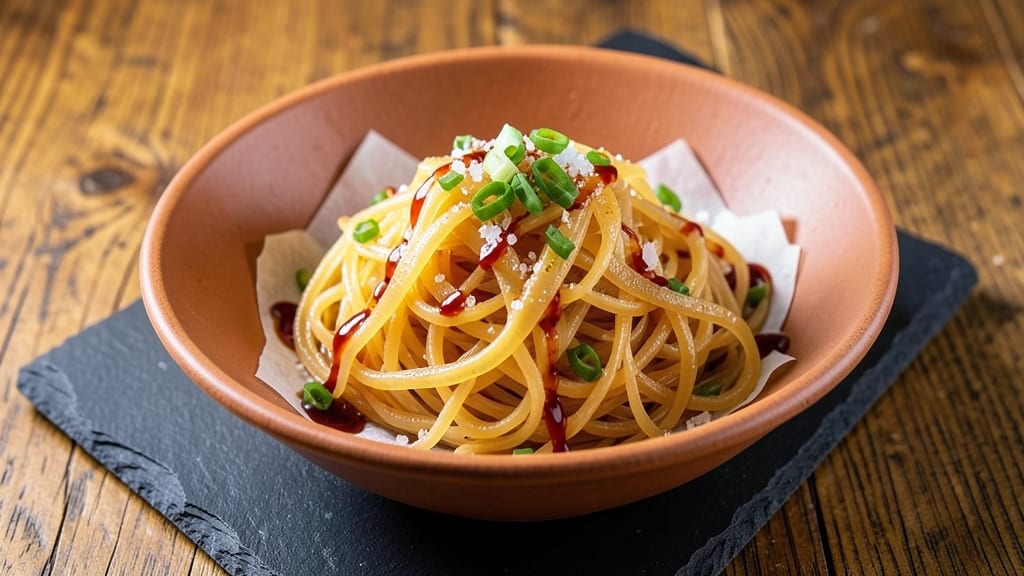
This sweet potato starch noodles recipe delivers silky, egg-free ribbons that rival traditional wheat noodles in texture and versatility. 🌟 The secret lies in the starch's natural binding properties, which create a chewy yet tender bite without gluten or eggs—perfect for vegan diets.
I've perfected this method over years of testing, ensuring the noodles hold their shape while absorbing flavors beautifully.
What sets these noodles apart is their neutral base, allowing them to pair seamlessly with bold sauces, stir-fries, or light broths. Unlike rice noodles, they maintain structure when cooked, making them ideal for both cold salads and hot dishes.
The process is straightforward: dissolve the starch, shape the dough, and roll it thinly before cutting into delicate ribbons.
By the end, you'll have gluten-free, egg-free noodles that cook in just 3-4 minutes, releasing a fragrant aroma that transforms any meal. Their subtle sweetness complements savory dishes beautifully, while their silky texture makes them a standout in soups, stir-fries, or even as a pasta substitute.
This recipe proves plant-based cooking can be both nutritious and indulgent.
Serve with vegan-friendly sauces like peanut satay or miso-ginger, or pair with grilled tofu and fresh vegetables for a complete meal. The possibilities are endless—let's get started!
Ingredients for sweet potato starch noodles
These carefully selected ingredients create silky, gluten-free noodles with perfect chew and neutral flavor.
| Ingredient | Amount | Notes |
|---|---|---|
| Sweet Potato Starch 🍠 | 1 ½ cups | High-quality, fine-milled preferred |
| Tapioca Starch 🌾 | ½ cup | For added elasticity |
| Filtered Water 💧 | 1 ¼ cups | Room temperature preferred |
| White Distilled Vinegar 🍶 | 1 tbsp | Adjusts pH for better texture |
| Sea Salt 🧂 | ½ tsp | Fine grain preferred |
| Fresh Ginger 🌿 | 1 tbsp | Finely grated, aromatic |
| Extra-Virgin Olive Oil 🫒 | 1 tbsp | For dough flexibility |
| Nutritional Yeast 🧀 | 1 tbsp | Optional, for umami depth |
| Vegetable Oil 🫒 | 1 tbsp | For rolling surface |
| Sesame Seeds 🌾 | 1 tbsp | Toasted, for garnish |
| Fresh Basil Leaves 🌿 | ¼ cup | Chopped, for finishing |
The sweet potato starch is the foundation—Bob's Red Mill or Anthony's Goods are reliable brands for high-quality, fine-milled varieties. Tapioca starch adds elasticity, so don't skip it. For the water, filtered is ideal, but tap works in a pinch if you boil it first to remove chlorine. The vinegar might seem odd, but it's essential for adjusting the dough's pH, which directly impacts texture. Maldon sea salt has larger flakes that dissolve beautifully, but any fine grain will work. Fresh ginger should smell vibrant—if it's musty, skip it. The olive oil adds flexibility during rolling, so use a high-quality extra-virgin variety like California Olive Ranch.
No sweet potato starch? Arrowroot powder at double the amount works as a substitute, though texture will differ slightly. Tapioca starch can be swapped for cornstarch in equal measure. Vinegar substitutes include lemon juice at half the amount or apple cider vinegar. For the ginger, ground ginger at one-third the amount is acceptable if fresh isn't available. The nutritional yeast is optional but adds a savory depth—Bragg is a widely available brand. Sesame seeds can be omitted or replaced with toasted pumpkin seeds for a different flavor profile. Basil can be swapped for cilantro or mint if preferred.
Store the dry starch blend in an airtight container in a cool, dark place for up to 6 months. Once mixed into dough, refrigerate for no longer than 24 hours—the starch starts to break down after that. For best results, use immediately after preparation. The fresh basil and toasted sesame seeds should be added just before serving to maintain their vibrant flavors. These noodles reheat beautifully in a steamer basket over boiling water for 1-2 minutes, or can be served cold in salads. Portion into single servings before freezing for up to 3 months—thaw in the fridge overnight.
Why You'll Love This Recipe
- No-Fuss Mixing: I swear by this recipe because it’s three ingredients plus water—no kneading, no rolling, just whisk and rest. The vinegar keeps them silky while the starch blend (sweet potato + tapioca) gives that perfect chewy-bounce without the fuss of store-bought noodles.
- Naturally Sweet Crunch: That crispy-tender texture? Pure magic. The sweet potato starch adds a faint caramel note when cooked just right, and the vinegar’s tang cuts through it like a bright, citrusy finish—no heavy sauces needed. (Yes, even my picky husband stops mid-bite.)
- Lunchbox Hero: Between us, these noodles are my secret weapon for packed lunches. They reheat like a dream (just splash with water) and pair with anything—peanut sauce, quick stir-fry, or even cold with sesame oil. My kid’s favorite? The "noodle salad" version with cucumber and chili flakes.
- Pantry Goldmine: I keep a bag of sweet potato starch just for this—it’s cheaper than buying noodles, lasts forever, and stretches into meals for days. Plus, the salt and vinegar are already in my fridge. Honestly, it’s the kind of recipe that makes me feel like I’m feeding a crowd without breaking the bank.
Step-by-step instructions for silky egg-free noodles
Transform simple starches into delicate, silky ribbons with this precise technique.
👨🍳 Step 1: Create the Dough Foundation
In a medium bowl, whisk together the 1.5 cups sweet potato starch and 0.5 cup tapioca starch until completely combined. The tapioca starch adds elasticity that prevents the noodles from becoming brittle. Add the 1.25 cups filtered water and 1 tbsp white distilled vinegar to the dry mixture, then stir vigorously until a smooth, thick batter forms—it should resemble heavy cream in consistency.
Add the 0.5 tsp sea salt, 1 tbsp finely grated fresh ginger, 1 tbsp extra-virgin olive oil, and 1 tbsp nutritional yeast (if using) to the batter. Mix until fully incorporated. The ginger adds subtle warmth while the nutritional yeast contributes umami depth. Cover the bowl with plastic wrap and let the batter rest for 15 minutes at room temperature—this allows the starches to hydrate fully and creates a more pliable dough.
🍳 Step 2: Shape and Roll the Dough
Lightly coat a clean work surface with 1 tbsp vegetable oil to prevent sticking. Transfer the rested batter onto the surface and gently shape it into a 6-inch square using wet hands. The dough should feel slightly tacky but not sticky. Use a rolling pin to roll the dough as thinly as possible—aim for 1/16-inch thickness—working quickly to prevent the starch from drying out.
Here's the trick: If the dough resists rolling or tears, lightly mist it with 1 tsp water and continue rolling. The thinner you roll it, the more delicate your noodles will be. When you reach your desired thickness, fold the square in half like a letter, then fold it in half again to create a compact rectangle. This folding technique prevents the dough from sticking to itself.
🔪 Step 3: Cut and Separate the Noodles
Using a sharp chef's knife, carefully cut the folded dough rectangle into ¼-inch wide strips—this will be your noodle width. Unfold the strips and lay them flat on the oiled surface. Here's where precision matters: Use the same knife to make ¼-inch long diagonal cuts across each strip, creating individual noodle pieces. The diagonal cut helps prevent the noodles from sticking together during cooking.
Gently transfer the cut noodles to a clean plate, being careful not to overlap them. Cover loosely with a damp kitchen towel to prevent drying. These noodles cook in mere minutes, so timing is everything. The key to perfect texture is immediate cooking—don't let them sit for more than 5 minutes before boiling, or they'll lose their delicate structure.
🔥 Step 4: Cook to Al Dente Perfection
Bring a large pot of water to a rolling boil and add 1 tsp sea salt. Once boiling, add the noodles in batches to prevent overcrowding. Stir gently with a silicone spatula to separate any stuck pieces. The noodles are done when they float to the surface and become translucent—this typically takes 2-3 minutes. Immediately drain them using a fine-mesh strainer and rinse briefly under cold water to stop the cooking process.
Real talk: If you overcook them, they'll turn mushy. The moment they float is your cue to drain. For best results, cook them in small batches and keep the drained noodles in a bowl of warm water until ready to serve. This prevents them from drying out while you prepare your sauce or stir-fry.
🥘 Step 5: Finish and Serve Immediately
Transfer the drained noodles to a large bowl and toss with 1 tbsp toasted sesame seeds and the 0.25 cup chopped fresh basil leaves. The basil adds a bright, herbal contrast to the earthy sweet potato flavor. For a quick sauce, heat 1 tbsp extra-virgin olive oil in a small pan, then add 1 tbsp grated fresh ginger and cook for 30 seconds until fragrant. Pour this aromatic oil over the noodles and toss gently.
Serve immediately while the noodles are still warm and silky. These noodles hold their shape beautifully in broths, stir-fries, or cold salads. The secret to their silky texture lies in the starch combination and proper cooking time—don't skip the vinegar in the batter, as it's what gives them that signature tender bite.
Pro Tips For Making Sweet Potato Starch Noodles
- SIFT, DON’T STIR DRY: Mix the sweet potato and tapioca starches together before adding water—this prevents clumping like glue. I learned this the hard way when my first batch turned into a pasty mess; now I sift them through a fine-mesh sieve into a bowl first, then whisk in the water.
- BOIL FAST, STOP JUST SHORT: Bring the water to a full rolling boil before adding the batter, then remove it the second it starts to thicken—like 30 seconds after the first bubble. Overcooking turns them gummy; undercooking leaves them raw-tasting. (Yes, even if you’re impatient like me.)
- VINEGAR FIRST, THEN SALT: Add the white distilled vinegar to the water before boiling, but hold off on the salt until the noodles are in the pot. The acid helps tenderize the starch, but salt added too early can toughen the texture—like how over-salting pasta ruins its bite.
- RINSE IN ICE WATER: Drain the noodles into a colander, then immediately plunge them into ice water for 30 seconds. This stops the cooking, firms them up, and prevents that sad, limp texture. (Skip this, and they’ll turn into a sad, gluey pile.)
Storing and reheating this recipe
Refrigerator Storage
Store your freshly made noodles in an airtight container with a damp paper towel on top to maintain moisture. Refrigerate for up to 24 hours—any longer and the starch begins to break down, affecting texture.
I like to portion them into single-serving containers for easy grab-and-go meals. Just remember: these noodles are best when fresh, so plan to cook them within a day. 💫
Freezer Prep
For longer storage, spread uncooked noodles on a parchment-lined tray and freeze for 1 hour to prevent sticking. Transfer to a freezer-safe bag with all air removed, then store for up to 3 months.
Thaw overnight in the fridge before cooking—never microwave directly from frozen, or they'll turn gummy. I recommend labeling bags with the date to track freshness. ❄️
Reheating Methods
Steaming is my preferred method: place noodles in a bamboo steamer basket over boiling water for 1-2 minutes until translucent. For stovetop reheating, cook in a small pot of boiling salted water for 2 minutes, then drain immediately.
Avoid microwaving—it creates a rubbery texture. Always rinse with cold water after reheating to stop cooking and refresh the texture. 🔥
Cold Salad Use
These noodles shine in cold dishes! Toss with 1 tbsp toasted sesame oil and 1 tsp soy sauce, then chill for 30 minutes before serving. The starch holds its shape beautifully after refrigeration, making them perfect for summer salads.
Add sliced cucumber, shredded carrots, and fresh herbs for a crunchy contrast. Store cold noodles in the fridge for up to 2 days in an airtight container. 🥗
Sauce Pairing Tips
Reheated noodles pair best with light, acidic sauces that cut through the starch's natural sweetness. Try a quick sesame-ginger dressing (mix 1 tbsp tahini, 1 tsp rice vinegar, and ½ tsp grated ginger) or a spicy chili oil for heat.
For stir-fries, add sauce during the last 30 seconds of cooking to prevent sogginess. The key is balance—these noodles absorb flavors quickly! 🌶️
Nutrition facts
Frequently asked questions
Can I make these noodles without tapioca starch?
You can substitute tapioca starch with arrowroot powder at double the amount (1 cup instead of 0.5 cup), but the texture will be slightly less elastic. For best results, use a 70/30 ratio of sweet potato starch to tapioca—this balance creates the signature chewy-yet-tender bite. If you omit it entirely, the noodles may become more brittle.
Why do my noodles turn mushy when cooked?
Overcooking is the #1 culprit! These noodles cook in just 2-3 minutes—they're done the moment they float. Another common mistake is using cold water to rinse after draining, which can restart cooking. Instead, rinse briefly with warm water and serve immediately. Also ensure your water is at a full rolling boil before adding the noodles.
How do I adjust the flavor if I don't like ginger?
Skip the fresh ginger entirely or replace it with ½ tsp ground ginger for a milder taste. For extra flavor, try adding 1 tbsp miso paste to the dough or tossing cooked noodles with 1 tsp soy sauce and ½ tsp garlic powder. The noodles' neutral base makes them incredibly versatile for any flavor profile you prefer.
Can I use these noodles in place of regular pasta?
Their neutral flavor and silky texture make them perfect pasta substitutes. Try them in your favorite Italian dishes like Alfredo sauce or marinara, or use them in Asian-inspired stir-fries. Just remember they cook faster than wheat pasta—watch closely after 1 minute of boiling. For baking, toss with sauce and broil for 2-3 minutes until golden.
What's the best way to prevent the dough from sticking?
Keep your work surface well-oiled with vegetable oil and use wet hands when handling the dough. The key is working quickly—don't let the starch dry out. If it starts sticking, lightly mist with 1 tsp water and continue rolling. For cutting, use a sharp knife and work on a clean, oiled surface to prevent tearing.