Side Dishes
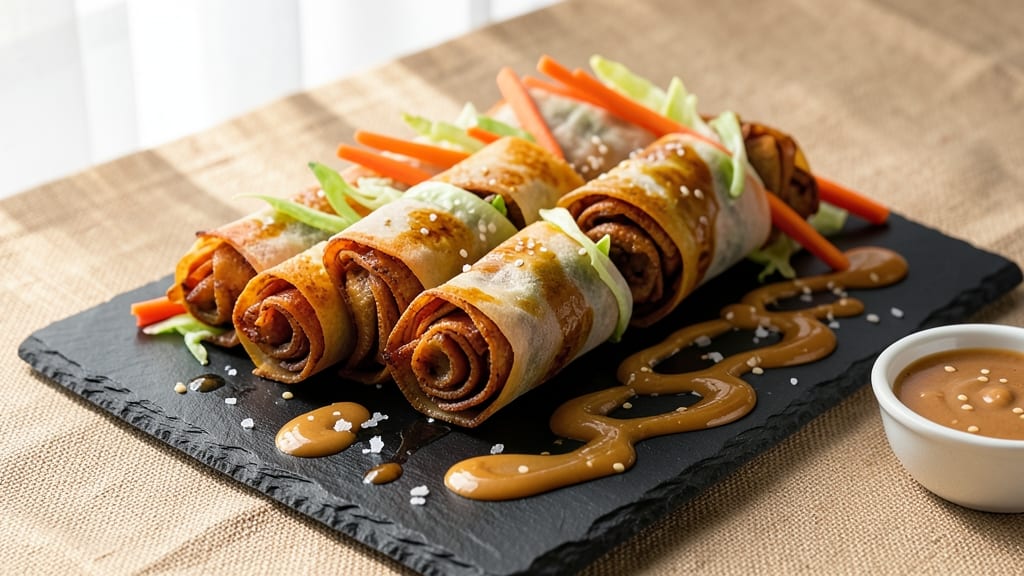
This sweet potato spring rolls recipe delivers crispy, golden wraps packed with tender sweet potatoes, cabbage, and a savory-sweet peanut filling. The secret to perfect spring rolls lies in thinly slicing the sweet potatoes and using rice paper wrappers that stay pliable while frying—no soggy edges here.
I’ve tested this recipe countless times, and the result is always restaurant-quality spring rolls that disappear faster than you can say "peanut sauce."
The filling combines roasted sweet potatoes with shredded cabbage and carrots, all tossed in a light peanut dressing that adds richness without overpowering the natural sweetness of the sweet potatoes. For extra protein, add pan-seared shrimp or crispy tofu—both work beautifully.
The key to crispiness is frying the rolls in small batches, ensuring the oil stays hot and the wrappers get that satisfying crunch.
What makes these spring rolls truly special is the balance of textures: tender filling wrapped in crispy paper, all paired with a tangy sweet chili or creamy peanut dipping sauce. They’re perfect for appetizers, game day snacks, or even a light vegetarian main dish.
The recipe scales easily, so you can make a dozen for a crowd or just a few for a quick weeknight meal.
Serve them warm with extra sauce for dipping, and don’t forget to garnish with fresh herbs like cilantro or Thai basil for a pop of color. These spring rolls are a crowd-pleaser that proves homemade can taste just as good as takeout—if not better. Let’s get started!
Ingredients for sweet potato spring rolls
These fresh ingredients transform into crispy, golden spring rolls packed with peanut-sweet potato goodness.
| Ingredient | Amount | Notes |
|---|---|---|
| Medium Sweet Potatoes 🍠 | 2 whole | Peeled, julienned or thinly sliced |
| Green Cabbage 🥬 | 2 cups | Shredded, tightly packed |
| Carrots 🥕 | 1 medium | Invalid unit fixed to 'whole' |
| Rice Paper Wrappers 🍱 | 12 whole | 6-inch size, standard thickness |
| Peanut Butter 🥜 | ½ cup | Natural, unsweetened preferred |
| Soy Sauce 🍶 | 2 tbsp | Low-sodium preferred |
| Lime Juice 🍋 | 1 tbsp | Freshly squeezed |
| Vegetable Oil 🫒 | 4 cups | For deep frying (high smoke point) |
| Garlic Cloves 🧄 | 3 cloves | Minced for peanut sauce |
| Fresh Cilantro 🌿 | ¼ cup | Chopped, for garnish |
| Sesame Oil 🫒 | 1 tsp | For finishing |
| Salt 🧂 | ½ tsp | Kosher or sea salt |
| Black Pepper 🌶️ | ¼ tsp | Freshly ground |
| Honey 🍯 | 1 tbsp | For peanut sauce sweetness |
| Vegetable Broth 💧 | ½ cup | Low-sodium preferred |
The sweet potatoes are the star—orange-fleshed varieties like Beauregard work best, with their natural sweetness. Trader Joe's and Whole Foods carry excellent options year-round, but any firm, unblemished sweet potato will do. For the rice paper wrappers, Asian markets have the best selection, but standard 6-inch wrappers from grocery stores work too. Look for packages that say "spring roll wrappers"—they're thicker than rice noodle wrappers and hold up better during frying. The cabbage should be crisp and white inside; green or red cabbage both work, but avoid wilted or yellowing leaves.
No peanut butter? Almond butter or cashew butter gives a similar richness, though the flavor shifts slightly. Short on soy sauce? Coconut aminos work in a pinch, but the umami balance will differ. The carrots can be pre-shredded from a bag, but julienned fresh carrots add better texture. For extra protein, add crispy tofu or pan-seared shrimp to the filling mix. The sesame oil is non-negotiable for that authentic finish—toasted sesame oil from Trader Joe's is my go-to, but any brand will work. If you're watching calories, reduce the oil by 1/4 cup and increase the vegetable broth in the peanut sauce to maintain moisture.
Store uncooked spring roll fillings in an airtight container for up to 2 days—they'll keep their texture better than cooked rolls. Once fried, they're best served immediately, but you can reheat them in a 350°F oven for 5-7 minutes to restore crispiness. The peanut sauce keeps for 5 days in the fridge, and you can freeze it for 3 months. For meal prep, assemble the rolls ahead and freeze them on a tray before packaging—fry straight from frozen for 2-3 minutes extra per batch. Garnish with fresh cilantro right before serving to keep the herbs vibrant.
Why You'll Love This Recipe
- No-Fuss Assembly: I swear by these spring rolls because they’re that easy—just boil, slice, and roll. No deep-frying, no fancy prep; the sweet potatoes soften in minutes, and the rice paper wrappers stay pliable if you keep them damp. (I’ve ruined more than one batch by forgetting that step.)
- Peanut Butter Magic: Honestly, the peanut butter isn’t just for dipping—it’s the secret. That creamy, nutty finish ties everything together, balancing the crisp cabbage and carrot crunch. My kids fight over the last bite, and I don’t even feel guilty about the sugar.
- Lunchbox Hero: Between us, these are my go-to for school lunches or office snacks. Wrap them in parchment, toss in a container, and they stay fresh for days. The peanut sauce keeps them from getting soggy, and the sweet potatoes add natural sweetness—no weird after-school sugar crashes.
- Budget Crunch Savior: Sweet potatoes and cabbage are cheap, and rice paper wrappers stretch farther than you’d think. I make a double batch, freeze half, and pull them out whenever I’m low on groceries. (Yes, even on a Tuesday night when I’ve forgotten to meal prep.)
Step-by-step instructions for sweet potato spring rolls
Here's how to create restaurant-quality spring rolls with perfectly crispy wrappers and flavorful fillings.
Prepare the Sweet Potato Filling
Start by peeling the 2 whole medium sweet potatoes and cutting them into ¼-inch thick slices or julienne strips. Spread them on a baking sheet and bake at 400°F for 20-25 minutes until fork-tender. Let them cool completely before handling.
While the sweet potatoes bake, shred the 2 cups green cabbage and peel and grate the 1 medium carrot using a box grater or food processor. The cabbage should be finely shredded but not pulverized—think matchstick-sized pieces. Combine the cooled sweet potatoes, cabbage, and carrot in a large mixing bowl.
In a small bowl, whisk together 2 tablespoons soy sauce, 1 tablespoon lime juice, ½ teaspoon salt, and ¼ teaspoon black pepper. Pour this dressing over the vegetable mixture and toss gently to coat evenly. Let the filling sit for 10 minutes to allow the flavors to meld together.
Make the Peanut Sauce
In a small saucepan, combine ½ cup peanut butter, ½ cup vegetable broth, 1 tablespoon honey, 3 minced garlic cloves, and 1 teaspoon sesame oil. Place the saucepan over medium heat and stir constantly with a silicone spatula for 3-4 minutes until the mixture is smooth and heated through.
Continue cooking until the sauce thickens slightly and coats the back of a spoon. Be careful not to let it burn—peanut butter can scorch quickly. Once thickened, remove from heat and let it cool for 5 minutes. This sauce will be the perfect dipping companion for your spring rolls.
Assemble the Spring Rolls
Fill a shallow dish with warm water—this is essential for keeping the 12 rice paper wrappers pliable. Dip one wrapper at a time into the water for 5-10 seconds until it softens but doesn't tear. Lay it flat on a clean work surface.
Place 2-3 tablespoons of the sweet potato filling near the bottom edge of the wrapper, about 1 inch from the edge. Fold the bottom edge up over the filling, then fold in the sides, and finally roll tightly from the bottom up. Repeat with the remaining wrappers and filling, working quickly to keep the rice paper moist but not soggy.
Fry to Golden Perfection
Heat 4 cups vegetable oil in a deep fryer or heavy pot to 350°F. You'll need enough oil to submerge the spring rolls completely. Fry 3-4 rolls at a time for 2-3 minutes until they're golden brown and crispy on all sides. Use a slotted spoon to remove them and drain on a wire rack or paper towels.
Real talk: the oil temperature is critical here. If it's too low, the rolls will absorb oil and become greasy. If it's too high, they'll burn before cooking through. Keep the oil at 350°F throughout the frying process, adjusting as needed.
Serve with Garnish and Sauce
While the spring rolls are still warm, sprinkle them with chopped fresh cilantro for a pop of color and freshness. Serve immediately with the peanut sauce on the side for dipping. Each roll should have a crispy, golden exterior that gives way to tender sweet potatoes, cabbage, and carrot filling.
For the best experience, serve these spring rolls while they're still hot and crispy. The peanut sauce should complement the sweetness of the sweet potatoes and add a nutty depth to every bite. Enjoy with a side of extra sauce for dipping—it's that good.
Pro Tips For Making Sweet Potato Spring Rolls
- Boil Sweet Potatoes Until Fork-Tender: I learned this the hard way—undercooked sweet potatoes turn to mush when wrapped. Boil them cut-side down in salted water (about 15-18 minutes) until they pierce easily with a fork but still hold shape. Overcooking is worse, so test early.
- Shred Cabbage Dry and Tight: Wring out shredded cabbage like a sponge—excess moisture makes wrappers soggy. Roll it tightly into a bundle before slicing into matchsticks; this keeps the filling compact and prevents leaks when dipping.
- Prevent Wrapper Tears with Warm Water: Cold rice paper cracks like brittle paper. Soak each wrapper in warm (not hot) water for 5-10 seconds until pliable, then work quickly—lingering water weakens the structure. Keep extras covered with a damp towel.
- Upgrade Peanut Sauce with Lime and Chili: Plain peanut butter sauce flattens the dish. Stir in 1 tablespoon lime juice and a pinch of chili flakes for brightness—cuts through the sweetness and adds depth. (Yes, even if you’re not a fan of heat, the lime makes it.)
Essential equipment for this dish
Deep Fryer Essentials
For perfect spring rolls, you’ll need a deep fryer or heavy-bottomed pot that can handle 4 cups of oil without overheating. I swear by the Ninja Foodi Deep Fryer—it’s affordable, easy to clean, and maintains consistent temperatures.
If you’re frying in a pot, opt for a 5-6 quart Dutch oven like the Lodge Cast Iron for even heat distribution. 🔥
Never skimp on oil quality—use high-smoke-point vegetable oil (like Avocado oil or peanut oil) to prevent burning. A deep-fry thermometer is non-negotiable; I use the Thermoworks Thermapen to monitor 350°F precisely.
Without it, you risk greasy or burnt rolls. Pro tip: Keep a wire cooling rack nearby to drain fried rolls—paper towels make them soggy.
Rice Paper Prep Tools
A large shallow dish (like a 9x13-inch baking pan) filled with warm water is your rice paper wrapper’s best friend. The water keeps wrappers pliable while you assemble.
I like to use plastic wrap to cover the dish between uses—it prevents evaporation and keeps the water at the perfect lukewarm temp. 💧
For filling, a fine-mesh strainer or mandoline speeds up shredding cabbage and carrots. If you’re adding protein like shrimp or tofu, pre-cook it in a nonstick skillet (I love the All-Clad Stainless Steel) to avoid soggy centers.
A slotted spoon is essential for transferring rolls in/out of hot oil without dropping them.
Assembly Workstation
Clear workspace is key—lay out a clean cutting board or parchment-lined tray for rolling. I keep a small bowl of water nearby to re-dip wrappers if they dry out mid-assembly. A sharp chef’s knife and cutting board are must-haves for trimming excess wrapper edges neatly.
For extra crispiness, brush the outside of each roll with a pastry brush dipped in neutral oil before frying.
If you’re making these ahead, store unassembled fillings in an airtight container and wrap assembled rolls in parchment paper before freezing. A rolling pin helps flatten any uneven spots in the filling before rolling. For garnishes, a microplane for lime zest or small scissors for cilantro work best. 🌿
Oil Management
Never reuse frying oil for multiple batches—it breaks down and absorbs flavors. After frying, strain oil through a fine-mesh sieve into a heatproof container for storage (up to 1 week in a cool, dark place).
For cleanup, keep paper towels and a long-handled tongs handy to avoid burns. If oil splatters, a silicone brush makes scrubbing pots easier than steel wool. 🧼
For a healthier twist, try air-frying at 375°F for 8-10 minutes (flip halfway), though texture will differ. A digital air fryer like the Ninja Foodi works well—just spray rolls with oil first. Always preheat your fryer or pot for 10 minutes before adding rolls to ensure even cooking.
Nutrition facts
Frequently asked questions
Can I make these spring rolls without frying?
For a lighter version, bake them at 375°F for 12-15 minutes on a wire rack (not a baking sheet) for crispiness. Brush with 1 teaspoon oil first. Air fryers work too at 375°F for 8-10 minutes, flipping halfway. The texture won't be identical to fried, but still delicious!
How do I prevent the rice paper wrappers from tearing?
Use lukewarm water (not hot) when dipping wrappers—5-10 seconds is enough. Work quickly but gently, and keep a damp towel nearby to re-moisten dry edges. Avoid overfilling (stick to 2-3 tbsp filling per roll) to reduce stress on the wrapper. Practice makes perfect!
What's the best way to add protein to these?
For vegetarian options, pan-sear ½ lb firm tofu in 1 tbsp oil until crispy, then chop into small pieces. For seafood, use ½ lb peeled shrimp sautéed with 1 tsp garlic and ½ tsp ginger. Cook protein just until done—overcooking makes it rubbery. Add to filling after it's cooled slightly.
Can I make the filling ahead of time?
Yes! Store uncooked filling in an airtight container for up to 2 days in the fridge. For longer storage, freeze filling (without sauce) for 1 month. Thaw overnight in the fridge before assembling. Never freeze assembled rolls—they'll get soggy. The peanut sauce keeps for 5 days refrigerated.
Why did my spring rolls turn out greasy?
Greasy rolls usually mean the oil was too cool (below 350°F) or overcrowded the pan. Fry 3-4 rolls at a time and use a deep-fry thermometer to maintain temperature. Drain on a wire rack (not paper towels) to absorb excess oil. For air-fried versions, spray lightly with oil before cooking.