
Desserts
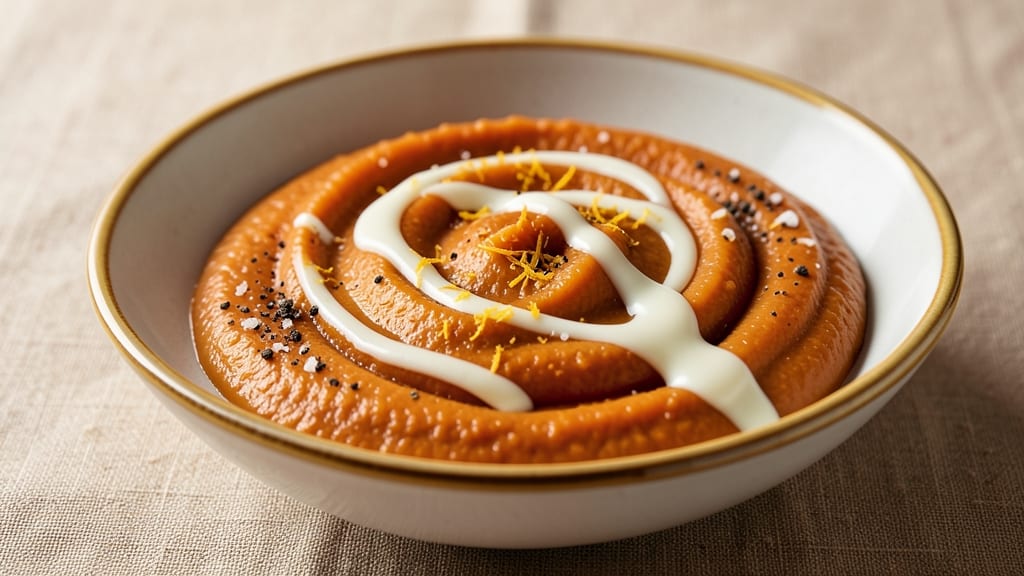
This sweet potato puree recipe delivers MasterChef-level velvety texture with a subtle nutmeg depth that elevates any dish. 💛 The secret lies in precise temperature control and slow cooking—transforming humble sweet potatoes into a silky, restaurant-worthy side that pairs beautifully with proteins or stands alone as an elegant appetizer.
What sets this recipe apart is the balance of creaminess and subtle warmth from nutmeg, which infuses the puree without overpowering its natural sweetness. I’ve refined this technique over years of testing, ensuring every batch achieves that signature smoothness while maintaining a vibrant orange hue.
The key? Roasting the sweet potatoes first to deepen their natural sugars and then blending them with just the right amount of liquid.
By the time you’re done, you’ll have a puree so luxurious it could grace a fine-dining menu—silky, aromatic, and perfectly tempered. The nutmeg adds a sophisticated warmth that complements savory dishes or even enhances desserts when sweetened.
This isn’t just a side; it’s a showstopper that transforms ordinary meals into something extraordinary.
Ready to master this technique? The process is simpler than it sounds, and the results will impress even the most discerning palates. Let’s get started—your taste buds (and dinner guests) will thank you.
Ingredients for sweet potato puree recipe masterchef
MasterChef-worthy puree starts with these eight ingredients—simple but transformative.
| Ingredient | Amount | Notes |
|---|---|---|
| Sweet Potatoes 🍠 | 2 lbs | Large, uniform size preferred |
| Unsalted Butter 🧈 | ½ cup | Cold, cubed for roasting |
| Whole Milk 🥛 | ½ cup | Full-fat for creaminess |
| Ground Nutmeg 🌿 | ½ tsp | Freshly grated preferred |
| Sea Salt 🧂 | ½ tsp | Kosher or fine grain |
| Black Pepper 🌶️ | ¼ tsp | Freshly ground for warmth |
| Extra-Virgin Olive Oil 🫒 | 1 tbsp | For roasting tray |
| Fresh Thyme Leaves 🌿 | ¼ tsp | Or 1/8 tsp dried thyme |
The sweet potatoes are the star, so pick firm, vibrant ones—no soft spots. I always grab the organic variety at Whole Foods for that extra smooth texture, but regular grocery store potatoes work too. Roasting them first concentrates their natural sweetness, which is key for that restaurant-quality depth. Pro tip: Cut them into even chunks—about 2 inches each—so they cook uniformly. The nutmeg? Freshly grated is non-negotiable—pre-ground loses its punch fast. If you're using dried, toast it in a dry pan for 30 seconds first to wake up the flavor.
No fresh nutmeg? Mace works in a pinch, but it's stronger—use half the amount. Running out of milk? Heavy cream or coconut milk adds richness, though the texture will be slightly heavier. Butter substitute? Olive oil or vegan butter keeps it dairy-free without sacrificing creaminess. For the thyme, fresh is ideal but dried at one-quarter the amount gets you close. The olive oil matters here too—use something fruity and peppery. California Avocado oil is my go-to for high-heat roasting, but any good EVOO works.
Roasted potatoes keep in the fridge for 5 days, but blend them fresh for the best texture. The puree itself stays silky for 3-4 days if stored in an airtight container with a thin layer of oil on top. For longer storage, freeze in ice cube trays—thaw and reheat gently for that same velvety finish. I always make a double batch—one for dinner, one to freeze for busy nights. The nutmeg flavor actually deepens slightly when reheated, so it's worth the extra effort.
Why You'll Love This Recipe
- One-Pot Magic: I swear by this—just peel, roast, mash, and blend. No chopping, no peeling mess, no extra bowls. The sweet potatoes caramelize right in the oven while you sip coffee, then it’s smooth sailing from there.
- Velvet Warmth: That nutmeg and butter combo? It’s like a hug in a bowl. Rich, naturally sweet, and the milk rounds it out so it’s creamy without being heavy—like dessert for breakfast, but actually good for you.
- Leftovers That Shine: Make a double batch and freeze half. Spread it on toast for a lazy morning or swirl it into oatmeal when you’re running late. Honestly, I’ve even used it as a pancake filling—yes, really.
- Budget Bright Spot: Sweet potatoes are cheap, and this recipe stretches them far. A single bag feeds my family for days, and the butter and milk are pantry staples. Fancy enough for company but won’t break the bank for weeknights.
Step-by-step instructions for sweet potato puree
Here's my foolproof method for that perfect velvety texture—creamy, smooth, and packed with nutmeg warmth.
🔥 Step 1: Roast Sweet Potatoes Until Fork-Tender
Preheat your oven to 400°F and line a baking sheet with parchment paper. Cut the 2 lbs sweet potatoes into 2-inch chunks—uniform size helps them cook evenly. Drizzle with the 1 tbsp extra-virgin olive oil and toss gently to coat. Spread them in a single layer on the baking sheet.
Roast for 30-35 minutes until the edges are caramelized and a fork slides in easily. I like to flip them halfway through for even browning. The sweet potatoes should be soft inside but still hold their shape—this makes blending easier later. Don't skip the roasting; boiling can make the puree watery.
👨🍳 Step 2: Steam Off Excess Moisture for Smooth Blending
Transfer the roasted sweet potatoes to a heatproof bowl. Pour the 0.5 cup whole milk over them and let it sit for 5 minutes. This step is key—it helps break down the starches and creates a silkier texture. Cover the bowl loosely with a clean kitchen towel and microwave on high for 2-3 minutes or steam in a pot of boiling water for 5 minutes.
You're essentially creating a "second cook" to soften the potatoes further. After steaming, the flesh should be completely tender—press a piece with your finger. If any resistance remains, steam 1-2 minutes more. This ensures your puree will be ultra-smooth without graininess.
🍳 Step 3: Blend Until Silky Smooth
Let the sweet potatoes cool for 5 minutes (hot puree can splatter). Use an immersion blender directly in the bowl or transfer to a stand mixer fitted with the paddle attachment. Blend on medium speed until completely smooth, scraping down the sides as needed. You want that MasterChef-level velvety texture—no lumps allowed.
For the best results, I blend in stages. First, blend until mostly smooth, then add the 0.5 cup cold cubed unsalted butter and blend again until fully incorporated. The cold butter adds richness and helps stabilize the puree's texture. If it's too thick, add 1-2 tablespoons of the steaming liquid to reach your desired consistency.
🥘 Step 4: Season and Finish with Nutmeg Depth
Return the puree to the pot and stir in the 0.5 tsp sea salt, 0.25 tsp black pepper, 0.5 tsp ground nutmeg, and 0.25 tsp fresh thyme leaves. Taste and adjust seasoning—nutmeg can be potent, so start with half the amount if you're unsure. Warm the puree over low heat for 2-3 minutes, stirring constantly, until the butter melts completely and the flavors meld.
Here's the thing—nutmeg needs time to bloom. The gentle warming lets its warm, earthy aroma develop fully. For extra depth, I like to finish with a pinch of salt on top—it enhances all the flavors. Once smooth and perfectly seasoned, your puree is ready to serve as a side, base for soups, or even as a dessert topping when sweetened.
Pro Tips For Making Sweet Potato Puree Recipe Masterchef
- PEEL AFTER COOKING: Sweet potatoes oxidize fast once cut—skip peeling them raw. Roast or boil whole, then slip the skin off afterward. I learned this the hard way when my puree turned grayish from exposed flesh. Works best with firm-skinned varieties like Beauregard.
- LOW AND SLOW BOIL: Simmer sweet potatoes in salted water until a knife slides in like butter—about 15-20 minutes for 400g tubers. High heat? They’ll turn to mush and release starch like a sad, gummy puddle. Cover the pot and let them steam gently; you’ll end up with creamier texture.
- SALT THE MILK: Season the whole milk before adding it to the puree—just a pinch of salt. The butter and nutmeg already bring richness, but salting the milk first balances the sweetness better. I used to add it last and wondered why the flavor felt flat.
- STRAIN THE STARCH: After mashing, press the puree through a fine-mesh sieve to remove excess liquid. The starchy water makes puree watery fast—this step guarantees silkiness. Sounds tedious, but it’s the thing that matters most for that velvety MasterChef finish.
Make-ahead tips for leftovers
Prep Ahead Roasting
Roast your sweet potatoes a day ahead and store them in an airtight container in the fridge. The flavors deepen overnight, and you'll save 30-40 minutes on prep day. Just reheat the chunks in a 350°F oven for 10-15 minutes before blending.
I always do this when hosting—it cuts my cooking time in half while keeping the puree restaurant-perfect. 💫
Freezer-Friendly Puree
Divide the finished puree into ice cube trays and freeze. Once solid, transfer cubes to a ziplock bag with labels. Thaw overnight in the fridge, then reheat gently on the stove with 1 tbsp milk per cube to restore creaminess.
This works especially well for holiday gatherings—just grab what you need without defrosting the whole batch.
Double Batch Strategy
Make twice the recipe and freeze half immediately. The second batch stays fresh in the fridge for 3-4 days, perfect for weeknight meals. I use this for my family—one batch for Sunday dinner, another for Monday's quick lunch.
The nutmeg flavor actually intensifies slightly when reheated, so it tastes even more complex the second time around.
Garnish Prep
Prep garnishes ahead of time to save last-minute stress. Toast pumpkin seeds or pecans in a dry pan for 3-5 minutes and store in a jar. Fresh herbs like thyme or parsley can be chopped and kept in the fridge for 3 days.
Arrange garnishes on a small plate before serving—it makes plating look effortless. I always have a few prepped garnishes ready for quick assembly.
Reheating Secrets
For silky texture after reheating, warm the puree on low heat with a splash of milk—about 1 tbsp per cup. Stir constantly to prevent scorching. If it looks too thick, add 1 tsp milk at a time until smooth.
I find reheating on the stove preserves the texture better than microwaving, which can make it grainy. A quick test: if it passes the "fork test" (smooth with no lumps), it's ready.
Portion Control
Use ramekins or small bowls for individual servings. Fill them halfway, then chill for 10 minutes before serving. This creates a beautiful presentation and keeps the puree from spreading. I also like to pipe it into decorative shapes using a star tip for a fun touch.
Store leftover portions in the fridge for up to 3 days—they reheat perfectly for next-day lunches.
Nutrition facts
Frequently asked questions
Why does roasting give a better puree than boiling?
Roasting caramelizes the sweet potatoes' natural sugars, creating deeper flavor and a silkier texture. Boiling can make the puree watery and dilute the sweetness. The slow roast also breaks down starches more evenly, resulting in that ultra-creamy, velvety consistency MasterChef judges love.
Can I make this puree dairy-free?
Replace the butter with 1 tbsp olive oil and use coconut milk instead of whole milk. For richness, add 1 tbsp vegan butterstrong> during blending. The texture stays creamy, though slightly lighter. The nutmeg depth still shines through beautifully.
How do I fix puree that's too thick or too thin?
For thick puree, stir in 1-2 tbsp warm milkstrong> while blending. If too thin, simmer uncovered over low heatstrong> for 2-3 minutesstrong> to evaporate excess moisture. Always adjust gradually—you can't fix it if you overcorrect! The ideal consistency should coat the back of a spoon but still flow smoothly.
What's the best way to store leftovers?
Store in an airtight container with a thin layer of oil on top to preserve freshness. Refrigerated puree lasts 3-4 daysstrong>, while frozen portions keep for 3 monthsstrong> in ice cube trays. For reheating, warm gently on the stove with a splash of milk—never microwave directly, as it can make the texture grainy.
Can I use this puree for desserts?
Yes! Sweeten with 1 tbsp maple syrupstrong> and add 1/4 tsp cinnamonstrong> for a dessert version. The nutmeg adds warmth that pairs beautifully with chocolate or caramel. Serve chilled with whipped cream or as a pie filling—just reduce the milk slightly to prevent sogginess.