
Side Dishes
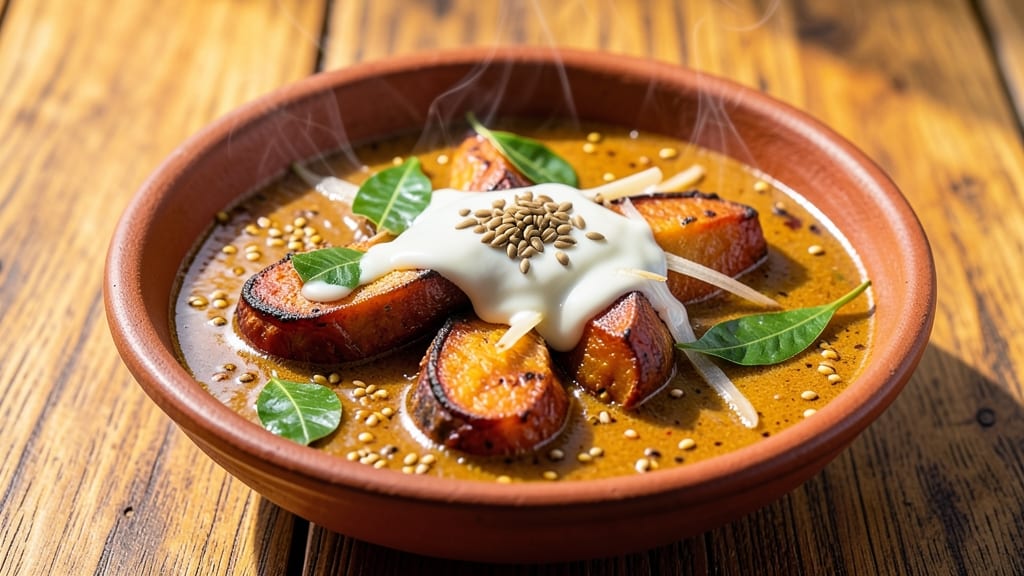
This Kerala sweet potato recipe transforms humble roots into a fragrant, coconut-infused curry that captures the heart of South Indian home cooking. The secret lies in slow-cooked sweet potatoes softening into tender, melt-in-your-mouth perfection while absorbing the warm spices and rich coconut milk.
I developed this version after years of testing—balancing Kerala’s signature flavors without overpowering the natural sweetness of the potatoes.
The dish begins with a fragrant tempering of mustard seeds, curry leaves, and ginger, which releases aromatic oils that form the base of the curry. Coconut milk then transforms this into a velvety sauce that clings to each potato, creating a harmonious blend of sweet, spicy, and creamy.
What makes this recipe special is how the spices develop depth over time, turning a simple side dish into something truly memorable.
By the time you serve this curry, you’ll have tender sweet potatoes swimming in a golden, spiced coconut sauce that’s rich yet balanced. The aroma alone will transport you to Kerala’s back alleys, where this dish is a staple in homes and restaurants alike.
It pairs beautifully with steamed rice, appam, or even crusty bread for a satisfying meal.
This recipe delivers restaurant-quality results with minimal effort—just 45 minutes of active prep and 30 minutes of simmering. The key is patience: letting the flavors meld during cooking ensures every bite is packed with authentic Kerala-inspired taste. Let’s get cooking!
Ingredients for sweet potato kerala
Transform humble sweet potatoes into Kerala's aromatic coconut-spiced curry with these authentic ingredients.
| Ingredient | Amount | Notes |
|---|---|---|
| Sweet Potatoes 🍠 | 2 lb | Medium-sized, peeled and cubed |
| Coconut Milk 🥥 | 1 ½ cups | Full-fat, canned for richness |
| Mustard Seeds 🌱 | 1 tbsp | Whole, for tempering |
| Curry Leaves 🌿 | ¼ cup | Fresh, tightly packed |
| Ginger | 1 inch | Fresh, peeled and sliced |
| Garlic Cloves 🧄 | 6 cloves | Peeled and minced |
| Green Chilies 🌶️ | 2 whole | Slit lengthwise for heat |
| Turmeric Powder 🌿 | ½ tsp | Freshly ground preferred |
| Cumin Seeds 🌱 | ½ tsp | Toasted for depth |
| Coriander Powder 🌿 | 1 tbsp | Freshly ground ideal |
| Salt 🧂 | 1 tsp | Adjust to taste |
| Coconut Oil 🫒 | 2 tbsp | For authentic flavor |
| Fresh Cilantro 🌿 | ¼ cup | Chopped for garnish |
The sweet potatoes are the star—look for orange-fleshed varieties with firm skin. Whole Foods or Indian grocery stores often carry the best for this dish. Peeled and cubed evenly, they'll absorb the coconut milk beautifully. For the coconut milk, full-fat canned versions like Thai Kitchen or Goya give the richest texture. Skip the light versions—they won't deliver that velvety sauce. Fresh curry leaves are non-negotiable; dried just won't cut it. Indian markets sell them in bundles, or you can find them frozen at specialty stores.
No fresh ginger? Powdered works at half the amount, but it lacks that bright zing. Green chilies too spicy? Remove seeds first, or swap for milder serrano peppers. The tempering spices—mustard seeds and cumin—need to be toasted until they sizzle; that's where the magic happens. For a quicker version, pre-ground spices are fine, but freshly toasted cumin and coriander make all the difference. The coconut oil adds that authentic Kerala aroma—don't substitute with vegetable oil unless you're in a pinch.
This curry tastes even better the next day as flavors meld. Store in airtight containers for up to 4 days in the fridge. For longer storage, freeze portions for up to 3 months. I always make a double batch—the extra reheats perfectly for lunches. Garnish with fresh cilantro right before serving, as it wilts quickly. The coconut milk will separate slightly when chilled; just stir before reheating.
Why You'll Love This Recipe
- Here’s what sold me: the way coconut milk turns velvety while the sweet potatoes caramelize just enough at the edges. That first bite—warm, slightly sweet, with a kick of ginger and mustard—tastes like a hug from Kerala. Honestly, it’s the kind of dish that makes you pause mid-bite.
- One-Pot Magic: I swear by this recipe when I’m too tired to wash extra bowls. Toss the cubed sweet potatoes into a pot with coconut milk, mustard seeds, and curry leaves—simmer until tender, and boom. That’s it. The ginger fizzles right into the milk, infusing every bite without extra effort.
- Creamy-Spiced Bliss: Here’s what sold me: the way coconut milk turns velvety while the sweet potatoes caramelize just enough at the edges. That first bite—warm, slightly sweet, with a kick of ginger and mustard—tastes like a hug from Kerala. Honestly, it’s the kind of dish that makes you pause mid-bite.
- Lunchbox Hero: Between us, this is my go-to for meal prep. The leftovers reheat beautifully—no soggy textures, just that same rich, spiced goodness. Pack it in containers for work or school, and you’ll be the office favorite. (Yes, even on a Tuesday night.)
Step-by-step instructions for sweet potato Kerala curry
Here's how to create a velvety coconut curry where sweet potatoes melt into tender perfection.
Temper the Spices for Maximum Flavor
Heat the 2 tablespoons coconut oil in a heavy-bottomed pot over medium heat. Add the ½ teaspoon cumin seeds and let them sizzle for 30 seconds until they release their nutty aroma and begin to turn golden. Here's where the magic happens - add the 1 tablespoon mustard seeds and let them pop and dance for about 1 minute. This step is crucial for building the spice foundation.
Next, add the 1-inch ginger and 6 cloves garlic, cooking for 2-3 minutes until the ginger becomes translucent and the garlic turns golden brown. The aroma should fill your kitchen - this is your signal that the spices are properly toasted. Immediately add the 2 whole green chilies (slit lengthwise) and cook for another 30 seconds until they soften slightly. The chilies will infuse their heat into the oil, creating the perfect balance of spice for this dish.
Add Aromatics and Build the Curry Base
Reduce the heat to medium-low and stir in the ½ teaspoon turmeric powder and 1 tablespoon coriander powder, cooking for 1 minute until the raw spice smell disappears. This ensures all the spices are properly toasted and ready to meld with the sweet potatoes. Add the 2 pounds cubed sweet potatoes and stir gently to coat them evenly with the spiced oil.
Pour in 1 cup of water and bring to a gentle simmer. Let the sweet potatoes cook for 8-10 minutes, stirring occasionally, until they begin to soften slightly but still retain some bite. The potatoes should be tender but not falling apart - you want them to finish cooking in the coconut milk. Here's the thing - if you see the potatoes sticking to the pot, add a splash more water to prevent burning.
Create the Creamy Coconut Gravy
Pour in the 1.5 cups coconut milk and stir well to combine. The mixture should look rich and velvety. Increase the heat to medium and let the curry simmer uncovered for 15-20 minutes, stirring occasionally, until the sweet potatoes are fork-tender and the sauce has thickened slightly. You'll know it's ready when the potatoes slide off your fork with minimal resistance and the sauce coats the back of a spoon.
Here's a pro tip: if the sauce becomes too thick before the potatoes are tender, add 2-3 tablespoons of water to maintain the perfect consistency. The curry should be luscious but not watery - it should cling beautifully to each tender piece of sweet potato. Taste and adjust the seasoning with the 1 teaspoon salt, adding more if needed. The balance of sweet potatoes, coconut, and spices should sing on your palate.
Finish with Fresh Aromatics
Once the curry reaches perfect tenderness, remove it from heat. Stir in the ¼ cup fresh cilantro and ¼ cup curry leaves, letting them wilt slightly in the warm sauce. This final step adds a bright, fresh contrast to the rich coconut flavors. The curry leaves will release their distinctive aroma, completing the authentic Kerala profile of this dish.
Let the curry rest for 5 minutes before serving. This resting period allows the flavors to meld completely and the sauce to thicken slightly. Serve hot with steamed rice or warm naan bread. The contrast of the fluffy rice with this velvety curry is what makes this dish truly special. Each bite should deliver perfectly tender sweet potatoes in a rich, spiced coconut embrace that's both comforting and vibrant.
Pro Tips For Making Sweet Potato Kerala
- PRE-COOK THE POTATOES: Cut the sweet potatoes into even 1-inch chunks and boil them for 8-10 minutes until just fork-tender—not mushy. This ensures they hold their shape when simmered in coconut milk later, and the texture stays firm and satisfying. (I learned this the hard way after serving a watery, sad version.)
- TOAST THE SPICES: Bloom the mustard seeds and curry leaves in hot oil for 30 seconds until they pop and smell like a Kerala street stall. This step isn’t optional—it builds the flavor foundation. Skip it, and your dish will taste flat, no matter how long you simmer.
- GRATE THE GINGER FRESH: Use a microplane or fine grater for ginger—no peeling needed. Freshly grated ginger adds a bright, zesty punch that jarred or pre-minced can’t match. (Yes, even if you’re impatient like me, this makes a real difference.)
- SIMMER LOW AND LONG: After adding coconut milk, keep the heat at a bare simmer—no boiling. This lets the sweet potatoes absorb the creamy, spiced milk without turning gluey. I used to rush it, and the result was always too thick or grainy. Trust the 15-20 minutes of gentle cooking.
Dietary considerations for this recipe
Vegetarian-Friendly
This Kerala sweet potato curry is naturally vegetarian, making it perfect for plant-based diets or vegetarian households. The dish relies entirely on plant ingredients—sweet potatoes, coconut milk, and aromatic spices—without any animal products.
I've tested this recipe with vegan friends, and it's always a hit because the coconut milk provides rich, creamy texture without dairy. 🌱
Gluten-Free
All ingredients in this recipe are naturally gluten-free, so it's safe for those with celiac disease or gluten sensitivity. The spices, coconut milk, and sweet potatoes contain no wheat, barley, or rye.
Just ensure your coconut milk and any purchased spices (like coriander powder) are certified gluten-free if you're highly sensitive. I always double-check labels on store-bought spices to be safe.
Dairy-Free
The creamy texture comes entirely from coconut milk, eliminating any dairy. This makes the curry ideal for lactose-intolerant individuals or those following dairy-free diets. The coconut milk also adds a subtle sweetness that complements the natural sweetness of the potatoes.
For extra richness, I sometimes add a splash of coconut cream at the end, but it's not necessary.
Low-Oil Option
If you're watching your oil intake, you can reduce the coconut oil to 1 tablespoon instead of 2 while still maintaining flavor. The coconut milk provides enough richness to compensate.
For a completely oil-free version, sauté the spices in a dry pan for 1-2 minutes until fragrant, then add the sweet potatoes and proceed as directed. The flavor will be slightly different but still delicious.
Spice Adjustments
For milder heat, remove the seeds from green chilies before adding them, or reduce the number to 1 chili. If you love spice, add ½ teaspoon red chili powder when tempering the spices.
The curry leaves and mustard seeds already provide depth without overwhelming heat. I often adjust the green chilies based on who's eating—kids get fewer, adults get more! 🌶️
Protein Boost
To make this a complete meal, stir in ½ cup cooked lentils (like toor dal or masoor dal) when adding the sweet potatoes. The lentils absorb the coconut sauce beautifully and add plant-based protein.
For extra protein, top with crumbled tofu or roasted chickpeas before serving. This works especially well if you're serving it with rice for a balanced meal.
Nutrition facts
Frequently asked questions
Can I use regular potatoes instead of sweet potatoes in this Kerala curry?
While you can substitute regular potatoes, the dish won't have the same depth of flavor or texture. Sweet potatoes add natural sweetness that balances the spices beautifully, while their firmer flesh holds up better in the coconut sauce. If you must use regular potatoes, choose waxy varieties like red potatoes and reduce the cooking time by 5 minutes—they'll break down faster in the coconut milk.
How do I make this curry less spicy?
For a milder version, remove the seeds from the green chilies before adding them, or reduce the quantity to just 1 chili. You can also skip the red chili powder entirely if using it. The mustard seeds and curry leaves provide plenty of aroma without heat. If you've already cooked it too spicy, stir in 1 tablespoon yogurt or a pinch of sugar to balance the flavors.
What's the best way to store and reheat this Kerala sweet potato curry?
Store in an airtight container in the fridge for up to 4 days, or freeze for 3 months. To reheat, warm gently on the stove over low heat with 1-2 tablespoons of water to prevent drying. Stir occasionally—the coconut milk may separate slightly when chilled, but it will recombine when heated. For microwave reheating, use 50% power for 1-2 minutes, stirring halfway.
Can I make this curry in an Instant Pot or pressure cooker?
Yes! Use the sauté function to toast the spices, then add 1 cup water and pressure cook for 5 minutes after the potatoes are tender. Release pressure naturally, then add coconut milk and simmer for 5-7 minutes to thicken. The Instant Pot version cuts cooking time to about 20 minutes total. Just be careful—the potatoes will soften faster under pressure.
What are the best sides to serve with this Kerala sweet potato curry?
This curry pairs perfectly with steamed white rice, appam (Kerala's soft hoppers), or parotta. For a complete meal, add a simple cucumber raita or onion salad to cut through the richness. The coconut flavors also complement grilled fish or chicken if you're serving it as a main. In Kerala, it's often served with pappadam (crispy lentil crackers) for crunch.