
Side Dishes
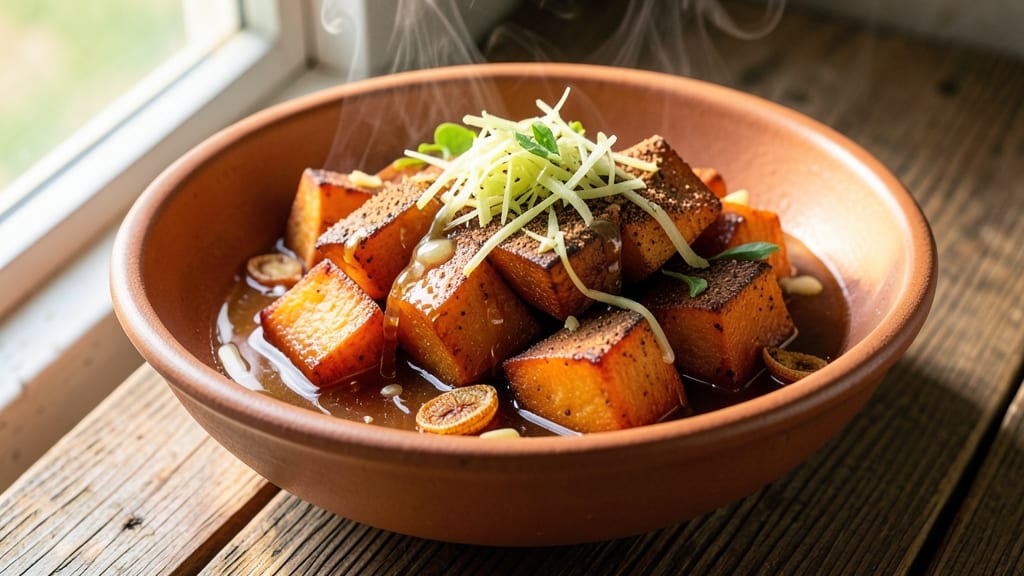
This sweet potato jaggery recipe transforms humble sweet potatoes into a rich, caramelized masterpiece with India’s beloved jaggery glaze. The combination of earthy sweet potatoes and jaggery’s deep molasses notes creates a dish that’s both comforting and sophisticated—perfect for special occasions or weeknight dinners.
I’ve perfected this recipe over years of testing, balancing sweetness and spice to achieve that ideal harmony.
The secret lies in the jaggery glaze, which requires patience to caramelize properly without burning. You’ll roast the sweet potatoes until tender, then simmer them in a fragrant blend of jaggery, warm spices like cinnamon and cardamom, and a touch of ghee for richness.
The result is a dish that’s naturally sweet, subtly spiced, and impossibly tender—a far cry from the dry, bland versions you might find elsewhere.
What makes this recipe truly special is its versatility. Serve it as a standalone side dish alongside grilled meats or fish, or pair it with a dollop of yogurt and a sprinkle of toasted nuts for added texture.
The jaggery glaze adds a deep, complex sweetness that lingers on the palate, making every bite memorable. Plus, it’s vegetarian, gluten-free, and requires just one pot for minimal cleanup.
Whether you’re introducing jaggery to your pantry or looking to elevate your sweet potato game, this recipe delivers restaurant-quality results with minimal effort. The process is straightforward, but the flavors are anything but ordinary—proof that simple ingredients can create something extraordinary when handled with care. Let’s get started!
Ingredients for sweet potato jaggery
Earthy sweet potatoes meet India’s rich jaggery glaze in this vegetarian masterpiece—just twelve ingredients for restaurant-quality results.
| Ingredient | Amount | Notes |
|---|---|---|
| Sweet Potatoes 🍠 | 2 lb | Medium-sized, peeled and cubed |
| Jaggery 🍯 | ¾ cup | Grainy texture preferred |
| Ghee 🧈 | ½ cup | Clarified butter for richness |
| Fresh Ginger 🧄 | 2 tbsp | Finely grated, aromatic |
| Ground Cinnamon 🌿 | 1 tsp | Ceylon preferred for flavor |
| Ground Cardamom 🌿 | ½ tsp | Freshly ground for potency |
| Black Peppercorns 🌶️ | ½ tsp | Crushed for depth of flavor |
| Coconut Oil 🫒 | 2 tbsp | For roasting sweet potatoes |
| Plain Yogurt 🥛 | ¼ cup | Full-fat for serving |
| Toasted Cashews 🥜 | ¼ cup | Chopped for garnish |
| Diamond Crystal Kosher Salt 🧂 | 1 tsp | For seasoning and glaze |
| Fresh Lemon Juice 🍋 | 1 tbsp | Balances sweetness |
The jaggery is the heart of this dish, and quality matters. Look for organic jaggery from Indian specialty stores like Patel Brothers or Apna Bazaar—it should have a deep amber color and a grainy texture, not refined sugar. Fresh ginger is non-negotiable here; organic ginger from the produce section has more punch than pre-peeled versions. For the ghee, Amul or Gowardhan brands are excellent choices, though any pure ghee will work. The cinnamon and cardamom should be freshly ground if possible—pre-ground spices lose their aroma quickly, especially cardamom.
No jaggery? Brown sugar or muscovado sugar can substitute at a 1:1 ratio, though the flavor won’t be identical. Running out of ghee? Coconut oil or vegan butter works in a pinch, though the dish will have a slightly different mouthfeel. The yogurt can be swapped for coconut yogurt or vegan Greek-style yogurt if needed, and the cashews can be replaced with pecans or almonds. For the ginger, if you only have powdered, use half the amount—but fresh is always better. The lemon juice is crucial for brightness, so if you’re using bottled, opt for freshly squeezed if possible, or add an extra pinch of salt to compensate.
Sweet potatoes keep 5-7 days in the fridge once peeled, but roast them the day you plan to use them for best texture. The jaggery glaze can be made ahead and stored in an airtight container for up to 2 weeks, though it’s best used within a week for maximum flavor. Portion the roasted sweet potatoes into containers with the glaze and they’ll reheat beautifully—30 seconds in the microwave or 10 minutes at 350°F restores their tenderness. Garnish with toasted nuts just before serving to maintain their crunch.
Why You'll Love This Recipe
- One-Pot Magic: I swear by this recipe when I’m too tired to wash a million dishes—just one pan, a little ghee to sizzle, and those sweet potatoes caramelizing with jaggery until they’re sticky and sweet. The ginger and cinnamon melt right into the mix, so you’re not left scraping burnt bits off your stove.
- Caramelized Bliss: That moment when jaggery melts into a glossy syrup and coats every bite? Pure satisfaction. The sweetness isn’t cloying—it’s balanced by the earthy warmth of cinnamon and the sharp kick of fresh ginger, like a hug in dessert form. (Yes, even on a Tuesday night.)
- Leftover Hero: This dish actually improves the next day. The flavors deepen, and the texture gets even better—perfect for quick breakfasts or sneaking into lunches. I’ve reheated mine in a skillet with a pat of ghee, and it’s like eating a warm, spiced hug.
- Budget Spice Bomb: Jaggery and sweet potatoes are my go-to cheap luxuries—way more affordable than honey or maple syrup, and they pack a flavor punch that feels special. A little goes a long way, and the cinnamon and ginger are pantry staples that make it taste like you spent hours cooking. (Spoiler: You didn’t.)
Step-by-step instructions for caramelized jaggery glazed sweet potatoes
Transform simple sweet potatoes into a luxurious spiced dish with this precise method.
Roast Sweet Potatoes to Perfect Tenderness
Preheat your oven to 400°F and line a baking sheet with parchment paper. Toss the 2 lb sweet potatoes (cubed to 1-inch pieces) with 2 tbsp coconut oil and 1 tsp Diamond Crystal Kosher Salt. Spread them in a single layer, leaving space between pieces for even browning.
Roast for 25-30 minutes until the edges are golden brown and a knife slides in easily. I like to flip them halfway through for consistent color. Remove from oven when they're tender but still hold their shape—overcooking turns them mushy. Let them cool slightly before proceeding.
Create the Jaggery-Cardamom Glaze
In a heavy saucepan, combine 0.75 cup jaggery, 0.5 cup ghee, 2 tbsp fresh ginger, 1 tsp ground cinnamon, 0.5 tsp ground cardamom, and 0.5 tsp crushed black peppercorns. Place over medium-low heat and stir constantly for 8-10 minutes until the jaggery melts completely and the mixture thickens.
Watch carefully—the glaze should coat the back of a spoon but still be pourable. If it starts to smoke, reduce heat immediately. The aroma will be intoxicating—this is where the magic happens. Remove from heat and let cool for 5 minutes while you prepare the yogurt mixture.
Assemble and Glaze the Sweet Potatoes
In a separate bowl, whisk together 0.25 cup plain yogurt and 1 tbsp fresh lemon juice until smooth. This tangy base balances the sweetness of the jaggery. Pour the cooled jaggery mixture over the warm sweet potatoes and toss gently to coat evenly.
Return the potatoes to the oven for 5-7 minutes at 375°F to set the glaze. You'll see it caramelize beautifully into a glossy finish. The potatoes should be hot but not scorched—this final step creates that signature restaurant-quality sheen.
Garnish and Serve Immediately
Transfer the glazed sweet potatoes to a serving platter and sprinkle with 0.25 cup toasted cashews for texture contrast. The cashews add a satisfying crunch that cuts through the rich glaze. Serve while still warm—the glaze will thicken as it cools, so timing matters for the perfect consistency.
Each bite should deliver tender sweet potato, aromatic spice notes, and that luxurious jaggery caramel. The yogurt-lemon base prevents the dish from being overly sweet, creating a harmonious balance. For best results, serve immediately with a dollop of whipped cream or a sprinkle of toasted coconut.
Pro Tips For Making Sweet Potato Jaggery
- CUT POTATOES UNIFORM: Jaggery caramelizes unevenly if chunks vary in size. Use a mandoline or sharp knife to slice sweet potatoes into ½-inch cubes—no bigger, no smaller. I learned this the hard way when my first batch had some mushy centers and others still raw inside.
- MELT JAGGERY LOW AND SLOW: Dump jaggery into the pan and walk away—literally. Too much heat makes it burn before dissolving. Keep the flame at medium-low and stir every 30 seconds until it turns into a glossy, amber syrup. Trust me, rushing this step ruins the flavor.
- GRATE GINGER FINE: Fresh ginger adds depth, but chunky pieces linger like tiny surprises. Use the smallest holes on a box grater or pulse in a food processor until it’s almost paste-like. This way, it blends smoothly into the ghee without clumping.
- TEST GHEE TEMPERATURE: Ghee should shimmer like liquid gold, not smoke like a campfire. Heat it until it’s hot enough to sizzle the potatoes but not so hot that it burns the jaggery’s caramel notes. Drop a tiny cube of potato in—if it dances, you’re golden. If it sticks, lower the heat.
Troubleshooting great sweet potato jaggery
Glaze Too Thin
If your jaggery glaze isn’t thickening enough, you likely need to reduce the heat or cook longer. I’ve found that medium-low heat is critical—too high causes it to burn before thickening. Let the mixture bubble gently for 5-7 extra minutes, stirring constantly with a heatproof spatula.
For a thicker glaze, reduce the 0.75 cup jaggery by 1 tbsp next time, as less liquid means more concentration. 🌡️
Sweet Potatoes Too Dry
Over-roasted sweet potatoes lose moisture and become dry. To prevent this, roast them at 400°F for 25 minutes max, then check with a fork—they should be tender but still slightly firm.
If they’re already dry, toss them with 1 tbsp warm water or coconut milk before adding the glaze. The yogurt-lemon mixture also helps restore moisture, so don’t skip that step! ⚡
Jaggery Not Melting
If your jaggery refuses to melt, it’s likely because the heat isn’t evenly distributed. Use a heavy-bottomed saucepan (like Calphalon or All-Clad) and stir constantly with a silicon spatula to prevent scorching.
If it starts to separate, add 1 tsp ghee to help emulsify it. For stubborn jaggery, lower the heat to medium-low and be patient—it will melt eventually. 💪
Glaze Too Sweet
The yogurt-lemon mixture is your secret weapon for balancing sweetness. If the glaze is overwhelmingly sweet, add 1 extra tbsp lemon juice or 1 tsp black pepper to cut through it.
For a more complex flavor, stir in ½ tsp grated ginger or a pinch of smoked paprika after removing from heat. Trust me, the acidity makes all the difference! 🍋
Cashews Not Crunchy
Toast your cashews in a dry skillet over medium heat for 3-4 minutes until golden, shaking the pan occasionally. If they’re still soft, spread them on a baking sheet and broil for 1-2 minutes—just watch closely to avoid burning.
For extra crunch, toast them until they’re deep golden brown and let them cool completely before sprinkling. 🥜
Glaze Separating
Separation happens when the glaze cools too quickly. To fix it, whisk in 1 tsp ghee or coconut oil while warm to help bind the mixture. For prevention, let the glaze cool for 5 minutes after removing from heat before combining with the sweet potatoes.
If it still separates, gently reheat the glaze on low heat while stirring until smooth. ✨
Nutrition facts
Frequently asked questions
Can I substitute jaggery with brown sugar?
You can use brown sugar as a substitute, but the flavor won't be identical. For every 0.75 cup jaggery called for, use 0.75 cup packed brown sugar. Jaggery has a deeper, caramel-like taste that brown sugar lacks, but it will still create a sweet, spiced glaze. For best results, add 1 tsp extra ginger to compensate for the missing complexity.
How long can I store the glazed sweet potatoes?
Store the glazed sweet potatoes in an airtight container in the refrigerator for up to 4 days. The glaze will thicken as it cools, so reheat them in the microwave for 30-45 seconds or in the oven at 350°F for 10 minutes to restore their tenderness. For longer storage, freeze the glazed potatoes for up to 2 months—just thaw overnight in the fridge before reheating.
Can I make this recipe without ghee?
If you don’t have ghee, use coconut oil or vegan butter instead. The dish will still be delicious, though the texture will be slightly lighter. For extra richness, add 1 tbsp coconut cream to the glaze. Just remember that ghee adds a unique depth of flavor that’s hard to replicate.
Why does my jaggery glaze burn easily?
Jaggery burns quickly because it contains natural sugars that caramelize fast. Always use medium-low heat and stir constantly with a heatproof spatula. If it starts to smoke, immediately reduce the heat or remove the pan from the stove. For extra safety, use a heavy-bottomed saucepan to distribute heat evenly. Patience is key—rushing will ruin the glaze!
What’s the best way to serve this dish?
This dish is incredibly versatile! Serve it warm as a side with grilled meats, fish, or even as a vegetarian main with a dollop of yogurt and toasted coconut flakes. For a dessert twist, top with whipped cream and crushed pistachios. It’s also perfect for breakfast—pair it with a fried egg and avocado for a sweet-savory combo. The possibilities are endless!