
Side Dishes
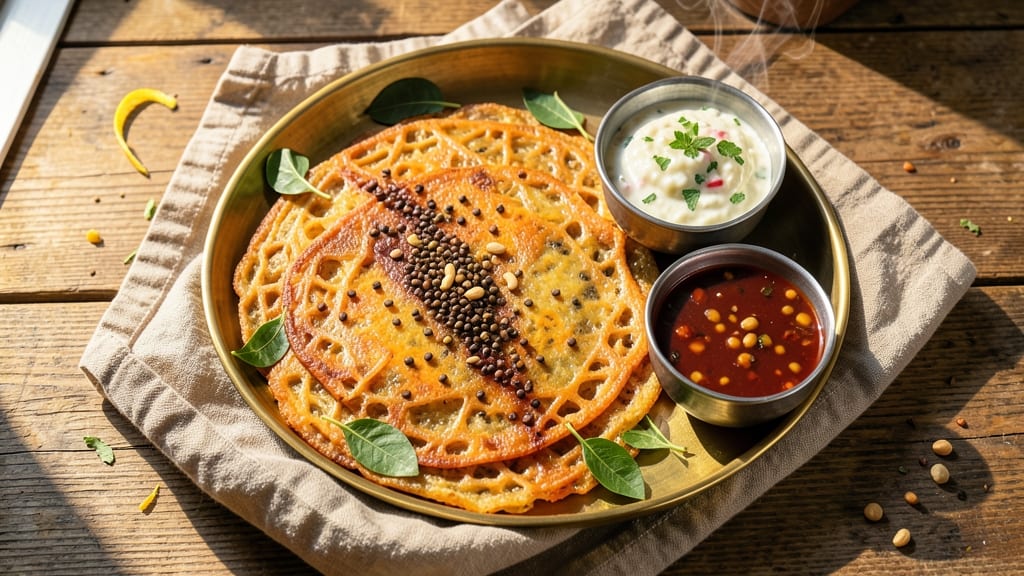
This sweet potato dosa recipe transforms a humble side into a crispy, layered masterpiece with golden edges and a spiced filling that balances earthy sweetness. The key lies in adjusting the batter for sweet potato’s moisture while maintaining that signature dosa texture—crispy outside, tender within.
I’ve refined this over countless batches to ensure the filling stays cohesive and the dosa holds together during flipping, a common challenge with root vegetables.
The process begins with a fermented batter (or quick version) that incorporates grated sweet potato and aromatic spices like cumin and mustard seeds. This isn’t your typical dosa—here, the filling transforms the dish into a hearty, satisfying meal rather than just a side.
The secret to the crispy layers is a well-heated griddle and precise pouring technique, ensuring even cooking without soggy centers.
What you’ll end up with is a dosa that delivers on every promise: crispy, golden-brown layers with a filling that’s fragrant and flavorful.
The contrast between the crunchy exterior and soft interior makes each bite satisfying, while the sweet potato adds natural sweetness that pairs beautifully with coconut chutney or sambar. This recipe proves that dosas can be both traditional and inventive.
Perfect for breakfast, lunch, or even dinner, these dosas are versatile enough to stand alone or complement a full South Indian meal. The batter can be prepped ahead, and the filling can be customized with herbs or spices to suit your taste.
Let’s get started on creating your crispy, layered dosa experience.
Ingredients for sweet potato dosa
Sweet potatoes, aromatic spices, and crispy layers—here’s your vegan dosa game-changer.
| Ingredient | Amount | Notes |
|---|---|---|
| Orange Sweet Potatoes 🍠 | 2 lbs | Medium size, peeled and grated |
| Rice Flour 🌾 | 1 ½ cups | For crispy texture |
| Urad Dal (Black Gram) 🌱 | ½ cup | Soaked overnight for batter |
| Cumin Seeds 🌶️ | 1 tbsp | Toasted for aroma |
| Mustard Seeds 🌶️ | ½ tbsp | Toasted for crispiness |
| Curry Leaves 🌿 | ¼ cup | Fresh, chopped |
| Asafoetida (Hing) 🌶️ | ¼ tsp | Optional, for depth |
| Salt 🧂 | 1 ½ tsp | Adjust to taste |
| Water 💧 | 1 ½ cups | For batter consistency |
| Cooking Oil 🫒 | ½ cup | For frying |
| Ginger 🧄 | 1 tbsp | Fresh, grated for filling |
| Green Chilies 🌶️ | 2 whole | Slit lengthwise for filling |
| Coriander Leaves 🌿 | ¼ cup | Fresh, chopped for filling |
| Lemon Juice 🍋 | 1 tbsp | Freshly squeezed |
| Vegan Butter 🧈 | 1 tbsp | For griddle coating |
The sweet potatoes are the star—orange varieties have more natural sweetness and vibrant color. Trader Joe’s or any Asian market usually has them pre-peeled, but if you’re peeling yourself, use a mandoline for even shreds. The urad dal is non-negotiable for that signature dosa texture, but if you can’t find it, chickpea flour works in a pinch. Toast your cumin and mustard seeds until they pop—this adds that irresistible aroma. For curry leaves, Indian grocery stores sell them fresh in bundles, but frozen works too if you’re in a hurry. Asafoetida might be tricky to find—Hing powder at any Indian market solves that.
No urad dal? Substitute with extra rice flour plus 1/4 cup chickpea flour—it’ll be slightly denser but still crispy. Fresh ginger and green chilies are ideal, but powdered versions at half the amount get you close. Short on coriander? Fresh cilantro works too. The lemon juice is key for brightness—bottled works but fresh is better. For the filling, if you’re feeling bold, add grated carrot or zucchini to bulk it up. The vegan butter on the griddle? Any plant-based butter (like Earth Balance) does the trick—just don’t skip it for crispiness.
Grated sweet potatoes release moisture fast—squeeze them dry in a clean towel before mixing into the batter. The batter ferments best at room temp for 6-8 hours, but the quick version (with 1 tsp baking soda) works in 30 minutes. Store leftovers in the fridge for 3 days, reheating on a dry skillet. Freezing isn’t ideal—they get soggy. Pro tip: Double the batter and freeze half for lazy mornings. The filling keeps for 2 days in the fridge, so make it fresh if possible.
Why You'll Love This Recipe
- No Blender Required: I swear by this—just grate those sweet potatoes by hand (or use a box grater if you’re feeling fancy). The texture stays perfect, no pulpy mess, and honestly? The effort makes the crispy, golden edges worth it.
- Sweet & Savory Magic: That orange sweet potato brings natural sweetness, while the urad dal adds a nutty depth. Toss in cumin and mustard seeds? Instant flavor explosion—crispy outside, tender inside, with just a hint of warmth.
- Lunchbox Hero: Between us, these hold up amazingly for packed lunches. Wrap them with coconut chutney or yogurt, and they’re still crispy by afternoon. My kids actually eat their veggies this way—no complaints.
- Pantry Staple Power: Rice flour, dal, and sweet potatoes? Things I already have. No specialty ingredients, no last-minute grocery runs. Plus, leftovers reheat like a dream—just a quick pan-fry to revive that crunch. Budget-friendly and foolproof.
Step-by-step instructions for sweet potato dosa
Here's how to craft these crispy, layered dosas with a sweet potato filling that's both flavorful and satisfying.
Prepare the Sweet Potato Filling
Start by peeling the 2 lbs of orange sweet potatoes and grating them finely using a box grater or food processor. Transfer the grated sweet potatoes to a mixing bowl and set aside. In a small pan, heat 0.5 cup of cooking oil over medium heat. Add the 1 tbsp of grated ginger, 2 whole green chilies (slit lengthwise), and 0.25 cup of chopped curry leaves. Sauté for 1 minute until the chilies turn bright green and the ginger releases its aroma.
Add the grated sweet potatoes to the pan and cook for 5 minutes, stirring occasionally, until the sweet potatoes soften slightly and the moisture evaporates. Remove from heat and let it cool for 5 minutes. Once cooled, mix in 0.25 cup of chopped coriander leaves and 1 tbsp of freshly squeezed lemon juice. This filling should be slightly sticky but not wet. Taste and adjust seasoning with salt if needed.
Make the Dosa Batter
In a large bowl, combine 1.5 cups of rice flour, 0.5 cup of soaked urad dal (black gram), 1.5 tsp of salt, and 0.25 tsp of asafoetida (hing). Mix well to combine the dry ingredients. Gradually add 1.5 cups of water while whisking to avoid lumps. The batter should be smooth and slightly runny, like thin pancake batter. Let it rest for 15 minutes to allow the urad dal to soften and the batter to thicken slightly.
While the batter rests, toast 1 tbsp of cumin seeds and 0.5 tbsp of mustard seeds in a dry pan over medium heat until they turn golden brown and release their fragrance. This should take about 2 minutes. Let them cool for 5 minutes, then add them to the batter along with 1 tbsp of vegan butter. Mix gently to distribute the toasted seeds evenly. The batter is now ready for cooking.
Cook the Dosas
Heat a non-stick griddle or skillet over medium heat. Lightly grease it with a small amount of cooking oil to prevent sticking. Pour a ladleful of the batter onto the center of the griddle, spreading it into a thin, even circle about 6 inches in diameter. The edges should be slightly thicker than the center to create the layered effect. You'll notice the batter sizzle and start to set almost immediately.
Once the edges begin to turn golden brown and the center looks slightly set but still moist, carefully place a spoonful of the sweet potato filling in the center. Fold the dosa into a semi-circle or triangle by bringing the edges toward the center, enclosing the filling. Press gently to seal the edges. Cook for an additional 2 minutes until the bottom is crispy and golden brown. Flip carefully and cook the other side for 1-2 minutes until golden and crispy.
Serve Hot and Enjoy
Transfer the cooked dosa to a plate and let it rest for 1 minute. You'll notice the layers stay crispy on the outside while the filling remains warm and flavorful inside. Repeat with the remaining batter and filling, making sure not to overcrowd the griddle. Serve the dosas hot with coconut chutney, mint chutney, or a side of sambar for a complete meal.
Here's the thing—these dosas are best enjoyed immediately while they're crispy and warm. The contrast between the crispy layers and the soft, spiced sweet potato filling makes every bite satisfying. Don't skip the resting step after cooking; it ensures the filling stays warm and the layers hold together perfectly.
Pro Tips For Making Sweet Potato Dosa
- Peel After Roasting: Sweet potatoes are stubborn when raw—peel them only after roasting. The skin softens enough to slide off with a spoon, and you avoid the mess of scrubbing orange flesh off your cutting board. (I used to peel first and ended up with a sink full of pulp.)
- Soak Urad Dal 3 Hours: Skip the overnight soak—just 3 hours in warm water is enough for urad dal to soften properly. Drain and grind with rice flour immediately while still warm; the batter will be smoother and stick less to your hands. (Cold dal = gummy batter = frustration.)
- Cook Sweet Potatoes Dry: Roast the sweet potatoes without oil—just high heat, cut-side down, until caramelized. The natural sugars concentrate, giving your dosa that deep, nutty sweetness. (Yes, they’ll stick. Use a spatula to scrape them off the tray.)
- Temper Spices Separately: Bloom cumin and mustard seeds in 1 tablespoon oil before adding them to the batter. This prevents the mustard from turning bitter and ensures the dosa gets that proper toasty aroma in every bite. (I learned this after a batch tasted like sad, undercooked dosa.)
Essential equipment for this dish
Griddle Essentials
A non-stick griddle or cast-iron skillet is your best friend for these dosas—I swear by my Lodge cast iron because it retains heat perfectly and creates those coveted crispy layers. If you don’t have one, a high-quality non-stick pan (like GreenPan or T-fal) works too.
The key is a heavy-bottomed pan to prevent hot spots that can burn the edges before the center cooks. Preheat your griddle over medium heat for 5 minutes before the first pour—this ensures even cooking and prevents sticking. 🔥
Batter Tools
You’ll need a ladle (about ½ cup capacity) to pour the batter evenly—my stainless steel ladle from OXO is perfect for this. A whisk (like Cuisinart stainless steel) is essential for mixing the batter smoothly without lumps, especially when combining the rice flour and urad dal.
For the filling, a small mixing bowl and a spoon work best to combine the grated sweet potatoes with spices. Pro tip: Use a fine-mesh strainer to squeeze out excess moisture from the grated sweet potatoes before cooking—the less water, the crispier your dosas. 🥄
Spice Toasting
Toasted spices are the secret to flavor—cumin seeds and mustard seeds need a dry pan (no oil) over medium heat until they sizzle and turn golden. I use a small stainless steel pan (like Calphalon) because it heats evenly.
Toasting takes just 2 minutes, but don’t walk away—burnt spices taste bitter! Let them cool for 5 minutes before adding to the batter to avoid altering the batter’s temperature.
A mortar and pestle (optional) can help grind them slightly if you prefer a finer texture, but they’re delicious whole too. 🌶️
Filling Prep
For the filling, a box grater or food processor is a must—Trader Joe’s sells pre-peeled sweet potatoes if you’re short on time. A small sauté pan (like All-Clad) handles the ginger, chilies, and curry leaves perfectly.
After cooking, let the filling cool completely before mixing in fresh herbs—this prevents the coriander from wilting and losing its brightness. A spoon with a rubber spatula helps scrape every last bit of filling from the pan. Trust me, every drop counts! 🍠
Serving Gear
Serve your dosas on a wooden board or slate platter for that rustic South Indian vibe. A small serving spoon (like Le Creuset) keeps the chutneys and sambar neatly portioned. For extra flair, use fresh cilantro or microgreens as garnishes—just a sprinkle adds freshness.
If you’re meal-prepping, airtight containers (like Glasslock) keep dosas crispy for 2 days in the fridge. Reheat on a dry skillet for 1 minute per side to restore crispiness. ✨
Nutrition facts
Frequently asked questions
Can I make this sweet potato dosa without fermentation?
Skip the overnight soak by using 1 tsp baking soda in the batter—it creates a quick rise. Let the batter rest for 30 minutes before cooking, and adjust water to 1.25 cups (less liquid = crispier dosas). The texture will be slightly denser but still delicious. This method works great for busy mornings!
How do I prevent the filling from leaking out?
Press the folded edges firmly against the griddle for 10 seconds to seal the filling. Use a thin, even layer of batter (about ¼-inch thick) and avoid overfilling—1 tbsp per dosa is perfect. If it still leaks, reduce the filling amount or cook at slightly lower heat to set the batter first.
What’s the best way to store leftover sweet potato dosas?
Store in an airtight container at room temp for 1 day (best for crispiness). For longer storage, refrigerate for up to 3 days—reheat on a dry skillet for 1 minute per side to restore crunch. Freezing isn’t ideal (they get soggy), but you can freeze the filling separately for 1 month.
Can I use regular potatoes instead of sweet potatoes?
Not recommended! Sweet potatoes add natural sweetness and moisture balance that regular potatoes lack. If you must, use ½ cup mashed regular potato + 1.5 cups sweet potato to mimic texture, but the flavor won’t be the same. The filling’s stickiness relies on sweet potato’s starch content—substituting changes the dish entirely.
Why did my dosa turn out too thick?
This usually happens from too much batter or uneven pouring. Use a ½-cup ladle and spread the batter thinly (like a crepe) with the back of the ladle. If the batter is too thick, add 1-2 tbsp water at a time until it flows smoothly. Overcrowding the griddle also causes uneven thickness—space dosas 2 inches apart.