
Sauces & Condiments
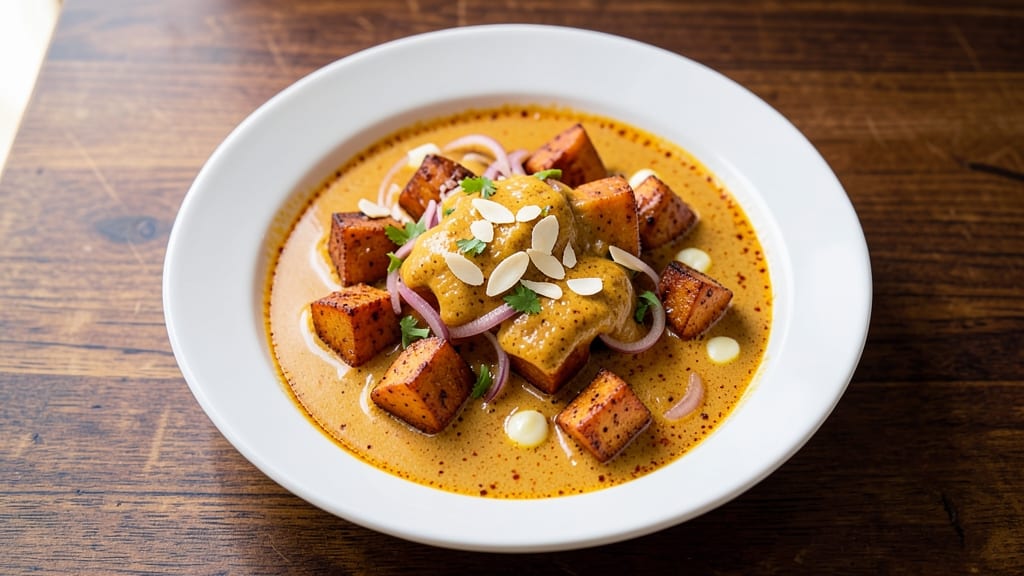
This sweet potato curry sauce recipe transforms humble ingredients into a velvety, aromatic masterpiece that elevates every dish it touches. The secret lies in deep-roasting sweet potatoes until caramelized, then blending them into a luscious base that balances rich coconut milk with complex curry spices.
I developed this sauce after years of experimenting with curry pastes—this version cuts through the heat while adding natural sweetness that makes it irresistible.
The process is straightforward but transformative: roast sweet potatoes until tender and golden, then simmer with coconut milk, curry paste, and aromatics like ginger and garlic until the flavors meld into a cohesive, fragrant sauce.
The result is a creamy, slightly sweet condiment that works as a curry base, bowl topping, or even a dip for grilled meats and vegetables. It’s restaurant-quality without the fuss.
What makes this sauce stand out is its versatility—it keeps well in the fridge for up to a week or freezes beautifully for months, making it perfect for meal prep.
The deep-roasted sweet potatoes add a caramelized depth that traditional curry sauces often miss, while the coconut milk ensures a luxurious texture. This isn’t just a sauce; it’s a flavor foundation that turns simple meals into something extraordinary.
Use it to glaze roasted chicken, drizzle over rice bowls, or serve with naan for dipping. The possibilities are endless, and the process is designed to be foolproof. Let’s create this sauce that will become a staple in your kitchen.
Ingredients for sweet potato curry sauce
Sweet potatoes, coconut milk, and aromatic spices—simple ingredients for a velvety sauce with restaurant-quality depth.
| Ingredient | Amount | Notes |
|---|---|---|
| Sweet Potatoes 🍠 | 2 lb | Medium, peeled and cubed |
| Coconut Milk 🥥 | 1 ½ cups | Full-fat for creaminess |
| Curry Paste 🌶️ | 3 tbsp | Red or yellow, store-bought |
| Fresh Garlic 🧄 | 4 cloves | Peeled and minced |
| Fresh Ginger 🌿 | 2 tbsp | Finely grated, fresh preferred |
| Onion 🧅 | 1 medium | Yellow, diced |
| Olive Oil 🫒 | 2 tbsp | Extra-virgin for roasting |
| Coconut Oil 🥥 | 1 tbsp | For roasting, optional |
| Salt 🧂 | 1 tsp | Kosher or sea salt |
| Black Pepper 🌶️ | ½ tsp | Freshly ground preferred |
| Honey 🍯 | 1 tbsp | For balancing heat |
| Lemon Juice 🍋 | 1 tbsp | Freshly squeezed |
The sweet potatoes are the foundation—choose firm, vibrant orange ones with no soft spots. Trader Joe's and Whole Foods carry excellent organic varieties, but any good grocery store will have them. Peeled and cubed into even 1-inch pieces, they roast more uniformly. For extra caramelization, toss them with coconut oil before roasting—it adds a subtle coconut aroma that complements the sauce. If you're short on time, a microwave steam method works, though roasting develops deeper flavor. The ginger and garlic should be freshly grated and minced—pre-minced jarred versions lack the bright punch this sauce needs.
No curry paste? Make your own blend with 1 tbsp each of ground cumin, coriander, turmeric, and 1 tsp each of cayenne and fenugreek seeds. Fresh ginger out of stock? Substitute 1 tbsp ground ginger—though it won’t be as aromatic. The coconut milk can be swapped for light coconut milk or even cashew cream if you’re avoiding full-fat. For a touch of umami, add 1 tsp soy sauce or miso paste. The honey balances the heat—maple syrup works too if you prefer a vegan option. Lemon juice brightens the sauce, but lime juice gives a slightly tangier finish if you have it on hand.
This sauce thickens as it cools, so stir in 1-2 tbsp water if it’s too thick after blending. Store in an airtight container in the fridge for up to 7 days—the flavors actually deepen overnight. For freezing, portion into ice cube trays or small containers for easy use. Thaw in the fridge overnight. The roasted sweet potatoes keep for 5 days before blending, so make them a day ahead if possible. This sauce reheats beautifully—simmer gently on the stove or microwave in 30-second bursts, stirring between each, to preserve its creamy texture.
Why You'll Love This Recipe
- One-Pot Magic: I swear by this recipe when I’m too tired to wash another dish. Toss chopped sweet potatoes, coconut milk, and curry paste into one pot—no chopping boards, no stress. The garlic and ginger melt right in, so you’re not stuck with separate aromatics to manage.
- Rich Without Effort: Between us, this sauce is ridiculously flavorful with almost no work. The curry paste handles the depth, coconut milk adds creaminess, and those roasted sweet potatoes caramelize into something sweet and savory. It’s the kind of dish where the ingredients do all the heavy lifting.
- Meal Prep MVP: I make a double batch on Sundays and freeze half. Thaw it later for stir-fries, drizzle it over rice, or even toss it with tofu for a quick lunch. The sauce keeps its texture in the fridge for days—just reheat and serve.
- Budget-Friendly Luxury: Sweet potatoes and coconut milk stretch this sauce far, and curry paste lasts forever. Honestly, I’ve fed a houseful of people for under $15 with this—plus, it tastes like I spent hours in the kitchen. (Spoiler: I didn’t.)
Step-by-step instructions for sweet potato curry sauce
This method delivers a velvety, balanced sauce with deep-roasted sweet potato sweetness and aromatic spice.
Roast the Sweet Potatoes Until Caramelized
Preheat your oven to 425°F and line a baking sheet with parchment paper. Toss the 2 lb sweet potatoes (peeled and cubed) with 2 tbsp olive oil, 1 tbsp coconut oil, 1 tsp salt, and 0.5 tsp black pepper. Spread them in a single layer, leaving space between pieces for even browning.
Roast for 35-40 minutes, stirring once halfway through, until the edges are deep golden brown and the cubes are tender when pierced with a fork. The sweet potatoes should smell caramelized and fragrant—this roasting step builds the sauce's rich, natural sweetness that balances the curry's heat. If they're browning too quickly, reduce the oven temperature to 400°F for the last 10 minutes to prevent burning.
Build the Curry Base with Aromatics
While the sweet potatoes roast, heat a large skillet or saucepan over medium heat. Add 1 medium onion (diced) and cook for 5 minutes until softened and translucent. Add 4 cloves fresh garlic (minced) and 2 tbsp fresh ginger (finely grated), cooking for another 1 minute until fragrant—you should smell the garlic's sharpness and ginger's warmth.
Stir in 3 tbsp curry paste and cook for 2 minutes, stirring constantly, until the paste darkens slightly and releases its deep, earthy aroma. This step develops the sauce's complex flavor profile. If the paste sticks, add 1-2 tbsp water to help it release. Keep the heat at medium to avoid burning the spices.
Blend the Roasted Sweet Potatoes
Transfer the roasted sweet potatoes to a blender or food processor. Add 1.5 cups coconut milk, 1 tbsp honey, and 1 tbsp lemon juice. Blend until completely smooth, scraping down the sides as needed. The mixture should be silky and free of lumps—this ensures a velvety sauce texture. If it's too thick, add 2-3 tbsp water to reach a pourable consistency.
Pour the blended mixture into the skillet with the curry base. Stir well to combine, then bring to a gentle simmer over medium-low heat. Let it cook for 8-10 minutes, stirring occasionally, until the sauce thickens slightly and coats the back of a spoon. The aroma should be rich, sweet, and spicy—this is your signal that the flavors have melded perfectly.
Adjust and Serve the Creamy Curry Sauce
Taste the sauce and adjust the seasoning if needed. If it's too sweet, add a pinch more salt or a splash of lemon juice to brighten the flavors. If the heat from the curry paste is too intense, stir in 1-2 tbsp coconut milk to mellow it out. The sauce should be creamy yet balanced, with a harmonious blend of sweet, spicy, and tangy notes.
Serve the sauce immediately over rice, noodles, or grilled proteins. For extra richness, drizzle with a little more coconut milk or garnish with fresh cilantro. The sauce will thicken further as it cools, so adjust the consistency to your preference before serving. This method ensures a restaurant-quality curry sauce that's creamy, aromatic, and perfectly balanced every time.
Pro Tips For Making Sweet Potato Curry Sauce
- Sear the Sweet Potatoes First: Cut the sweet potatoes into 1-inch chunks, then toss them in a dry pan over medium-high heat for 3-4 minutes before adding liquid. This step builds flavor—like a quick caramelization—that the curry sauce will cling to later. (Yes, even if you're impatient like me, don’t skip this.)
- Use Two Cans of Coconut Milk: The first can thins the sauce as it simmers; the second adds richness at the end. Stir in the second can only in the last 5 minutes to keep it creamy, not watery. I learned this the hard way when my curry turned into soup.
- Toast the Curry Paste: Bloom the curry paste in oil for 1-2 minutes before adding garlic and ginger. This deepens its aroma and prevents a raw, bitter taste. Think of it like making tea—steeping the spices first makes all the difference.
- Peel and Grate Ginger Cold: Fresh ginger loses its bite when heated too soon. Peel and grate it directly into the pan with garlic, then cook for 30 seconds before adding other ingredients. This keeps the zing sharp, not muted. (Your future self will notice.)
Flavor customization for these flavors
Sweet Heat Adjustments
If the curry paste feels too fiery for your taste, balance it with 1-2 tbsp honey or maple syrup—this sweetens without overpowering. For a smoky twist, add ½ tsp smoked paprika while simmering.
I’ve found that yellow curry paste (like Maesri) is milder than red, so use it if you prefer subtler heat. 🌶️
Creamy Texture Variations
For an extra-rich sauce, stir in ¼ cup Greek yogurt or cashew cream at the end. If you want it lighter, replace ½ cup coconut milk with vegetable broth.
I’ve also blended in steamed cauliflower for a lower-calorie version—it adds creaminess without heaviness. The key is adjusting liquid after blending.
Tangy Brightness Boost
Swap lemon juice for lime juice or mango chutney (1 tbsp) for a tropical twist. A dash of fish sauce (½ tsp) adds umami depth, while pickled jalapeño slices as a garnish bring a tangy crunch.
I love adding fresh cilantro or mint leaves for freshness—just chop them in at the very end. 🍋
Spice Depth Enhancers
Toast 1 tsp cumin seeds in the skillet before adding onions for nutty warmth. For earthiness, stir in ½ tsp ground turmeric or fresh galangal (if available).
A pinch of white pepper adds complexity without altering color. I’ve also experimented with chili flakes for a smoky finish—just sprinkle them in at the end.
Sweetness Alternatives
Instead of honey, try agave nectar (1 tbsp) for a neutral sweetness or date syrup (1 tbsp) for caramel notes. For a caramelized touch, sauté 1 tbsp brown sugar with the onions until golden before adding curry paste.
I’ve also blended in roasted butternut squash (½ cup) for a deeper sweetness that pairs beautifully with the curry.
Acid Balance Tricks
If the sauce tastes flat, add 1 tsp apple cider vinegar or rice vinegar for brightness. For a fruity kick, stir in ½ cup pineapple juice at the end. A squeeze of yuzu juice (if available) brings a citrusy complexity.
I’ve even used tomato paste (1 tbsp) for a tangy, savory depth—simmer it with the aromatics first for best results.
Nutrition facts
Frequently asked questions
Can I use regular potatoes instead of sweet potatoes?
While you can substitute regular potatoes, sweet potatoes bring a natural caramelized sweetness that balances the curry's heat beautifully. Regular potatoes will work, but you may need to add 1-2 tbsp extra honey or maple syrup to compensate for the lack of sweetness. For best results, stick with sweet potatoes—they're the secret to this sauce's signature depth.
How long does this sauce keep in the fridge?
This sauce stays fresh in an airtight container for up to 7 days in the refrigerator. The flavors actually deepen as it sits, making it even more delicious over time! For longer storage, freeze portions in ice cube trays or small containers for up to 3 months. Thaw overnight in the fridge before using.
What's the best way to adjust the spice level?
If the curry paste feels too spicy, balance it with 1-2 tbsp honey or maple syrup to mellow the heat. For extra richness, stir in 1-2 tbsp coconut milk at the end. If you want more heat, add ½ tsp extra curry paste or a pinch of chili flakes while simmering. Always taste as you go!
Can I make this sauce without coconut milk?
Yes! For a dairy-free alternative, use cashew cream (blend soaked cashews with water) or light coconut milk. If avoiding coconut entirely, try Greek yogurt or vegetable broth for a lighter texture. The sauce will still be flavorful, though the creaminess may differ slightly. Adjust liquid as needed after blending.
What are the best ways to use this sauce?
This versatile sauce works as a glaze for grilled chicken or fish, a drizzle over rice bowls, or a dip for spring rolls and veggies. Try it in curries, stir-fries, or even as a marinade for tofu or shrimp. The creamy texture and balanced flavors make it perfect for both savory and slightly sweet dishes.