
Side Dishes
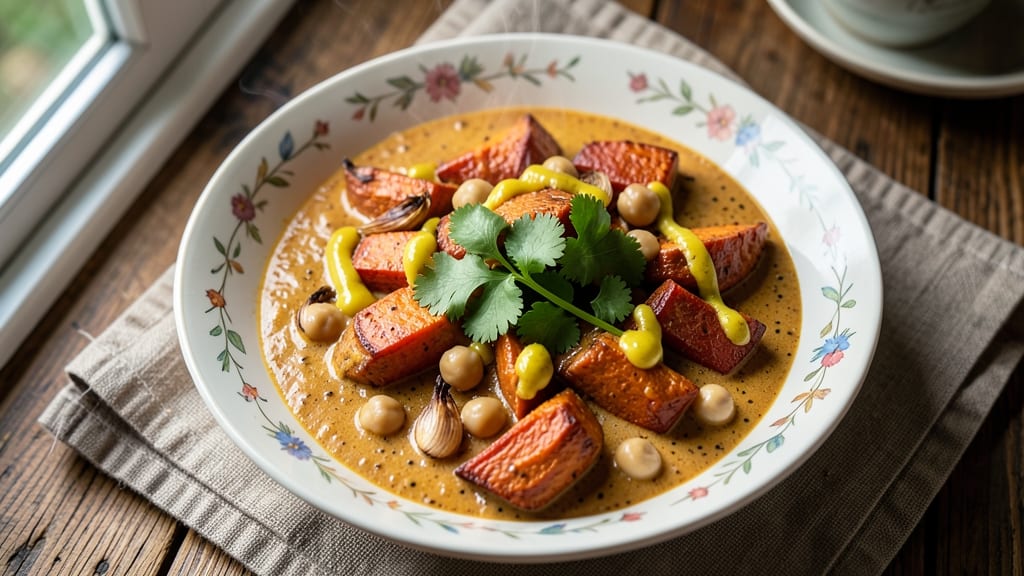
This vegan sweet potato curry recipe delivers restaurant-quality depth with smoky coconut cream and crispy chickpeas that transform a simple side into a satisfying main dish. The secret lies in slow-simmered spices and properly toasted chickpeas for maximum texture contrast—no shortcuts, just layered flavor that builds as it cooks.
I developed this version after years of testing plant-based curries, and the result is a dish that's both hearty and elegant, perfect for weeknight dinners or meal prep.
The foundation starts with properly roasted sweet potatoes—caramelized edges and tender centers—that absorb the aromatic spice blend while simmering. Crispy chickpeas add a satisfying crunch that holds up through every bite, while coconut milk creates a velvety sauce that balances sweet and smoky notes.
This isn't just a side dish; it's a complete, protein-rich meal that holds its own against any main.
What makes this curry special is the balance of textures and flavors: the caramelized sweet potatoes, the crispy chickpeas, and the rich coconut cream all come together in perfect harmony. The spices—cinnamon, cumin, and smoked paprika—create warmth that lingers, while fresh cilantro and lime brighten the finish.
Each component is essential, working together to create a dish that's both comforting and sophisticated.
Serve over steamed basmati rice or with warm naan to soak up every last bit of that smoky coconut sauce. The leftovers actually improve as flavors meld overnight, making this an ideal make-ahead option. Ready to create a vegan curry that impresses even non-vegetarians? Let's get cooking.
Ingredients for sweet potato curry recipe vegan
Properly roasted sweet potatoes and toasted chickpeas form the heart of this rich, smoky vegan curry.
| Ingredient | Amount | Notes |
|---|---|---|
| Sweet Potatoes 🍠 | 2 lb | Medium size, peeled and cubed |
| Chickpeas 🥜 | 1 ½ cups | Drained, rinsed, and dried thoroughly |
| Full-Fat Coconut Milk 🥥 | 13 ½ oz | High quality, canned |
| Coconut Oil 🫒 | 2 tbsp | Unrefined for flavor |
| Yellow Onion 🧅 | 1 whole | Medium size, diced |
| Garlic Cloves 🧄 | 6 cloves | Freshly minced |
| Ground Cumin 🌿 | 1 ½ tsp | Freshly toasted preferred |
| Smoked Paprika 🌶️ | 1 ½ tsp | High quality for smokiness |
| Ground Cinnamon 🌿 | ½ tsp | Freshly ground preferred |
| Ground Turmeric 🌶️ | ½ tsp | Freshly ground for color |
| Ginger Root 🌿 | 1 tbsp | Freshly grated |
| Fresh Cilantro 🌿 | ¼ cup | Chopped, for garnish |
| Lime 🍋 | 1 whole | Juiced, for brightness |
| Salt 🧂 | 1 ½ tsp | Kosher salt preferred |
| Black Pepper 🌶️ | ½ tsp | Freshly ground |
The sweet potatoes are the star—organic sweet potatoes from the produce section at Whole Foods or your local farmers' market develop the best caramelized edges. If you can't find organic, regular sweet potatoes work fine, just scrub them well. For the chickpeas, Trader Joe's or Costco sell the highest-quality canned chickpeas—look for low-sodium varieties. Drain and rinse them thoroughly, then spread them on a baking sheet to dry completely before toasting. This ensures maximum crispiness, which is critical for that satisfying texture contrast in every bite. The coconut milk should be full-fat for optimal creaminess—Thai Kitchen or Goya brands are my go-to for consistent quality.
No smoked paprika? Substitute a pinch of liquid smoke (1/4 tsp) plus regular paprika—it's not identical, but gets you close. Fresh ginger is ideal, but ground ginger at half the amount works in a pinch. For the coconut milk, if you only have light coconut milk, combine equal parts light and heavy coconut milk to mimic the richness. The chickpeas can be swapped for crispy roasted potatoes if you prefer, though chickpeas add that perfect protein boost. Fresh cilantro is non-negotiable for that bright finish, but if you must use dried, reduce to 1/4 the amount—it's an entirely different flavor profile.
Roasted sweet potatoes keep well in the fridge for 4-5 days if stored in an airtight container, though they're best used within 2 days for optimal texture. The crispy chickpeas lose their crunch after about 3 days, so make them fresh when serving. The fully assembled curry reheats beautifully—simply warm on the stove over medium-low heat, stirring occasionally. For meal prep, portion the sauce separately from the chickpeas and sweet potatoes. Reheat the sauce first, then add the crispy components just before serving to maintain that perfect crunch. This dish actually tastes better the next day as the flavors meld together—make extra if you can.
Why You'll Love This Recipe
- One-Pot Magic: The moment I toss sweet potatoes, chickpeas, and onions into a single pot with coconut oil, I know cleanup will be merciful. No fancy techniques—just slice, simmer, and let the spices do their thing while I sip tea and pretend I’m a chef.
- Creamy Without Guilt: Full-fat coconut milk makes this dish ridiculously rich, but honestly? It’s the caramelized sweet potatoes that steal the show. That crispy edge with the creamy center? My kids fight over the last bite, and I don’t even feel bad about it.
- Meal Prep MVP: This curry tastes better the next day—yes, even on a Tuesday night. I make a big batch on Sundays, and by Thursday, it’s the star of my lunchbox. The chickpeas soak up all the flavors, and the coconut milk keeps it luscious for days.
- Budget-Friendly Luxury: Sweet potatoes and chickpeas stretch this recipe into a full week’s worth of dinners. Between us, I’ve fed my whole family (plus a neighbor) with one big pot, and no one noticed the price tag. It’s comfort food that doesn’t break the bank.
Step-by-step instructions for sweet potato curry with crispy chickpeas
Master this rich, aromatic curry with perfectly balanced sweetness and smoky depth—every element comes together seamlessly.
Sauté Aromatics and Toast Spices
Heat the 2 tablespoons coconut oil in a large Dutch oven over medium heat until shimmering. Add the diced yellow onion and cook for 5-6 minutes until softened and translucent. Push the onions to one side of the pan and add the 6 cloves minced garlic. Stir for 30 seconds until fragrant.
Return the onions to the center and sprinkle in the 1.5 teaspoons ground cumin, 1.5 teaspoons smoked paprika, 0.5 teaspoon ground cinnamon, and 0.5 teaspoon ground turmeric. Toast for 1 minute until the spices release their aroma—you should smell earthy warmth and a hint of smokiness. This step builds the flavor foundation for the entire curry.
Cook Sweet Potatoes Until Tender
Add the 2 pounds cubed sweet potatoes to the Dutch oven, stirring to coat them evenly in the spiced oil. Pour in 1 cup of water and bring to a gentle simmer. Cover and cook for 15-18 minutes until the sweet potatoes are fork-tender when pierced with a knife. Stir occasionally to prevent sticking.
Here's the thing—don't rush this step. The sweet potatoes need to soften completely before adding the coconut milk to prevent a watery curry. You'll know they're ready when they collapse slightly under gentle pressure and the edges begin to soften noticeably.
Build the Coconut Cream Base
Reduce heat to low and stir in the 13.5 ounces full-fat coconut milk. Add the 1 tablespoon freshly grated ginger root and 1.5 teaspoons salt. Simmer uncovered for 10-12 minutes, stirring occasionally, until the sauce thickens to a velvety consistency. The curry should coat the back of a spoon without being gluey.
Taste and adjust seasoning with 0.5 teaspoon black pepper and more salt if needed. The coconut milk should now be infused with all the aromatic spices, creating that signature creamy, slightly sweet base. This is where the magic happens—patience ensures proper flavor development.
Crisp the Chickpeas and Finish
In a separate skillet, heat 1 tablespoon coconut oil over medium-high heat. Add the 1.5 cups drained chickpeas and cook for 8-10 minutes, stirring frequently, until they develop crispy edges and golden spots. Transfer to a paper towel-lined plate to drain excess oil.
Return the chickpeas to the curry and gently stir to combine. Squeeze the juice from the whole lime over the top and scatter with 0.25 cup chopped fresh cilantro. The acidity from the lime brightens the rich coconut flavors while the cilantro adds fresh contrast. Let the curry sit off heat for 5 minutes to allow all the flavors to meld together.
Serve with Crispy Texture Intact
Ladle the curry into serving bowls, making sure each portion contains both the creamy sauce and crispy chickpeas. The texture contrast is crucial—each bite should offer tender sweet potatoes, velvety coconut cream, and satisfying crunch from the chickpeas.
Serve immediately with steamed basmati rice or warm naan bread. The crispy chickpeas will soften slightly as they sit, so enjoy them while they're at their best. This curry delivers on all its promises: rich, smoky, creamy, and packed with satisfying textures that keep every bite interesting.
Pro Tips For Making Sweet Potato Curry Recipe Vegan
- Parboil Sweet Potatoes First: Cut the sweet potatoes into even 1-inch chunks, then boil them for 5 minutes before adding to the curry. This keeps them from turning to mush while cooking—trust me, I’ve learned this after watching a batch disintegrate into a watery sludge.
- Sauté Onions Until Golden: Don’t rush the onions—cook them in coconut oil over medium heat until they’re deep golden, not just translucent. That caramelization adds depth the curry desperately needs (and yes, it takes about 8-10 minutes).
- Use Canned Chickpeas (Drained & Rinsed): Skip the dried chickpeas unless you’ve got time to soak and cook them. Canned chickpeas, drained and rinsed, save hours and still hold their shape—just toss them in at the end to avoid sogginess.
- Simmer, Don’t Boil: Once the coconut milk is in, keep the heat low enough that tiny bubbles just break the surface. Boiling splits the milk and makes the curry greasy—this is the one mistake that ruins texture faster than anything else.
Essential equipment for perfect results
Dutch Oven Essentials
A large Dutch oven is your best friend for this curry—its heavy base distributes heat evenly, preventing scorching while the deep sides contain the sauce.
I swear by the Le Creuset Signature Dutch Oven (5.5-quart size) for its durability and even heating, though All-Clad Stainless Steel works beautifully if you prefer non-reactive cookware. The lid creates a steam chamber that tenderizes the sweet potatoes perfectly without drying out the sauce. 🔥
Skillet for Crispy Chickpeas
You'll need a 10-inch cast iron skillet for those crispy chickpeas—cast iron retains heat exceptionally well, creating the ideal surface for even browning. My Lodge 10.25-inch Pre-Seasoned Skillet is my go-to because it develops a natural non-stick surface over time.
If you don't have cast iron, a stainless steel skillet with sloped sides (like All-Clad Stainless) works well, though you may need to add an extra ½ teaspoon coconut oil to prevent sticking.
Measuring Tools
Precision matters with spices, so invest in a small digital scale (like the OXO Good Grips Kitchen Scale) for accurate measurements of ground spices. For liquids, a medicine dropper helps when measuring ½ teaspoon smoked paprika or ½ teaspoon cinnamon—these tiny amounts make a huge difference.
A microplane is essential for freshly grating ginger root and lime zest if you want to elevate this dish further. These tools ensure your curry tastes as rich and balanced as mine does every time.
Optional Upgrades
For next-level flavor, consider a mortar and pestle to toast whole spices (like cumin seeds) before grinding them—this deepens their aroma exponentially. A fine-mesh strainer helps when draining chickpeas thoroughly, and a silicon spatula prevents scratching your Dutch oven while stirring.
If you love fresh herbs, a sharp chef's knife and cutting board are musts for chopping cilantro and onions efficiently. These extras transform good curry into exceptional curry.
Budget-Friendly Swaps
Don't have a Dutch oven? A heavy-bottomed pot (like Calphalon Classic) works in a pinch, though monitor heat more carefully. For crispy chickpeas, a non-stick skillet (like T-fal Professional) eliminates the need for extra oil.
Skip the scale? Use the spoon-and-level method for spices—just be extra careful with measurements. The key is maintaining even heat distribution and proper oil control—these budget tools can still deliver restaurant-quality results with attention to detail.
Nutrition facts
Frequently asked questions
Can I substitute tofu instead of chickpeas for protein?
Use 1 block (14 oz) extra-firm tofu, pressed and cubed, instead of chickpeas. Pan-fry the tofu until golden and crispy before adding it to the curry. For extra flavor, marinate the tofu cubes in 1 tbsp soy sauce and ½ tsp smoked paprika for 15 minutes before cooking. The texture will be slightly different but still delicious.
How do I make this curry spicier?
Add ½ teaspoon cayenne pepper or 1 teaspoon red pepper flakes when toasting the spices. For heat lovers, stir in 1-2 fresh chili peppers (like jalapeño or serrano), seeded and minced, along with the garlic. Always taste as you go—you can adjust heat levels to your preference.
Can I make this curry in an Instant Pot?
Yes! Sauté the onions, garlic, and spices as directed. Add the sweet potatoes, 1 cup water, and coconut milk, then cook on High Pressure for 8 minutes. Quick-release the pressure, then crisp the chickpeas separately in a skillet. The texture will be slightly different (less caramelized), but the flavors will still be rich and satisfying.
Why did my curry turn out watery?
This usually happens when sweet potatoes aren't fully tender before adding coconut milk, causing the sauce to dilute. Always cook sweet potatoes until fork-tender (15-18 minutes) before adding coconut milk. If needed, simmer uncovered for 5-10 extra minutes to thicken the sauce. A splash of cornstarch slurry (1 tsp cornstarch + 1 tbsp water) can also help.
How long will leftovers keep in the fridge?
The fully assembled curry (without crispy chickpeas) keeps for 4-5 days in an airtight container. For best texture, crisp the chickpeas fresh when reheating. The sauce actually improves overnight as flavors meld. Store components separately: sauce in one container, sweet potatoes in another, and crisp chickpeas in a third. Reheat sauce first, then add crispy elements just before serving.