
Soups & Stews
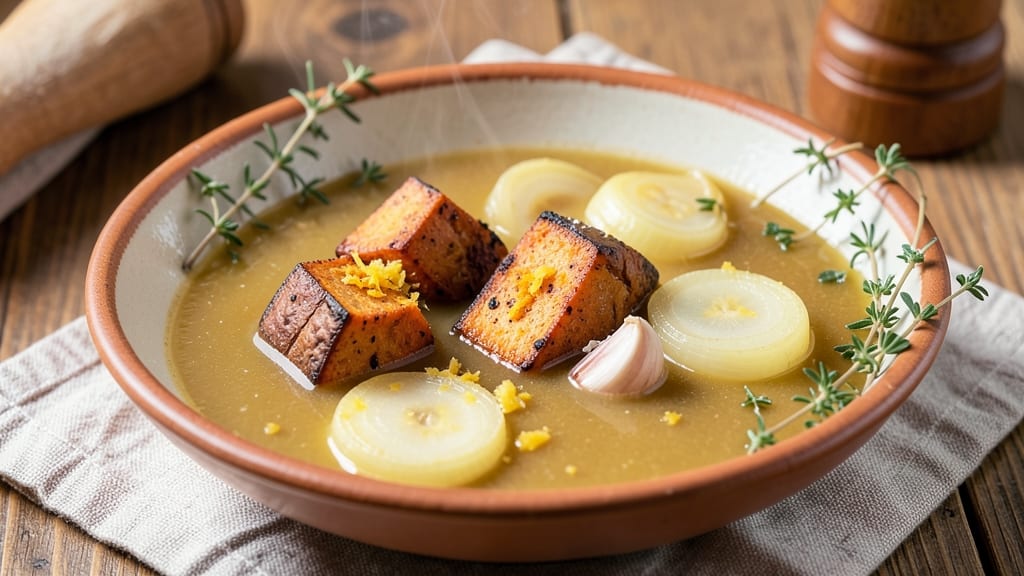
This sweet potato broth recipe transforms humble ingredients into a deeply aromatic, immune-boosting elixir that works as soup, side, or healing drink. The secret lies in roasting the vegetables first—caramelizing their natural sugars creates layers of earthy depth that no quick sauté could match.
I developed this method after realizing store-bought broths never quite delivered the same comforting warmth and complex flavor profile.
The process is straightforward but deliberate: roast sweet potatoes, onions, and garlic until their edges darken slightly, then simmer them with aromatic herbs and spices until the flavors meld into a velvety, golden liquid.
What you'll end up with is a broth so rich and satisfying that it rivals traditional chicken-based versions, yet remains completely plant-based and packed with nutrients. The roasting step alone elevates this from basic vegetable broth to something truly special.
This versatile broth works as a standalone soup when blended until silky, or as a flavorful base for grains and legumes. Its naturally sweet, slightly smoky character makes it perfect for sipping as a detox drink or serving alongside roasted meats and vegetables.
The immune-boosting spices—ginger, turmeric, and garlic—add warmth and medicinal properties without overpowering the natural sweetness of the sweet potatoes.
Ready in about an hour with minimal active time, this recipe proves you don't need animal products to create depth and complexity. The key is patience during the roasting and simmering stages—rushing these steps will leave you with something flat and one-dimensional.
Let's make this nourishing broth that works as hard as it tastes good.
Ingredients for sweet potato broth
Roasted vegetables and aromatic spices create this deeply nourishing, plant-based broth that rivals traditional versions.
| Ingredient | Amount | Notes |
|---|---|---|
| Sweet Potatoes 🍠 | 2 lbs | Organic preferred, skin-on for nutrients |
| Yellow Onions 🧅 | 2 whole | Yellow or red, roughly chopped |
| Garlic Cloves 🧄 | 6 cloves | Peeled, lightly smashed for aroma |
| Fresh Ginger Root 🌿 | 2 tbsp | Finely grated, organic preferred |
| Ground Turmeric 🌶️ | 1 tsp | Freshly ground for potency |
| Fresh Thyme Leaves 🌿 | ½ cup | Stems removed, organic preferred |
| Fresh Rosemary 🌿 | ¼ cup | Needles finely chopped |
| Extra-Virgin Olive Oil 🫒 | ¼ cup | High-quality, fruity variety |
| Vegetable Broth 💧 | 4 cups | Low-sodium preferred |
| Sea Salt 🧂 | 1 ½ tsp | Diamond Crystal preferred |
| Black Peppercorns 🌶️ | ½ tsp | Freshly cracked |
| Fresh Parsley 🌿 | ¼ cup | Chopped, for garnish |
| Lemon Juice 🍋 | 1 tbsp | Freshly squeezed |
The sweet potatoes are the foundation—choose organic with vibrant orange flesh for maximum sweetness and beta-carotene. Trader Joe's and Whole Foods carry excellent organic varieties, but any sweet potato works if it's firm and free of soft spots. The onions and garlic should be fresh, with no sprouting or bruising. For the herbs, fresh is non-negotiable—dried versions lack the complexity this recipe demands. Toast the spices lightly in a dry pan before using to deepen their flavors, a step that takes just 30 seconds but makes a noticeable difference. The vegetable broth should be low-sodium to avoid overpowering the delicate caramelized flavors you're building.
No fresh ginger? Powdered works at half the amount, though it lacks the same zing. Substitute dried thyme for fresh at one-third the quantity, but expect a more muted aroma. Running low on rosemary? Fresh sage offers a similar earthy note. The olive oil matters here—use something with fruity, peppery qualities rather than a bland refined oil. For extra depth, add a pinch of smoked paprika to the roasting vegetables. If you're making this ahead, store the roasted veggie mixture in the freezer for up to 3 months—just add broth and simmer when ready to use.
This broth keeps beautifully in the fridge for 5-6 days when stored in an airtight container, though the flavors deepen with time. For longer storage, freeze in ice cube trays—perfect for adding to soups or grains later. The lemon juice should be added just before serving to preserve its bright acidity. Garnish with fresh parsley and a drizzle of olive oil for a restaurant-quality finish. The broth thickens as it cools, so reheat gently and thin with water or broth if needed. Leftovers reheat beautifully and taste even more complex the next day.
Why You'll Love This Recipe
- No-Chop Nightmare: I swear, this is the only broth that lets me skip chopping. Just peel and slice the sweet potatoes into big chunks—no dice, no fuss. The onions caramelize right in the pot while you’re stirring, and the ginger? Grate it straight from the root. Honestly, it’s the kind of recipe that makes me feel like a lazy genius.
- Golden, Earthy Magic: That deep, caramelized sweetness from the sweet potatoes? It’s like autumn in a bowl. The turmeric gives it this warm glow, and the garlic-ginger combo adds a slow-building heat that lingers. I’ll be real: the first sip makes me pause. It’s not just broth—it’s a flavor experience.
- Soup Base or Sipper: Use it as a base for curries, grains, or even a creamy bisque. Or drink it straight—yes, really. It’s rich enough to stand alone but light enough to sip like tea. My daughter pours it over noodles, my partner adds it to smoothies, and I just drink it with a spoon. (Don’t judge.)
- Pantry Goldmine: Sweet potatoes and onions are cheap, and this broth stretches for days. Freeze it in portions for when you’re too tired to cook, or use it to stretch a small cut of meat into a full meal. Between us, I’ve turned $5 worth of ingredients into five dinners. That’s not just broth—that’s money saved.
Step-by-step instructions for sweet potato broth
Transform humble vegetables into a deeply flavorful, nutrient-rich broth with this method.
Prep and Roast the Vegetables
Preheat your oven to 400°F and line a large baking sheet with parchment paper. Peel and cube the 2 lbs sweet potatoes into 1-inch chunks, keeping the skin on for maximum nutrients. Halve the 2 whole yellow onions lengthwise and separate into layers. Peel the 6 cloves garlic and lightly smash them with the flat side of your knife to release their aroma.
In a large bowl, toss the sweet potatoes, onions, garlic, 2 tbsp finely grated fresh ginger root, 0.5 cup fresh thyme leaves, 0.25 cup finely chopped fresh rosemary, and 1.5 tsp sea salt with 0.25 cup extra-virgin olive oil until evenly coated. Spread everything in a single layer on the prepared baking sheet, leaving space between pieces for even browning.
Roast for 30-35 minutes, stirring once halfway through, until the sweet potatoes are tender when pierced with a knife and the edges are deep golden brown. This roasting step develops the rich, caramelized flavors that form the broth's foundation. The onions should be soft and slightly charred, while the garlic should be fragrant and beginning to brown.
Build the Broth Base
Transfer the roasted vegetables to a large stockpot or Dutch oven. Add 4 cups vegetable broth and 0.5 tsp freshly cracked black peppercorns. Bring to a gentle simmer over medium heat, then reduce the heat to low and let it cook uncovered for 20 minutes. This allows the flavors to meld and the broth to develop depth.
Use an immersion blender to purée the broth directly in the pot until completely smooth. If you don't have an immersion blender, carefully transfer the mixture to a blender in batches, blending until silky. Strain through a fine-mesh sieve into a clean pot to remove any remaining vegetable fibers, pressing on the solids to extract every last drop of flavor.
Return the strained broth to the pot and bring it back to a simmer. Skim off any foam that rises to the surface with a spoon, as this can make the broth bitter. The broth should now have a vibrant orange hue from the sweet potatoes and a rich, earthy aroma from the roasted vegetables.
Finish and Season
Simmer the broth gently for an additional 15 minutes to allow the flavors to concentrate. Taste and adjust the seasoning with more sea salt if needed—this broth should be deeply flavorful but not overly salty. Stir in the 1 tbsp freshly squeezed lemon juice and the 0.25 cup chopped fresh parsley, which adds a bright, fresh finish that cuts through the richness.
Remove the pot from heat and let the broth rest for 10 minutes before serving. This resting period allows the flavors to fully integrate and the broth to reach its optimal consistency. The finished broth should be smooth, vibrant, and packed with complex flavors that balance sweetness, earthiness, and a touch of acidity.
For best results, store any leftovers in an airtight container in the refrigerator for up to 5 days or freeze for up to 3 months. This broth makes an excellent base for soups, risottos, or grain dishes, or enjoy it as-is with a sprinkle of fresh herbs and a drizzle of olive oil.
Pro Tips For Making Sweet Potato Broth
- Char Sweet Potatoes First: I learned this the hard way—roasting the sweet potatoes before simmering adds a caramelized depth that no raw peel can match. Cut them into 1-inch chunks, toss with 1/2 teaspoon turmeric (yes, double the recipe amount), and roast at 400°F (200°C) for 25-30 minutes until edges darken. The broth will taste richer, not just sweeter.
- Peel Ginger Thinly: Skip the grating mess and use a microplane or sharp knife to shave ginger into matchsticks—no pulp, no waste. For this broth, 1 tablespoon of fresh ginger (about 3-4 shavings) is enough; overdoing it turns the broth bitter. Toss it in at the 10-minute mark to preserve its bright flavor.
- Simmer, Don’t Boil: I used to crank the heat and wonder why my broth tasted flat. Keep the broth at a gentle simmer—tiny bubbles breaking the surface—after the first 15 minutes. Boiling burns the sweet potatoes and makes the onions turn bitter. Low and slow (20-25 minutes total) extracts the best flavor without scorching.
- Toast Spices Last: Add ground turmeric early if you want color, but for maximum flavor, toast the whole spices (if using) or add turmeric in the final 5 minutes. The heat wakes up its earthy notes. For this recipe, 1/2 teaspoon turmeric at the end makes a real difference—just don’t let it sit too long or it’ll turn the broth fluorescent.
Pro cooking tips for this recipe
Roasting for Depth
The key to this broth's rich flavor is roasting the vegetables at 400°F until they develop caramelized edges. Spread them in a single layer on your baking sheet and resist the urge to crowd them—this ensures even browning.
I use a Vosges brand baking sheet because its textured surface prevents slipping. The sweet potatoes should be tender when pierced with a knife but still hold their shape slightly. 🌡️
Simmering Low and Slow
After roasting, simmer the vegetables in broth over low heat for 20 minutes—this is where the magic happens. The gentle simmer extracts all those roasted flavors without boiling them away.
I always use a Le Creuset Dutch oven because it maintains even heat distribution. Skim any foam that rises to the surface with a spoon—this prevents bitterness in your finished broth.
Blending Like a Pro
An immersion blender is my go-to tool for this step because it keeps everything contained and makes cleanup effortless. If you're blending in batches, never fill your blender more than halfway—this prevents splattering when you add the hot liquid.
For extra smoothness, strain through a fine-mesh sieve after blending. This removes any fibrous bits that could make your broth gritty. ✨
Spice Toasting Trick
Before adding your spices, lightly toast them in a dry pan for 30 seconds—this intensifies their flavors dramatically. I like to use a Calphalon stainless steel pan because it heats evenly.
Toast the turmeric and black peppercorns until fragrant, then immediately add them to your simmering broth. This simple step makes a noticeable difference in the final product's complexity.
Resting for Perfection
Never skip the 10-minute resting period after simmering. This allows the flavors to fully meld and the broth to reach its optimal consistency. I often find that broths taste even better the next day after resting in the fridge—this is when all the flavors have time to truly integrate.
The lemon juice should be added just before serving to preserve its bright acidity.
Storage Secrets
For maximum freshness, store your broth in airtight containers with at least 1-inch headspace to prevent oxidation. I prefer glass containers because they don't absorb odors like plastic. In the fridge, this broth keeps for up to 5 days, while freezing extends its shelf life to 3 months.
When reheating, do it gently over low heat** to prevent skin formation on the surface.
Nutrition facts
Frequently asked questions
Can I make this sweet potato broth without roasting the vegetables?
The roasting step is essential for developing deep caramelized flavors, but if you're short on time, you can sauté the vegetables in olive oil over medium-high heat for 10-12 minutes until softened. However, the broth will be less complex and won't have that rich, earthy depth. For best results, always roast—it takes just 35 minutes and transforms the flavor completely!
How can I use this broth beyond sipping it straight? This versatile broth works beautifully as a base for creamy soups, risottos, or grain bowls. Add cooked quinoa, lentils, or mushrooms for hearty meals. It also makes an excellent dipping sauce for spring rolls or veggie sticks. For extra richness, blend in a spoonful of tahini or coconut milk—just
What if my broth turns out too thin or watery?
If your broth seems too thin, simmer it uncovered for an additional 10-15 minutes to reduce the liquid. For a quicker fix, blend in 1-2 tbsp of cornstarch mixed with 2 tbsp cold water and stir until thickened. Alternatively, use it as-is for soups where a lighter consistency is desired. The roasting method should naturally create a more concentrated flavor, so this rarely happens!
Can I substitute regular potatoes for sweet potatoes?
While you can use regular potatoes, they won't provide the same natural sweetness or vibrant color. Sweet potatoes add a unique depth that regular potatoes can't match. If you must substitute, use yellow or red potatoes and increase the ginger and turmeric by 0.5 tsp each to compensate for the lack of sweetness. The broth will still be flavorful, just with a different profile!
How do I prevent the broth from getting bitter?
Bitter flavors can develop if the broth boils vigorously or if any burnt bits from roasting get into the liquid. Always simmer gently (small bubbles) and skim off any foam that rises to the surface. Also, make sure your roasted vegetables are evenly browned but not burnt—remove them from the oven as soon as they're tender. A splash of lemon juice at the end helps balance any bitterness!