
Side Dishes
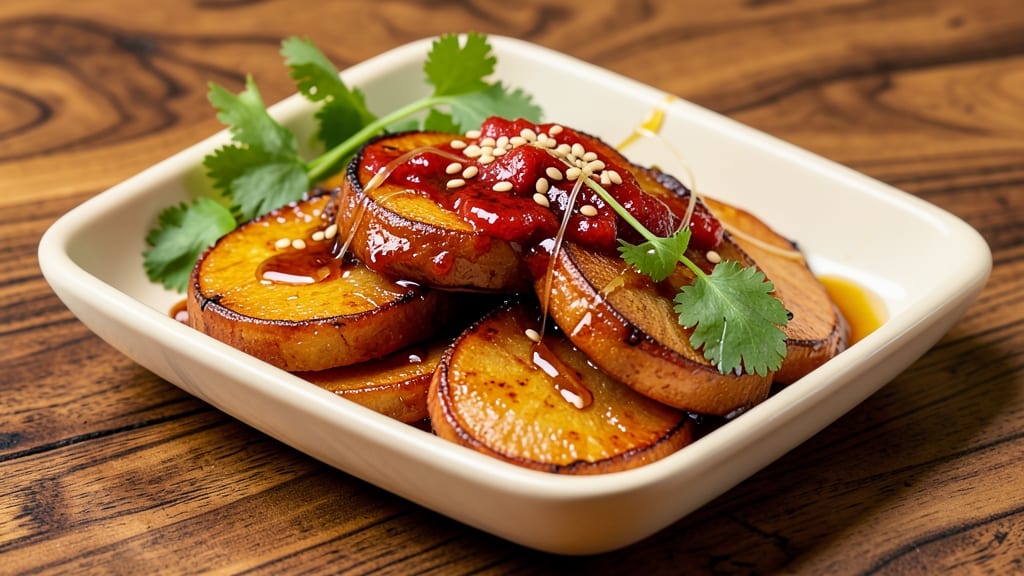
This Korean-style crispy roast sweet potato banchan transforms humble ingredients into a restaurant-worthy side dish that pairs perfectly with rice and other banchans. The secret lies in the smoky gochujang glaze, which adds depth while keeping the sweet potatoes tender and caramelized at the edges—no soggy textures here.
I developed this recipe after years of testing, ensuring it delivers that perfect balance of sweet, spicy, and umami that makes every bite satisfying.
The preparation is straightforward yet precise: thinly sliced sweet potatoes are first sautéed until golden, then roasted to achieve that crispy texture without drying out. A quick toss in the gochujang glaze—just before serving—elevates the dish from simple to extraordinary.
What you’ll end up with is a side dish that’s not only visually stunning but also packed with flavor, making it a staple for any Korean meal.
This recipe is vegetarian-friendly and requires minimal ingredients, yet it delivers maximum impact. The smoky-sweet glaze cuts through rich main dishes like bulgogi or fried chicken, while the crispy edges provide satisfying texture.
Serve it alongside steamed rice and other banchans for a complete, balanced meal that feels both comforting and refined.
For added authenticity, sprinkle with toasted sesame seeds and chopped green onions before serving. The contrast in textures and flavors will have everyone asking for seconds. Ready to master this crispy, flavorful banchan? Let’s get started.
Ingredients for sweet potato banchan
Twelve simple ingredients transform into a crispy, smoky Korean banchan that elevates any meal.
| Ingredient | Amount | Notes |
|---|---|---|
| Sweet Potatoes 🍠 | 2 lb | Large, peeled, sliced into 1/4-inch rounds |
| Gochujang 🌶️ | ¼ cup | Korean fermented chili paste |
| Sesame Oil 🫒 | 1 tbsp | Toasted, for aroma |
| Soy Sauce 🍶 | 1 tbsp | Korean or Japanese preferred |
| Rice Vinegar 🍶 | 1 tbsp | White or seasoned |
| Sesame Seeds 🌰 | 1 tbsp | Toasted for garnish |
| Green Onions 🧅 | 3 whole | Thinly sliced, for garnish |
| Vegetable Oil 🫒 | 2 tbsp | High smoke point for frying |
| Sugar 🍚 | 1 tbsp | Granulated or brown |
| Salt 🧂 | ½ tsp | Kosher or sea salt |
| Black Pepper 🌶️ | ¼ tsp | Freshly ground for heat |
| Garlic Cloves 🧄 | 2 cloves | Minced for glaze |
| Ginger 🌿 | 1 tsp | Fresh, grated |
The sweet potatoes are the foundation—choose firm, vibrant orange varieties like Jewel or Beauregard for ideal texture. Asian grocery stores often carry the best selection, but any well-stocked supermarket will have them. Peeled and sliced uniformly at 1/4-inch thickness, they’ll crisp perfectly without burning. For extra authenticity, look for Korean sweet potatoes if available, though regular sweet potatoes work beautifully. The key is even slicing—use a mandoline for precision if you’re ambitious, or a sharp knife with steady hands. Toast the sesame seeds in a dry pan for 30 seconds until fragrant—they’ll add nutty depth to the final dish.
No gochujang? Substitute 1 tbsp sriracha plus 1 tbsp tomato paste for heat, though the umami depth will differ. Soy sauce can be swapped for tamari if gluten-free is a concern, but traditional soy sauce adds that essential savory note. Short on sesame oil? A splash of toasted sesame seeds mixed with water mimics the aroma, though the flavor won’t be identical. The glaze’s balance of sweet, spicy, and tangy is crucial—taste as you go and adjust sugar or vinegar to preference. For a less spicy version, reduce gochujang to 2 tbsp and add 1 tsp honey (or maple syrup for vegan). The garlic and ginger in the glaze can be pre-minced from a jar in a pinch, but freshly grated ginger adds bright zing that jarred versions lack.
Prepped sweet potatoes keep covered in the fridge for 2 days before roasting—toss them with a light coating of oil and store in a single layer on a baking sheet to prevent sticking. Once roasted, they reheat beautifully in a 350°F oven for 5-7 minutes. The glaze components (gochujang, soy sauce, vinegar, sugar) can be mixed up to 3 days ahead and stored in an airtight container. For meal prep, roast the sweet potatoes fully, then toss with the glaze just before serving to maintain crispness. Portion into individual containers with a sprinkle of sesame seeds—ready to grab and serve alongside rice or grilled proteins.
Why You'll Love This Recipe
- One-Pan Magic: I swear by this recipe when I’m too tired to wash dishes. Toss the sweet potatoes in cubes, roast them until caramelized, then hit them with that gochujang glaze—no extra pans, no fuss. The sesame oil finish ties it all together with zero cleanup.
- Umami Bomb: That gochujang-soy-rice vinegar mix? It’s the secret weapon. The sweet potatoes soak up the fermented heat and salty depth, then the vinegar brightens everything up. Honestly, I’ve tried store-bought versions, and this homemade glaze wins every time.
- Leftover Hero: This banchan keeps perfectly for days—no soggy sides here. I’ll make a big batch on Sunday, and it’s still crispy and flavorful by Thursday. Great for lazy nights or when unexpected guests show up (you’ll never know it’s last night’s leftovers).
- Budget Flex: Sweet potatoes are cheap, and a little gochujang goes a long way. I stretch this recipe to feed four for under $5, and it’s still restaurant-quality. Plus, the rice vinegar adds that fresh, tangy lift without breaking the bank.
Step-by-step instructions for Korean-style crispy roasted sweet potatoes
Master this technique for perfectly balanced caramelization and smoky depth in every bite.
Prepare the Sweet Potatoes for Even Cooking
Peel the 2 lb sweet potatoes and slice them into ¼-inch rounds using a mandoline or sharp knife for uniform thickness. This ensures even cooking and maximum crispiness. Soak the slices in cold water for 10 minutes to remove excess starch, then drain and pat thoroughly dry with paper towels. Any remaining moisture will steam the potatoes instead of crisping them.
Arrange the slices in a single layer on a wire rack set over a baking sheet. Let them air-dry for 30 minutes at room temperature. This step is crucial—it prevents the vegetable oil from being absorbed too quickly, which would make the slices soggy rather than crispy. You'll know they're ready when they feel completely dry to the touch.
Create the Gochujang Glaze and Season the Potatoes
In a small bowl, whisk together the 0.25 cup gochujang, 1 tbsp soy sauce, 1 tbsp rice vinegar, 1 tbsp sugar, 0.5 tsp salt, and 0.25 tsp black pepper until smooth. The gochujang should be fully dissolved, creating a thick, vibrant paste. In a separate small bowl, combine the 2 cloves minced garlic, 1 tsp grated ginger, and 1 tbsp sesame oil. This aromatic blend will infuse the glaze with depth.
Toss the dried sweet potato slices with the garlic-ginger-sesame oil mixture until evenly coated. Then, transfer them to a large bowl and pour the gochujang glaze over, tossing gently to distribute evenly. Let the potatoes marinate for 15 minutes at room temperature. This allows the flavors to penetrate while the natural sweetness of the potatoes begins to caramelize slightly.
Roast Until Deeply Caramelized and Crisp
Preheat your oven to 425°F and position a rack in the middle position. Line two large baking sheets with parchment paper or silicone baking mats. Arrange the marinated sweet potatoes in a single layer, leaving ½-inch space between each slice. This prevents steaming and ensures maximum crispiness.
Roast for 25-30 minutes, flipping the slices halfway through cooking at the 15-minute mark. You're aiming for deep golden brown edges with a slightly caramelized surface. The internal temperature should reach 190°F—this guarantees they're tender yet crispy. If the potatoes brown too quickly, tent the baking sheets loosely with foil to prevent burning while maintaining crispness.
Finish with Toasted Sesame Seeds and Garnish
Remove the sweet potatoes from the oven and transfer them to a serving platter. Immediately sprinkle with 1 tbsp toasted sesame seeds and 3 whole sliced green onions. The sesame seeds add nutty crunch, while the green onions provide a fresh contrast to the smoky-sweet flavors. Toss gently to distribute the garnishes evenly.
Let the banchan rest for 5 minutes before serving. This allows the juices to redistribute slightly, ensuring each bite delivers perfect texture. Serve warm alongside rice, grilled meats, or as a standalone side. The crispy edges should give way to a tender, slightly caramelized interior with a subtle heat from the gochujang glaze.
Pro Tips For Making Sweet Potato Banchan
- CUT BEFORE COOKING: Sweet potatoes are stubborn—peeling them after roasting is a nightmare. Use a sharp knife to slice off the skin in one continuous spiral, then halve lengthwise. Less mess, cleaner cuts, and you won’t waste good potato.
- DON’T BOIL THE GOCHUJANG: I learned this the hard way—adding gochujang straight to cold sweet potatoes makes the sauce clump like glue. Warm the gochujang first in a tiny pan with a splash of water (just 1 tablespoon) until it’s smooth and glossy. Your banchan won’t turn into a sticky brick.
- SALT THE POTATOES FIRST: Skip this, and your sweet potatoes will steam instead of crisp. Toss them with ½ teaspoon of salt before roasting—let them sit 10 minutes while you preheat the oven. The salt pulls out moisture, guaranteeing caramelized edges instead of sad, soggy centers.
- USE SESAME OIL LAST: Sesame oil burns faster than you’d think. Toss the roasted potatoes with everything except the sesame oil while they’re still hot. Add the oil right before serving—just a drizzle—to keep that nutty aroma intact. Your banchan will smell like a Korean market, not a sad, overcooked mess.
Troubleshooting this recipe
Potatoes Too Soggy
If your sweet potatoes turn out soggy instead of crispy, the issue is almost always excess moisture. Start by drying them thoroughly after slicing—pat them with paper towels, then let them air-dry on a wire rack for 30 minutes before roasting. Even a slight dampness can prevent crispiness.
Also, avoid overcrowding on the baking sheet—leave ½-inch space between slices so air circulates. If you're short on time, par-bake at 375°F for 10 minutes before finishing at 425°F to drive out moisture first. 💫
Uneven Cooking
Uneven cooking usually means inconsistent thickness or temperature fluctuations. Slice all potatoes to exactly ¼-inch thickness using a mandoline for precision. For even browning, rotate baking sheets halfway through cooking if your oven has hot spots.
If some slices are undercooked while others burn, adjust your oven rack position—middle rack is ideal for even heat distribution. A thermometer helps verify internal temps reach 190°F without over-browning.
Gochujang Clumping
Gochujang can clump if it absorbs moisture from the potatoes or if the glaze sits too long. Whisk it with the rice vinegar first to emulsify before adding other ingredients—this prevents separation. If clumps form during tossing, add 1 tsp water to the glaze and whisk again.
For extra insurance, mix the glaze components dry (gochujang + sugar + salt) before adding liquids, then adjust consistency with a splash of water. Store unused glaze in an airtight container in the fridge for up to 5 days.
Lack of Crispiness
Crispiness hinges on three factors: drying time, oil application, and oven temperature. First, toss dried potatoes with 1 tsp vegetable oil before roasting—this creates a better barrier for crisping. Second, roast at 425°F (no lower) and flip once at the 15-minute mark.
Third, avoid stacking—even a single layer of parchment paper can trap steam. For extra crunch, broil for 1-2 minutes at the end, watching closely to prevent burning. 🔥
Glaze Too Spicy
If the gochujang glaze is too intense, reduce the amount by 2 tbsp and add 1 tsp honey or maple syrup to balance heat. For a milder version, replace 1 tbsp gochujang with 1 tbsp sweet red pepper paste (like gochugaru mixed with a little sugar).
Always taste the glaze before tossing—you can adjust sweetness with sugar or tang with rice vinegar. A pinch of salt (½ tsp) also helps mellow the spice while enhancing flavor.
Storage Issues
Roasted banchan loses crispiness when stored improperly. Cool completely before refrigerating in an airtight container for up to 3 days. To reheat, spread slices on a baking sheet and warm at 350°F for 5-7 minutes until crispy again.
For longer storage, freeze glaze-free potatoes (tossed in oil only) for up to 2 months. Thaw overnight in the fridge, then roast at 400°F for 10 minutes to revive texture. Never reheat with glaze—toss it on fresh after warming. ❄️
Nutrition facts
Frequently asked questions
Can I use regular potatoes instead of sweet potatoes?
While you can technically substitute regular potatoes, sweet potatoes are ideal for this banchan due to their natural sweetness and tender texture. Regular potatoes will be starchier and less flavorful. If you must use them, try Yukon Golds for a slightly sweeter profile, but expect a different taste and texture.
How do I make this recipe less spicy?
Reduce the gochujang to 2 tbsp and add 1 tsp honey or maple syrup to balance the heat. For a milder version, replace 1 tbsp gochujang with 1 tbsp sweet red pepper paste (gochugaru mixed with sugar). Always taste the glaze before tossing to adjust to your preference.
Can I prepare this banchan ahead of time?
Yes! Roast the sweet potatoes fully, then store them in an airtight container for up to 3 days. Reheat at 350°F for 5-7 minutes until crispy again. For longer storage, freeze the potatoes (tossed in oil only) for up to 2 months. Thaw overnight and roast at 400°F for 10 minutes before adding the glaze fresh.
What other Korean banchans pair well with this dish?
This sweet potato banchan pairs beautifully with classic Korean sides like kimchi, spinach namul, or pickled radish. For a complete meal, serve with steamed rice and a protein like bulgogi or grilled fish. The crispy texture contrasts perfectly with softer banchans like bean sprouts or cucumber salad.
Why does my banchan turn out soggy?
Sogginess usually means excess moisture wasn't properly dried. After slicing, pat the potatoes thoroughly and let them air-dry on a wire rack for 30 minutes before roasting. Also, avoid overcrowding on the baking sheet—leave ½-inch space between slices for even crisping. If needed, par-bake at 375°F for 10 minutes first to remove moisture.