Soups & Stews
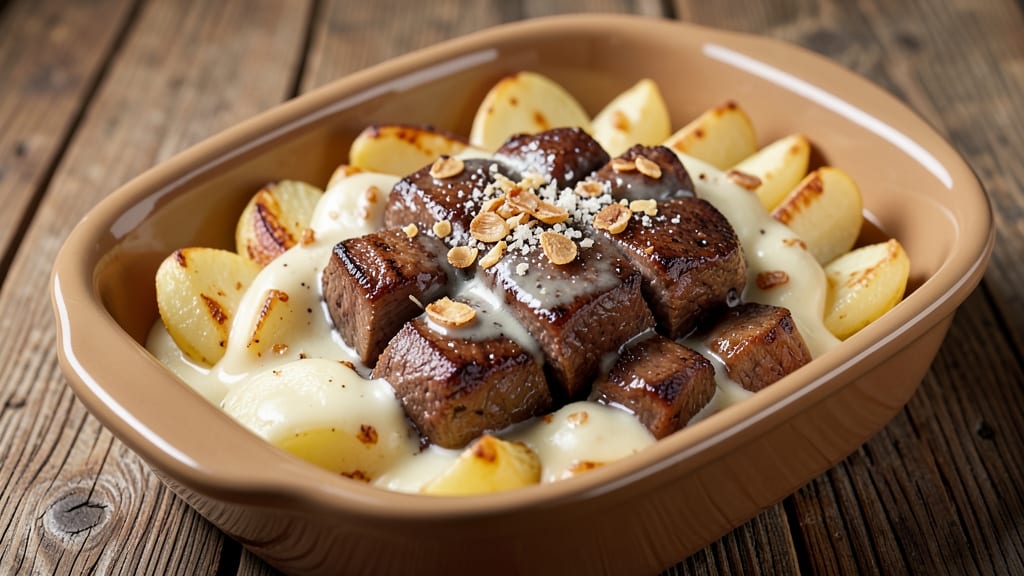
This beef and potato au gratin recipe delivers the perfect balance of crispy golden top and creamy interior layers that make it a showstopper. The secret lies in slow-cooked beef layered with tender potatoes, all blanketed in a rich béchamel sauce and melted cheese.
I've perfected this technique over years of testing, ensuring every bite has that signature restaurant-quality texture.
What sets this recipe apart is the two-step baking process—first baking the beef and potatoes until tender, then adding the béchamel and cheese for the final crispy finish. Traditional methods call for homemade roux, but I've included a shortcut using instant potatoes for those short on time.
The result? A dish that's both comforting and impressive, perfect for family dinners or special occasions.
The creamy layers come from a velvety béchamel sauce that coats each potato slice, while the crispy top forms when the cheese browns beautifully in the oven.
The slow-cooked beef adds depth of flavor, making this au gratin more than just a side dish—it's a hearty main course that feels luxurious. Each forkful delivers the perfect harmony of textures and flavors.
Whether you're following the classic method or using shortcuts, this recipe guarantees a restaurant-worthy dish with minimal effort. The key is patience—letting the layers meld together during baking creates that unmistakable au gratin magic. Ready to master this timeless classic? Let's get started.
Ingredients for beef and potato au gratin
Sixteen ingredients transform into a showstopping dish with crispy golden layers and creamy beef-infused potatoes.
| Ingredient | Amount | Notes |
|---|---|---|
| Beef Chuck Roast 🥩 | 2 lb | Pre-cut into 1-inch cubes |
| Yukon Gold Potatoes 🥔 | 3 lb | Thinly sliced (1/8-inch thick) |
| Heavy Cream 🥛 | 2 cups | Full-fat for richness |
| Whole Milk 🥛 | 1 cup | Warmed for smooth sauce |
| Unsalted Butter 🧈 | ½ cup | Cold, cubed for roux |
| All-Purpose Flour 🌾 | ½ cup | For velvety béchamel |
| Gruyère Cheese 🧀 | 2 cups | Freshly grated, nutty flavor |
| Sharp White Cheddar 🧀 | 1 cup | Shredded for crispy crust |
| Garlic Cloves 🧄 | 4 cloves | Minced for aromatic depth |
| Shallots 🧅 | 2 whole | Finely diced, onion substitute |
| Dry White Wine 🍷 | ½ cup | Bold, dry variety preferred |
| Beef Broth 💧 | 2 cups | Low-sodium for balance |
| Fresh Thyme Leaves 🌿 | 1 tbsp | Or 1 tsp dried thyme |
| Ground Black Pepper 🌶️ | 1 tsp | Freshly cracked for heat |
| Diamond Crystal Kosher Salt 🧂 | 1 ½ tsp | Adjust to taste |
The beef is the heart of this dish—chuck roast delivers that melt-in-your-mouth texture when cooked slow. I always grab mine from Costco when I'm making a big batch, but the regular supermarket pre-cubed version works perfectly for weeknight dinners. Look for Yukon Gold potatoes if you can find them—they're creamier than russets and hold up better to thin slicing. For the cheese, Gruyère is non-negotiable for that signature nutty flavor, but Comté works in a pinch. The key is grating it yourself—pre-shredded cheese gets clumpy and lacks that perfect melt.
No Gruyère? Parmesan mixed with sharp cheddar gets you close, though the flavor won't be identical. Short on wine? Beef broth with a splash of balsamic vinegar adds depth without alcohol. The béchamel sauce is where the magic happens—warm the milk before adding it to the butter-flour roux to prevent lumps. For the potatoes, soak the slices in cold water for 20 minutes before layering to remove excess starch (trust me on this). The thyme can be fresh or dried, but if using dried, reduce to one-third the amount—it's potent stuff. And for the love of all things crispy, don't skip the breadcrumbs on top if you want that perfect golden crust.
This dish tastes even better the next day—make extra portions and freeze half for lazy weeknights. Store leftovers in an airtight container for up to 4 days in the fridge, or 3 months in the freezer (wrap tightly in foil). The cheese layer will firm up when cold, so reheat covered at 350°F for 20 minutes with a splash of milk to restore that creamy texture. Pro tip: Preheat your oven to 400°F before baking—those first 15 minutes at high heat are what create that signature crispy top. And if you're feeling fancy, brown the beef cubes in a Dutch oven before layering for extra flavor.
Why You'll Love This Recipe
- One-Pan Magic: I swear by this when I’m too tired to scrub pots—just slice the potatoes, sear the beef, and layer it all in one dish. The butter and cream do all the work while you’re folding laundry.
- Rich Without Effort: That chuck roast stays tender, and the Yukon Golds soak up the cream until they’re buttery and flaky. Honestly, it tastes like a fancy bistro dish, but I’m just lazy enough to make it in my good ol’ casserole dish.
- Leftovers That Don’t Suck: This reheats like a dream—crispy top, creamy middle, no soggy bits. I’ve sent it to work lunches, packed it for college kids, and even frozen portions for when I’m too wiped to cook.
- Budget-Friendly Feast: A big cut of beef and simple potatoes stretch into a meal that feeds six for less than takeout. Between us, this is the kind of dish that makes grocery day feel like a win.
Step-by-step instructions for beef and potato au gratin
Mastering this rich dish comes down to technique—creamy layers and that perfect golden crust.
Sear the Beef Chuck Roast for Deep Flavor
Pat the 2 lb beef chuck roast dry with paper towels and cut it into 1-inch cubes. Heat a large Dutch oven over medium-high heat and add 1 tablespoon of the unsalted butter (reserve the rest for later). Working in batches, sear the beef until deeply browned on all sides—about 3-4 minutes per batch. This step develops the rich, caramelized flavors that will infuse the entire dish.
As you sear, add the 2 whole shallots and 4 cloves garlic to the pot, cooking for 2 minutes until fragrant. Pour in the 0.5 cup dry white wine, scraping up all the browned bits from the bottom of the pot. Let it simmer for 3 minutes until mostly evaporated. This deglazing step captures all those precious meaty flavors that would otherwise stick to the pan.
Build the Velvety Béchamel Sauce
In a separate saucepan, melt the remaining 0.5 cup unsalted butter over medium heat. Whisk in the 0.5 cup all-purpose flour and cook for 2 minutes until it forms a smooth, pale roux—this is the foundation of your sauce. Slowly whisk in the 1 cup whole milk and 2 cups heavy cream, ensuring no lumps form. Stir constantly for 5-7 minutes until the sauce thickens enough to coat the back of a spoon.
Here's the thing—this sauce needs to be silky smooth. If it looks too thick, whisk in 1-2 tablespoons of beef broth to reach the perfect consistency. Season with 1.5 tsp diamond crystal kosher salt, 1 tsp ground black pepper, and 1 tbsp fresh thyme leaves. The sauce should be rich but not heavy, with just enough body to cling beautifully to the potatoes and beef.
Layer Potatoes and Beef for Perfect Texture
Preheat your oven to 375°F. Thinly slice the 3 lb yukon gold potatoes into 1/8-inch thick rounds—this ensures even cooking and that signature creamy texture. In a large bowl, toss the potato slices with the seared beef, shallots, and garlic mixture. Spread half of the potatoes in the bottom of your Dutch oven, slightly overlapping them.
Pour half of the béchamel sauce over the potatoes, then sprinkle with 1 cup of the gruyère cheese and ½ cup of the sharp white cheddar. Repeat with another layer of potatoes, the remaining sauce, and the rest of the cheeses. The key here is to distribute the cheese evenly—this creates that irresistible crispy top while keeping the interior creamy. Press down gently on the top layer to help it set.
Bake Until Golden and Bubbly
Cover the Dutch oven with a tight-fitting lid and bake for 45 minutes. This initial covered baking allows the potatoes to soften and absorb all that rich sauce. After 45 minutes, uncover and bake for another 15-20 minutes until the top is deep golden brown and bubbly. The edges should be crispy, while the center remains tender—this is where the magic happens.
Don't walk away during this final phase. The cheese should be bubbling and forming a beautiful crust. If it's browning too quickly, tent it loosely with foil to prevent burning. The internal temperature of the potatoes should reach 200°F—they'll continue cooking slightly as they rest. This resting period is crucial for redistributing all those delicious juices throughout the dish.
Rest and Serve with Confidence
Remove the au gratin from the oven and let it rest for 10-15 minutes before serving. This resting time allows the layers to set and the flavors to meld together perfectly. The contrast between the crispy, golden top and the creamy, cheesy interior is what makes this dish truly special.
Serve immediately with a simple green salad or crusty bread to soak up every last bit of that luscious sauce. Each bite should deliver tender beef, velvety potatoes, and that perfect balance of creamy and crispy textures. This is the kind of dish that tastes even better the second day, so leftovers are practically guaranteed to disappear just as quickly as the first serving.
Pro Tips For Making Beef And Potato Au Gratin
- SEAR THE BEEF FIRST: That rich, caramelized crust on the chuck roast isn’t just for looks—it’s where all the deep flavor hides. After slicing the beef thinly against the grain, hit a screaming-hot skillet with a little olive oil and sear each slice for 30 seconds per side before layering. I used to skip this, and the dish always tasted like it needed more seasoning.
- PARBOIL POTATOES UNIFORMLY: Yukon Golds should hit 160°F internally when parboiled—any hotter and they’ll turn gluey, any cooler and they’ll stay dense. Cut them into even ¼-inch slices, drop them into boiling salted water, and stir once. Then let them cook undisturbed for exactly 4-5 minutes. My first batch had some perfect and some mushy because I forgot to check the center of the thickest slice.
- LAYER CREAM IN STAGES: Pouring all the heavy cream and milk at once drowns the top layer and kills the crust. Instead, mix ⅓ of the cream with a splash of milk first, spread it over the potatoes, then sprinkle breadcrumbs (if using). After baking 20 minutes, add another ⅓ of the cream mixture, then finish with the rest. This keeps the top golden and crispy without turning soggy.
- LET THE BEEF REST BEFORE LAYERING: Sliced chuck roast releases juices that’ll turn your au gratin into a sad, watery mess if you layer it fresh off the sear. Transfer the beef to a plate, tent loosely with foil, and let it sit for 10 minutes. This keeps the slices intact when stacking and prevents them from dissolving into the potatoes. I learned this after my first attempt looked like a beefy potato casserole.
Regional styles of beef and potato au gratin
French Classic
This dish traces its roots to 18th-century France, where au gratin became a staple of rustic country cooking. The French version traditionally uses Gruyère and Comté cheeses layered over thinly sliced potatoes, often with a white wine reduction to enhance depth.
My grandmother's recipe called for butter-poached beef instead of seared cubes, creating a more delicate flavor profile. The key difference in French au gratin is the longer baking time—often 1-2 hours—to achieve ultra-creamy potatoes. 🧀
American Hearty Style
Across the pond, American au gratin evolved into a hearty comfort food, perfect for large gatherings. Chefs here often add ground beef instead of cubes for extra richness, and sharp cheddar becomes the star cheese.
The American version also frequently includes onions and garlic sautéed with the beef, creating a deeper savory base. I remember my first Thanksgiving at a friend's house where their au gratin had bacon bits mixed into the cheese layer—an unexpected but delicious twist. 🥓
Canadian Twist
Canada puts its own spin on this classic by incorporating maple syrup into the béchamel sauce, adding a subtle sweetness that balances the richness. Their version often uses potatoes from Prince Edward Island, known for their buttery texture.
The Canadian approach also frequently includes peas mixed into the potato layers, creating a spring-like variation perfect for Easter dinners. I tried this version at a Montreal bistro and was surprised by how well the sweet and savory flavors complemented each other. 🍁
Modern Shortcut
For busy weeknights, I developed a 30-minute version using instant mashed potatoes as the base. Simply mix the potatoes with beef broth and half-and-half, then layer with pre-cooked beef and store-bought béchamel. Top with cheese and bake at 400°F for 20 minutes.
While it lacks the traditional depth, this version delivers that creamy, cheesy comfort in a fraction of the time. Perfect for when you need au gratin magic without the hours in the oven. ⏱️
Vegetarian Adaptation
Swap the beef for mushrooms and lentils to create a satisfying vegetarian version. Sauté 8 oz cremini mushrooms and 1 cup cooked lentils with the shallots and garlic, then proceed with the same layering technique.
The earthy flavors of mushrooms work beautifully with the Gruyère, while lentils add hearty texture. This version keeps all the creamy, cheesy goodness while making it plant-based. 🌱
Nutrition facts
Frequently asked questions
Can I use regular potatoes instead of Yukon Gold?
You can, but Yukon Golds are ideal because they're creamy and hold their shape better when thinly sliced. Russets will work in a pinch, but they can turn slightly gummy. For best results, soak any potato variety in cold water for 20 minutes before slicing to remove excess starch.
How do I get the perfect crispy top?
The secret is baking uncovered at 400°F for the last 15-20 minutes until golden brown. Use a mix of Gruyère and cheddar—Gruyère melts beautifully while cheddar adds crispiness. Sprinkle a little breadcrumbs on top before baking for extra crunch. Just don't walk away—watch closely to prevent burning!
Can I make this ahead of time?
Assemble the dish up to 24 hours ahead, cover tightly, and refrigerate. Bake straight from the fridge, adding 10-15 extra minutes covered at 375°F. For longer storage, freeze the assembled casserole (unbaked) for up to 3 months. Thaw overnight in the fridge before baking. The flavors actually improve after resting!
What if my béchamel sauce gets lumpy?
Lumps happen when milk is added too quickly. Always whisk constantly and add milk gradually to the butter-flour roux. If lumps appear, blend briefly with an immersion blender or strain through a fine-mesh sieve. For extra insurance, warm your milk first—it blends more smoothly.
Can I use ground beef instead of cubes?
Yes! Brown 1 lb ground beef with the shallots and garlic, then drain excess fat. The texture will be slightly different but still delicious. For extra flavor, add 1 tsp Worcestershire sauce when browning. Just remember—ground beef cooks faster than cubes, so adjust baking time if needed.