Side Dishes
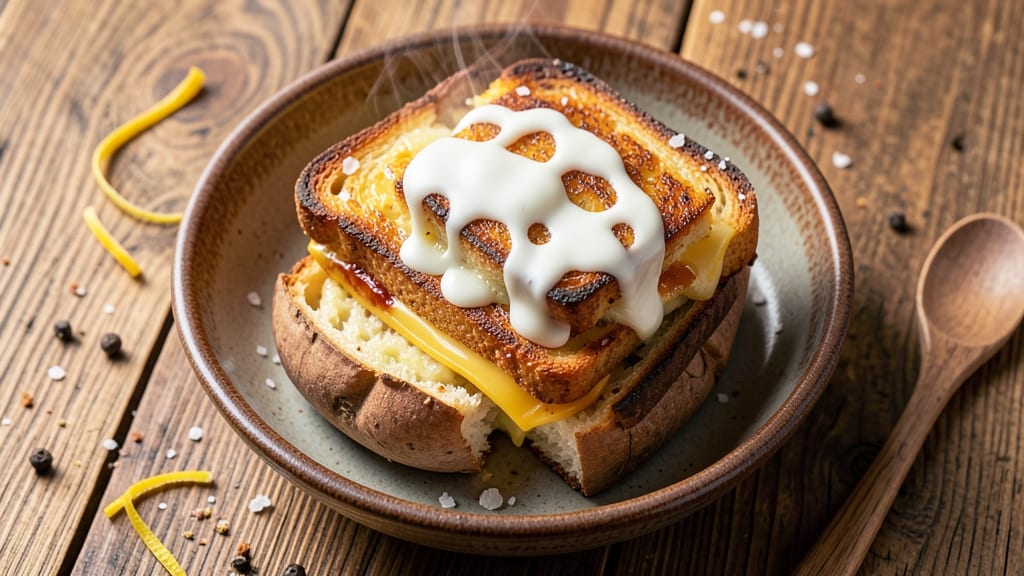
This baked potato grilled cheese recipe transforms two comfort food classics into a restaurant-worthy masterpiece with crispy edges and rivers of melted cheese. The secret lies in baking the potato until tender yet firm—never mushy—while the grilled cheese achieves that perfect golden crust and gooey center.
I developed this after years of perfecting textures, ensuring every bite delivers both the heartiness of a baked potato and the indulgence of a classic grilled cheese.
The key to success is timing: bake the potato first at 425°F until it yields slightly to pressure, then slice it open while still warm.
For the grilled cheese, butter your bread generously, layer with sharp cheddar and Gruyère, and cook on medium-low heat until the cheese is bubbling and the bread is golden. This method prevents soggy sandwiches while creating that coveted crispy exterior.
The combination of textures—creamy potato, crispy bread, and melty cheese—makes this dish impossible to resist.
What you'll end up with is a plated dish that looks as impressive as it tastes: a perfectly baked potato topped with a grilled cheese sandwich that holds its shape, its edges crispy and its center rich with cheese.
The potato's fluffy interior contrasts beautifully with the sandwich's crunch, while the cheese rivers add a luxurious touch. This isn't just a side dish—it's a complete, satisfying meal that proves comfort food can be elevated.
Serve it with a side of tomato soup for dipping or a simple green salad to balance the richness. The beauty of this recipe is its versatility—swap cheeses for different flavors, add bacon or chives for extra depth, or keep it classic. Here's how to make it perfectly every time.
Ingredients for baked potato grilled cheese
Four crispy potatoes and gooey cheese layers create this restaurant-style masterpiece.
| Ingredient | Amount | Notes |
|---|---|---|
| Russet Potatoes 🥔 | 4 whole | Large, unpeeled for texture |
| Sharp White Cheddar Cheese 🧀 | 1 ½ cups | Shredded, aged 6+ months |
| Gruyère Cheese 🧀 | 1 cup | Shredded, nutty flavor |
| Unsalted Butter 🧈 | ½ cup | Cold for crispy crust |
| Sourdough Bread 🍞 | 8 slices | Thick-cut, crusty texture |
| Heavy Cream 🥛 | ¼ cup | Optional for extra richness |
| Kosher Salt 🧂 | 1 ½ tsp | Diamond Crystal preferred |
| Freshly Ground Black Pepper 🌶️ | ½ tsp | For finishing sandwich |
| Garlic Powder 🧄 | ½ tsp | For bread seasoning |
| Olive Oil 🫒 | 1 tbsp | For potato brushing |
| Chives 🌿 | 2 tbsp | Chopped, for garnish |
The potatoes are the foundation—Idaho-grown Russets if you can find them, but any russet works. Costco or Trader Joe's usually have them in bulk. Look for firm, bumpy skins with no green spots. The cheese matters too: sharp white cheddar for tang and Gruyère for nutty depth. I always buy pre-shredded cheddar but grate my own Gruyère—it melts so much better. For the bread, sourdough from the bakery section has that perfect chewiness. If you're short on time, French bread works too.
No sharp cheddar? Pepper Jack at half the amount adds heat. Gruyère too expensive? Swiss cheese gives a similar melt. The heavy cream is optional but takes this to next-level richness—half-and-half works in a pinch. For the bread, if you don't have sourdough, brioche or Texas toast both work beautifully. The garlic powder is key for seasoning the bread—don't skip it unless you're allergic. And if you're feeling fancy, add a sprinkle of smoked paprika to the bread before buttered for extra depth.
Store prepped potatoes in the fridge for up to 2 days—reheat at 350°F for 15 minutes. The cheese mixture keeps for 3 days in an airtight container. For the bread, toast it fresh before assembling—never use stale bread. This dish reheats beautifully: 30 seconds in the microwave with a damp paper towel on top revives the crispiness. Make ahead and freeze the assembled sandwiches—3 months max—then toast in a skillet for 2-3 minutes per side.
Why You'll Love This Recipe
- One-Pan Magic: I swear by this—just bake the potato and cheese sandwich together on a sheet pan. No flipping, no fuss, and the oven does all the work while I sip my coffee.
- Creamy Crunch Combo: That sharp white cheddar melts into gooey perfection, while Gruyère adds nutty depth. The sourdough soaks up the butter just enough to keep every bite crispy on the edges.
- Lunch or Dinner Fix: Honestly, I make this for breakfast when I'm lazy, a quick lunch with a side salad, or even a fancy-ish dinner when guests drop by. The potato keeps it hearty enough for any meal.
- Budget-Friendly Leftovers: Russets are cheap, and this recipe stretches easily. I’ll often bake two and reheat slices the next day—still tastes like a fresh sandwich, not a sad reheat.
Step-by-step instructions for baked potato grilled cheese
Master this technique for perfectly crispy potato layers and molten cheese every time.
Bake the Potatoes Until Fork-Tender
Preheat your oven to 425°F and prick each of the 4 whole Russet Potatoes all over with a fork. Place them on a baking sheet and bake for 45-50 minutes until a knife slides in easily. The potatoes should feel soft when squeezed gently but still hold their shape.
While they bake, brush the skins with the 1 tablespoon olive oil to enhance browning. Rotate the potatoes halfway through baking for even cooking. I like to test doneness by piercing with a knife—if it comes out clean with just a little resistance, they're perfect. Overbaking leads to dry potatoes, so watch closely during the last 10 minutes.
Prepare the Cheese and Bread Layers
In a small bowl, combine the 1.5 cups Sharp White Cheddar Cheese and 1 cup Gruyère Cheese, breaking up any large clumps with your fingers. This blend gives you that perfect balance of sharp tang and nutty depth. In a separate bowl, melt the 0.5 cup Unsalted Butter in 10-second bursts in the microwave, stirring between each to prevent burning.
Lightly toast the 8 slices Sourdough Bread until just golden. While warm, brush each slice with the melted butter and sprinkle evenly with the 0.5 tsp Garlic Powder and 1.5 tsp Kosher Salt. The garlic powder adds subtle depth that complements the cheeses beautifully. Keep the bread slices buttered-side down on a clean surface for assembly.
Assemble the Sandwiches with Precision
Cut each baked potato in half lengthwise and scoop out about ½ cup of the flesh from each half, leaving a ¼-inch thick layer on the bottom. This creates space for the cheese to melt between the potato and bread layers. Spread the 0.25 cup Heavy Cream (if using) evenly over the potato bases—this adds luxurious richness that ties everything together.
Layer two slices of bread (buttered sides up) on each potato half, then sprinkle generously with the cheese mixture. Top with another two slices of bread, buttered sides down. The key here is even distribution—press down gently to help the cheese melt into the bread layers. This assembly creates that signature "cheese river" effect when baked.
Bake to Golden Crispiness
Transfer the assembled sandwiches to a baking sheet lined with parchment paper. Bake at 375°F for 12-15 minutes until the bread is deep golden brown and the cheese is fully melted with bubbly edges. The bottoms should be crispy while the tops remain soft enough to cut into easily.
Watch carefully in the last 2 minutes—this is when the cheese transforms from solid to molten. If the tops brown too quickly, tent loosely with foil. The sandwiches are done when you see that beautiful golden crust and hear the cheese bubbling inside. Remove from oven and let rest for 2 minutes before serving.
Garnish and Serve Immediately
Cut each sandwich diagonally into two triangles and garnish with the 2 tablespoons chopped Chives and a sprinkle of Freshly Ground Black Pepper. The chives add a fresh, bright contrast to the rich cheeses. Serve immediately while the cheese is still gooey—this dish doesn't wait.
Each bite should deliver that perfect combination of crispy potato layers, melted cheese rivers, and buttery bread. The contrast between the crispy exterior and creamy interior is what makes this version truly special. For extra indulgence, serve with a side of tomato soup or a simple green salad.
Pro Tips For Making Baked Potato Grilled Cheese
- USE A SKINNY KNIFE: Cut the sourdough slices thin—about ¼-inch thick—so they crisp without turning into a brick. Thick slices soak up potato moisture and end up soggy, and nobody wants a sad, limp grilled cheese. (Yes, even if you’re impatient like me.)
- SALT THE POTATOES BEFORE BAKE: Toss the cubed Russets with 1 teaspoon of salt before roasting—it crisps the skin and seasons the flesh evenly. I learned this the hard way after biting into bland, starchy potatoes that tasted like they’d been starched out.
- LAYER CHEESE LOW AND SLOW: Start with a thin layer of Gruyère closest to the bread, then add the sharp cheddar on top—it melts faster and won’t burn before the cheddar gets creamy. If you pile it all at once, the outer cheese turns rubbery while the inside stays cold. (Your future self will thank you.)
- BAKE AT 375°F, NOT HIGHER: Cranking the oven to 400°F might speed things up, but the sourdough burns before the cheese melts properly. 375°F gives the potato time to soften while the bread gets a golden crust—no charred edges, just perfect texture. (I was skeptical until I tried it.)
Troubleshooting this dish
Potato Too Dry
If your baked potato feels dry or crumbly, it likely baked too long or wasn't wrapped properly. I've found that wrapping potatoes in foil during the last 15 minutes of baking at 425°F traps steam and keeps them moist.
For extra insurance, brush the skins with 1 tablespoon olive oil before baking—this creates a crispy exterior while preserving moisture inside. If already dry, revive by microwaving with 1 teaspoon water for 30 seconds before assembling. 🥔
Cheese Not Melting
Cheese that refuses to melt usually means it's not hot enough or the bread isn't buttered properly. First, ensure your oven is at 375°F—any lower and the cheese won't transform. I swear by using a mix of sharp cheddar and Gruyère because Gruyère melts more smoothly.
For stubborn cheese, add 1 teaspoon heavy cream to the mix before layering—it acts as a melting agent. Also, make sure your bread is buttered generously on both sides before assembly. 🧀
Bread Too Soggy
Soggy bread happens when the cheese steams the bread instead of melting into it. The fix? Toast your bread slices until just golden before buttered and assembling. I like to use sourdough because it holds up better to moisture.
Another trick: press down firmly on the sandwich before baking to create good contact between bread and cheese. If already soggy, broil for 1-2 minutes to crisp up the bread after baking. 🍞
Uneven Cooking
Uneven cooking often means your sandwiches weren't placed properly in the oven. Always bake on the middle rack for even heat distribution. I've had success using a baking sheet with parchment paper to prevent sticking and ensure even browning.
If the top browns too quickly, tent loosely with foil after 8 minutes of baking. For extra insurance, rotate the pan halfway through baking. 🔥
Cheese Leaking Out
Cheese leaking is usually a sign of overfilling or using too much soft cheese. Measure your cheese carefully—1.5 cups sharp cheddar and 1 cup Gruyère is perfect for 4 sandwiches. For extra stability, press down firmly on the sandwich before baking.
If cheese still leaks, try using a mix with Parmesan (which melts less) or bake at 350°F instead of 375°F for slower melting. 🧈
Potato Too Mushy
Mushy potatoes usually mean they were overcooked or pierced too aggressively. For perfect texture, bake at 425°F for 45-50 minutes and test with a knife—it should slide in easily but with slight resistance.
If already mushy, try this trick: wrap the potato in a damp paper towel and microwave for 20 seconds to firm it up slightly before assembling. For future batches, prick potatoes with a fork but don't go too deep—just enough to let steam escape. 💫
Nutrition facts
Frequently asked questions
Can I make this ahead of time?
You can prep components in advance! Bake the potatoes up to 2 days ahead and store them in the fridge. Assemble the grilled cheese sandwiches (without baking) and refrigerate for up to 3 days. For the best results, bake the sandwiches fresh when ready to serve. If freezing, assemble completely and freeze for up to 3 months—then toast in a skillet for 2-3 minutes per side to revive the crispiness.
What's the best bread for this recipe?
Sourdough works perfectly because of its chewy texture, but you can also use Texas toast, brioche, or even French bread. Avoid soft white bread—it gets soggy too quickly. Pro tip: Toast your bread slices until just golden before assembling to prevent a gummy sandwich.
Can I use different cheeses?
For a smoky flavor, swap in smoked cheddar. Want something milder? Try Swiss cheese or Mozzarella. For extra richness, add Parmesan (it melts less but adds great flavor). The key is using a mix of 2-3 cheeses for the best melt and texture.
How do I keep the potato from getting soggy?
Leave a ¼-inch thick layer of potato flesh when scooping out the center—this creates space for the cheese to melt without steaming the potato. Also, bake the assembled sandwiches at 375°F (not too hot) for 12-15 minutes. If your potato gets soggy, broil for 1-2 minutes at the end to crisp up the bread.
Can I make this vegetarian?
This recipe is already vegetarian! For extra protein, add sautéed mushrooms or caramelized onions to the cheese layer. If you want a vegan version, use dairy-free butter, vegan cheese, and ensure your bread is egg-free. The technique remains the same—just focus on getting that perfect melt with plant-based cheeses.