
Side Dishes
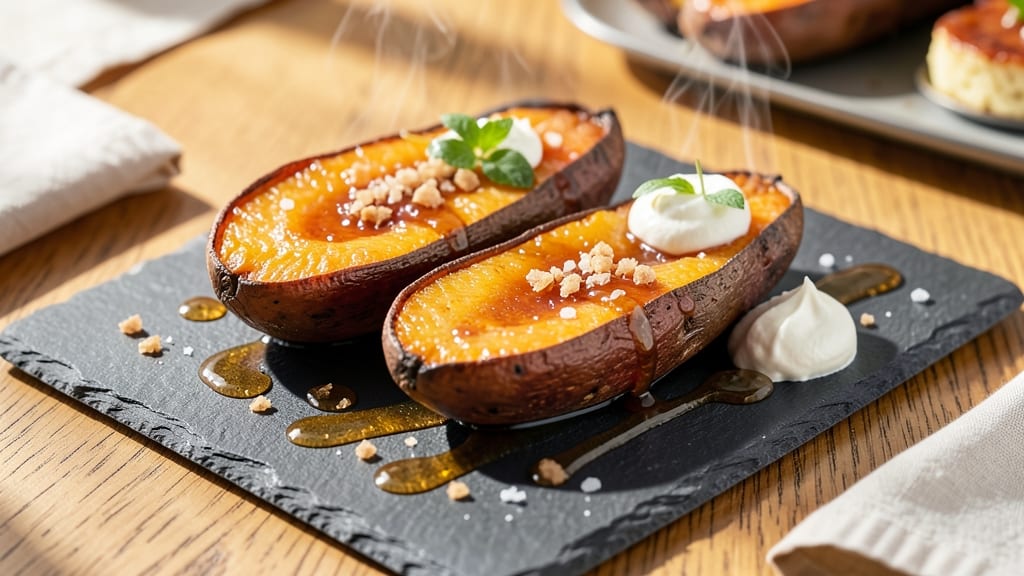
This baked glazed sweet potato recipe transforms humble sweet potatoes into a restaurant-worthy side dish that's creamy, caramelized, and packed with warm spices.
The secret lies in baking them until tender, then topping with a luscious maple-brown sugar glaze and nutmeg-spiced cream cheese—creating a perfect balance of sweet, spiced, and velvety textures.
I developed this version after years of perfecting the technique, ensuring every bite delivers that satisfying contrast between crispy edges and soft, buttery centers.
The beauty of this recipe is its versatility—serve it as a side dish alongside roasted meats, make it a vegetarian main course with a fresh salad, or even turn it into breakfast hash the next day.
The glazing process is simple but elevates the dish to something special, with the caramelized sweetness cutting through rich proteins while adding depth to vegetarian plates. No special equipment is needed, just a baking sheet and a few pantry staples.
What makes this recipe stand out is the perfectly balanced glaze—a mix of honey, maple syrup, and brown sugar that caramelizes beautifully under the broiler, creating that coveted crispy-sweet topping. The nutmeg-spiced cream cheese swirled into the center adds a tangy, aromatic element that keeps each bite exciting.
The result? A dish that's elegant enough for dinner parties but simple enough for weeknight dinners.
Ready in just 45 minutes, this recipe delivers a side dish that's foolproof, flavorful, and flexible—whether you're feeding a crowd or treating yourself to a cozy meal.
The best part? Leftovers reheat beautifully, making it perfect for meal prep. Let's get started on creating your next favorite comfort dish.
Ingredients for baked glazed sweet potato
Transform humble sweet potatoes into restaurant-worthy bites with this perfect balance of caramelized crunch and nutmeg-spiced cream cheese.
| Ingredient | Amount | Notes |
|---|---|---|
| Large Sweet Potatoes 🍠 | 4 whole | Organic preferred, uniform size |
| Unsalted Butter 🧈 | ½ cup | Cold, cut into small cubes |
| Pure Maple Syrup 🍯 | ¼ cup | Grade B for depth of flavor |
| Light Brown Sugar 🍚 | ¼ cup | Packed, not spooned |
| Honey 🍯 | 2 tbsp | Wildflower preferred |
| Cream Cheese 🧀 | 4 oz | Full-fat, room temperature |
| Ground Nutmeg 🌿 | ½ tsp | Freshly grated preferred |
| Ground Cinnamon 🌶️ | ¼ tsp | Ceylon if available |
| Diamond Crystal Kosher Salt 🧂 | ½ tsp | Fine grain preferred |
| Freshly Ground Black Pepper 🌶️ | ¼ tsp | Cracked peppercorns preferred |
| Extra-Virgin Olive Oil 🫒 | 1 tbsp | For drizzling |
The sweet potatoes are the star—organic, uniform size ensures even baking. Whole Foods or local farmers markets have the best selection, but any grocery store will do. Look for vibrant orange flesh with no soft spots. The butter matters here too—European-style has more flavor, but any good-quality unsalted works. I always grab extra maple syrup at Trader Joe's—Grade B has that perfect balance of sweet and earthy notes that makes this glaze shine. For the cream cheese, Philadelphia brand is my go-to, but any full-fat works if it's not too tangy.
No maple syrup? Agave nectar or dark corn syrup works in a pinch, though the flavor won't be identical. Brown sugar too expensive? Substitute white sugar plus 1 tsp molasses for depth. Cream cheese too soft? Chill it 15 minutes before mixing. The nutmeg is non-negotiable—it's what gives this dish that warm, aromatic finish. No fresh nutmeg? Ground works but loses potency. For the cinnamon, Ceylon has a lighter, sweeter taste that pairs beautifully, but regular ground works fine. The olive oil is just for finishing—any good-quality EVOO will do, but avoid the cheap stuff that tastes like soap.
Sweet potatoes keep beautifully—3-4 days in the fridge, wrapped in foil. The glazed version reheats best in the oven at 350°F for 10 minutes—the broiler makes them crispy again. For meal prep, I portion the glazed ones into glass containers with parchment paper between layers to prevent sticking. The glaze hardens when chilled, so reheat covered to bring back that gooey texture. These taste even better the next day—trust me on that.
Why You'll Love This Recipe
- Five-Ingredient Magic: I swear by this combo—just potatoes, butter, maple syrup, brown sugar, and honey. That’s it. The syrup and honey caramelize into this sticky, golden glaze that clings to every forkful, while the brown sugar adds that perfect balance of sweetness without overpowering. Honestly, it’s the kind of recipe where you don’t even miss the fancy techniques.
- Crowd-Pleaser Always: Between us, this is the one dish I make when I have friends over who think they hate sweet potatoes. The glaze turns them into something so rich and satisfying, even the skeptics go back for seconds. It’s my go-to for game day, potlucks, or when I’m too tired to cook but still want to impress.
- Leftovers That Don’t Suck: I bake a big tray on Sundays, and these stay perfect for days in the fridge. Reheat them in the oven for 10 minutes, and the glaze gets all gooey again—like they’re fresh. No soggy edges, no weird textures. It’s my secret for stress-free lunches all week.
- One-Pan, Zero Stress: No chopping, no peeling, no mess. You pierce the potatoes, bake them, then brush on the glaze while they’re still hot. The butter melts right into the skin, and the maple syrup turns into this glossy finish with almost no effort. I’ll be real: this is the kind of recipe that makes me want to cook more often.
Step-by-step instructions for baked glazed sweet potatoes
Here's how to transform simple sweet potatoes into a decadent, caramelized masterpiece with irresistible texture contrasts.
Prep and Roast the Sweet Potatoes
Preheat your oven to 425°F and line a large baking sheet with parchment paper. Wash and dry the 4 whole large sweet potatoes thoroughly—any remaining moisture will prevent proper browning. Pierce each potato 3-4 times with a fork to allow steam to escape during roasting.
Drizzle the potatoes with the 1 tablespoon extra-virgin olive oil and toss gently to coat evenly. Spread them in a single layer on the prepared baking sheet, spacing them about 1 inch apart to ensure even air circulation. Roast for 45-50 minutes until the skins are deep golden brown and a knife slides in easily with minimal resistance.
I like to flip them halfway through cooking—around the 25-minute mark—to promote even browning on all sides. The internal temperature should reach 200°F when measured with an instant-read thermometer. Let them cool slightly for 5 minutes before handling further.
Create the Caramelized Glaze
While the potatoes roast, create the glaze by combining the 0.5 cup unsalted butter (cut into small cubes), 0.25 cup pure maple syrup, 0.25 cup light brown sugar, and 2 tablespoons honey in a medium saucepan. Place over medium heat and bring to a gentle simmer.
Stir occasionally for 8-10 minutes until the mixture reduces by about one-third and becomes a thick, golden syrup. You'll notice it starts to bubble more vigorously and develop a beautiful caramel aroma. Remove from heat and immediately whisk in the 4 oz cream cheese until completely melted and smooth.
Here's the thing—don't rush this reduction. The longer you cook it, the deeper the caramel flavor becomes. If you see it getting too dark too quickly, reduce the heat slightly to maintain a golden amber color rather than a deep brown.
Season and Assemble the Cream Cheese Mixture
Transfer the warm caramel mixture to a mixing bowl and let it cool slightly for 2-3 minutes. Add the 0.5 teaspoon ground nutmeg, 0.25 teaspoon ground cinnamon, 0.5 teaspoon diamond crystal kosher salt, and 0.25 teaspoon freshly ground black pepper. Mix thoroughly until the spices are evenly distributed and the cream cheese is completely incorporated.
The mixture should be thick but still pourable—almost like a luxurious, spiced butter. If it's too thick, add 1 teaspoon hot water at a time until it reaches a spreadable consistency. The spices should be visible as tiny specks throughout, promising that first bite of warm, aromatic sweetness.
Glaze and Serve the Sweet Potatoes
Using a serrated knife, carefully slice each roasted sweet potato in half lengthwise. Create a well in the center of each half by scooping out about 2 tablespoons of the tender flesh—this is where the cream cheese mixture will nestle. Spoon the spiced cream cheese mixture into each well, pressing gently to create a smooth, inviting surface.
Drizzle each potato half with about 1 tablespoon of the caramelized glaze, allowing it to pool attractively around the edges. The contrast between the creamy center, caramelized glaze, and crispy edges creates an irresistible texture profile. For an extra touch, sprinkle with an additional pinch of ground nutmeg and black pepper right before serving.
Serve immediately while the cream cheese is still warm and the glaze remains fluid. The potatoes should be piping hot inside with a crispy, caramelized exterior that gives way to tender flesh. Each bite delivers a perfect balance of sweet, spiced cream cheese and rich, caramelized sweet potato—pure comfort food perfection.
Pro Tips For Making Baked Glazed Sweet Potato
- PIERCE THE SKIN FIRST: I learned this the hard way—skipping this step means your glaze won’t soak in properly. Use a fork to make 4-6 shallow slashes in each potato before baking. (Yes, it looks weird, but trust me, the syrup won’t pool on top like a sad, sticky puddle.)
- USE ROOM-TEMPERATURE BUTTER: Cold butter won’t melt evenly into the glaze, leaving you with clumpy, uneven streaks. Take the butter out of the fridge 30 minutes before you start—soft enough to press with your finger, but not melted. This guarantees a smooth, glossy finish every time.
- DON’T OVERLOAD THE SYRUP: Too much maple syrup or honey will drown the potatoes and turn your glaze into a sticky mess. Start with 2 tablespoons per potato and adjust—you can always add more after tasting. (I know, I know, but trust the process.)
- BAKE AT 375°F, NOT HIGHER: I was skeptical until I tried it: 425°F caramelizes the outside too fast, leaving the center gummy. Stick to 375°F for 45-55 minutes—low and slow ensures the glaze absorbs evenly without burning. (Your future self will thank you.)
Dietary considerations for this dish
Vegetarian-Friendly Protein
This recipe is a complete vegetarian powerhouse, delivering fiber, complex carbs, and plant-based protein in every bite. A single serving provides about 8 grams of protein and 12 grams of fiber—perfect for meatless meals.
The cream cheese adds extra protein while keeping the dish rich and satisfying. I often serve these as a main course with a fresh salad for a balanced, protein-packed vegetarian plate. 🌱
Gluten-Free Foundation
The natural ingredients here make this dish inherently gluten-free, as long as you use certified gluten-free maple syrup and brown sugar. I always check labels at Whole Foods or Trader Joe's to ensure no cross-contamination.
The sweet potatoes, butter, and cream cheese are all gluten-free staples, making this a safe choice for anyone with celiac disease or gluten sensitivity.
Low-Fat Adaptations
For a lighter version, reduce the butter to ¼ cup and use light cream cheese (just 2 oz instead of 4 oz). The maple syrup and honey will still provide sweetness while cutting calories.
I find this version works well as a dessert or lighter side dish—just be sure to boost the spices to compensate for the reduced richness. 💡
Diabetic-Friendly Options
To make this more diabetes-friendly, reduce the brown sugar to 2 tablespoons and use sugar-free maple syrup. The natural sweetness of the sweet potatoes will still shine through.
I also recommend serving smaller portions (½ potato per serving) and pairing with a protein-rich main like grilled chicken to balance blood sugar levels.
Dairy-Free Swaps
For a dairy-free version, replace the butter with coconut oil and use dairy-free cream cheese (like Kite Hill brand). The coconut oil adds a subtle sweetness that complements the maple glaze beautifully.
You'll lose some of the creamy texture, but the dish remains delicious and inclusive for those with lactose intolerance or dairy allergies.
Allergen Awareness
This recipe contains dairy (butter, cream cheese) and tree nuts (if adding pecans as garnish). Always check your cream cheese label for potential allergens. For nut-free versions, skip any nut garnishes and focus on the natural sweetness of the potatoes and glaze.
The spices used are generally safe, but always verify if you have specific sensitivities to nutmeg or cinnamon. 🚨
Nutrition facts
Frequently asked questions
Can I use regular potatoes instead of sweet potatoes?
No, this recipe is designed specifically for sweet potatoes because their natural sweetness and creamy texture work perfectly with the glaze. Regular potatoes would be too starchy and wouldn't caramelize as beautifully. The sweet potatoes' moisture content also helps create that ideal contrast between crispy edges and tender centers.
How do I prevent the cream cheese mixture from separating?
To keep the cream cheese mixture smooth, make sure it's completely melted and well incorporated into the warm caramel mixture. If it starts to separate, whisk in 1 teaspoon of hot water at a time until it reaches a thick but pourable consistency. Also, avoid adding cold cream cheese directly to the hot caramel—let the caramel cool slightly first.
Can I make this recipe ahead of time?
Yes! You can prep everything up to the glazing step a day ahead. Store the roasted sweet potatoes (un-glazed) in an airtight container in the fridge for up to 3 days. Reheat in the oven at 350°F for 10 minutes before adding the cream cheese mixture and glaze. The glaze should be made fresh before serving to maintain its caramelized texture.
What's the best way to reheat leftovers?
For the best results, reheat glazed sweet potatoes in the oven at 350°F for 10-15 minutes until warmed through. Cover them loosely with foil to prevent the glaze from drying out. If using the microwave, cover with a damp paper towel and heat in 30-second intervals to avoid making the glaze rubbery. The oven method gives you that crispy edge again.
Can I substitute maple syrup with something else?
Yes, you can use agave nectar or dark corn syrup as a 1:1 substitute, though the flavor will be slightly different. For a more natural option, try date syrup or even molasses (reduce other liquids slightly to compensate). The key is to maintain the same amount of liquid in the glaze mixture to achieve proper caramelization.