
Breakfast & Brunch
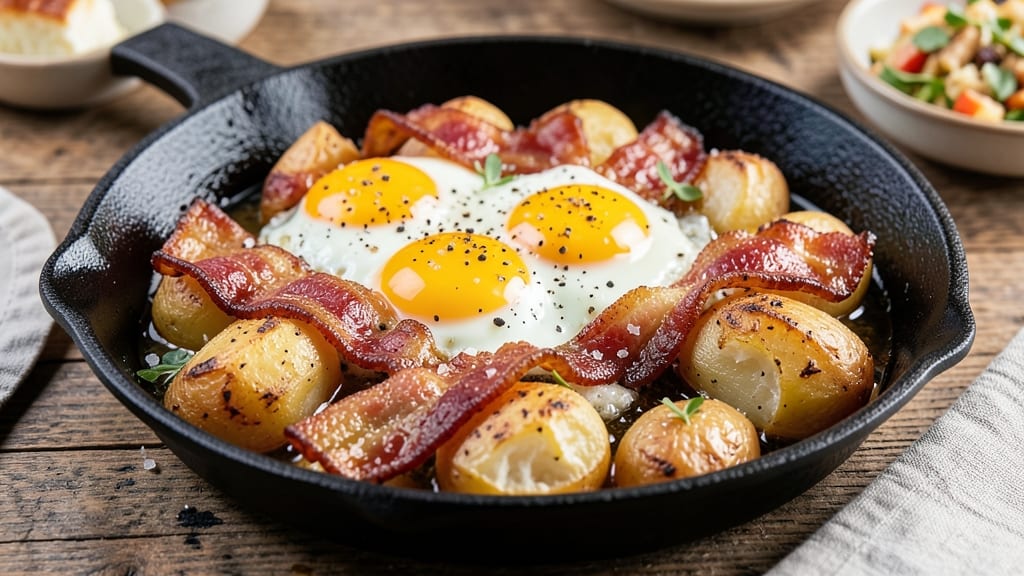
This bacon egg potato skillet recipe transforms simple ingredients into a hearty, restaurant-quality breakfast that's perfect for any time of day. The secret lies in crisping the potatoes just right—golden edges that stay crispy while the centers remain tender, all while the eggs poach perfectly with runny yolks.
I developed this recipe during a particularly busy week when I needed a meal that felt indulgent but required minimal effort.
The magic happens in the skillet where bacon renders its rich, smoky flavor, potatoes absorb that delicious fat, and eggs cook to order. This isn't your average breakfast—it's a satisfying, protein-packed dish that works as a weeknight dinner or a weekend brunch centerpiece.
The combination of textures—crispy bacon, tender potatoes, and silky eggs—makes every bite irresistible.
What makes this recipe stand out is its versatility. You can make it ahead and reheat for a quick meal, or customize it with your favorite toppings like fresh herbs, hot sauce, or a sprinkle of cheese.
The key is getting the potatoes perfectly crispy without burning them, and I'll show you exactly how to achieve that foolproof result.
Once you try this skillet, you'll never go back to basic eggs and toast. The rich flavors and satisfying textures make it a meal worth making again and again. Let's get started on creating this delicious, comforting dish that's perfect for any occasion.
Ingredients for bacon egg potato skillet
Six key ingredients transform a simple skillet into restaurant-quality breakfast magic.
| Ingredient | Amount | Notes |
|---|---|---|
| Bacon 🥓 | 8 oz | Thick-cut for best flavor |
| Russet Potatoes 🥔 | 1 ½ lb | Cut into 1-inch cubes |
| Large Eggs 🥚 | 4 whole | Fresh, room temperature |
| Unsalted Butter 🧈 | 4 tbsp | For crisping potatoes |
| Salt 🧂 | 1 tsp | Kosher or sea salt |
| Black Pepper 🌶️ | ½ tsp | Freshly ground preferred |
| Garlic Powder 🧄 | ½ tsp | For seasoning potatoes |
| Fresh Parsley 🌿 | ¼ cup | Chopped for garnish |
| Hot Sauce 🌶️ | 1 tbsp | Optional, for serving |
| Shredded Cheddar Cheese 🧀 | ½ cup | Optional, for topping |
| Olive Oil 🫒 | 1 tbsp | For skillet coating |
| Fresh Chives 🌿 | 2 tbsp | Chopped for garnish |
Thick-cut bacon is non-negotiable here—it renders slowly, creating that perfect crispy edge while keeping the center juicy. Costco or Trader Joe's usually have the best quality, but any thick-cut will work. For the potatoes, RussetsCook them low and slow—don't rush it, or they'll burn before they crisp.
No thick-cut bacon? Regular bacon cut into strips works, but it'll be less flavorful. For the potatoes, Yukon Golds are a great alternative if Russets aren't available—they're creamier but still crisp up nicely. Fresh parsley and chives can be swapped for dried parsley at half the amount, though fresh is definitely better. Want to skip the cheese? Sour cream or avocado slices add richness without dairy. The hot sauce is totally optional, but a little goes a long way—Cholula or Sriracha are my go-tos. And if you're worried about the eggs, room temperature eggs poach more evenly, but cold eggs work fine if you're in a hurry.
This skillet reheats beautifully—just pop it in a 350°F oven for 10-15 minutes to crisp up the potatoes again. Store leftovers in the fridge for 3-4 days, but honestly, it's even better the next day as the flavors meld. For meal prep, cook the potatoes and bacon ahead, then just fry the eggs fresh in the skillet when you're ready to serve. The bacon fat keeps for up to a week in the fridge—save it for future skillet meals or pancakes. And if you're making this for a crowd, double the recipe—it's that good.
Why You'll Love This Recipe
- One-Pan Magic: I swear by this recipe when I’m too tired to wash dishes—just slice potatoes, fry bacon, and let everything crisp together. No chopping boards, no fuss, just golden edges and salty-sweet layers all on one sheet pan.
- Crispy-Creamy Obsession: That first bite where the potato’s edge snaps and the inside melts? Then the runny egg yolk ties it all together—like a breakfast-for-dinner hug. The bacon’s smokiness cuts through the richness, and honestly, I’ll take that combo any day.
- Breakfast or Dinner Fix: Honestly, I make this for lazy Sunday mornings and weeknight dinners. Add a handful of greens for lunch, or pile it high for a hearty supper—it’s the same effort, different vibes. My kids even ask for it when they think it’s “just eggs.”
- Budget Breakthrough: Russets are cheap, eggs are cheap, and bacon stretches far when you render the fat. I’ve fed four people for under $10, and the leftovers? Just as good reheated with a sprinkle of flaky salt. My wallet and my taste buds win.
Step-by-step instructions for bacon egg potato skillet
Here's how to build the perfect hearty skillet with perfectly crispy potatoes, smoky bacon, and runny yolk magic.
Cook the Bacon Until Crispy
Place the 8 oz bacon in a large cast-iron skillet over medium heat. Let it cook undisturbed for 4-5 minutes until the edges start to crisp. You want that beautiful color change from pink to golden brown—this is when all the flavor develops. Once the bacon is 75% cooked and crispy on the edges, use tongs to transfer it to a paper towel-lined plate, leaving all that delicious bacon fat in the skillet.
Don't drain the fat—this is liquid gold for crisping your potatoes. If you're worried about excess fat, you can remove some with a paper towel after the bacon's done, but I like to keep it all for maximum flavor and crispiness. The fat will help create that perfect crust on your potatoes later.
Par-Cook the Potatoes in the Bacon Fat
Add 1 tablespoon olive oil to the bacon fat in the skillet and heat over medium-high heat until shimmering. Add the 1.5 lb russet potatoes cut into 1-inch cubes, spreading them in a single layer. You might need to work in batches if your skillet isn't large enough to fit them without crowding.
Cook the potatoes for 10-12 minutes, stirring occasionally, until they're tender when pierced with a fork but still have some bite. You want them soft enough to finish cooking later but not falling apart. This initial cooking step ensures they'll crisp up beautifully in the final step. Season with 1 teaspoon salt, ½ teaspoon black pepper, and ½ teaspoon garlic powder while they cook.
Make Space for the Eggs
Remove the potatoes from the skillet and set them aside on a plate. Reduce the heat to low and add 2 tablespoons unsalted butter to the skillet. Let it melt completely, then increase the heat to medium-low. This creates a smooth base for your eggs and helps prevent them from sticking.
Here's the thing—you want to create little wells in the skillet for your eggs. Use the back of a spoon to gently push the potatoes to one side, creating 4 small indentations in the skillet. Each well should be about the size of a small egg. This ensures your eggs will cook perfectly in their own little pockets of butter and bacon fat.
Cook the Eggs to Runny Perfection
Crack the 4 whole large eggs into the prepared wells in the skillet. Return the potatoes to the skillet, gently arranging them around the eggs. Cover the skillet with a lid and cook for 4-5 minutes on medium-low heat. You want the eggs to cook just until the whites are set but the yolks remain completely runny—this is where the magic happens.
Don't walk away during this step. The eggs cook quickly, and you want that perfect runny yolk. You'll know they're ready when the whites are just set but still slightly translucent around the edges. The potatoes should be golden brown and crispy on the bottom now—this is what makes this dish so satisfying.
Finish and Garnish
Remove the skillet from heat and let it sit for 1 minute to allow the eggs to set slightly. Sprinkle the ½ cup shredded cheddar cheese (if using) evenly over the top, then cover again for 30 seconds to melt the cheese slightly. This adds a delicious, gooey element to the dish.
Garnish with the 2 tablespoons chopped fresh chives and ¼ cup chopped fresh parsley. Serve immediately with the crispy bacon on top and a small dish of hot sauce on the side. The contrast of crispy potatoes, runny yolks, and smoky bacon makes every bite irresistible. Enjoy while everything is hot and the yolks are still perfectly runny!
Pro Tips For Making Bacon Egg Potato Skillet
- CRISP THE POTATOES FIRST: Toss diced Russets in cold water for 10 minutes before draining—this cuts down on excess starch and guarantees a crispy edge instead of a gummy mess. I learned this the hard way after three batches of soggy potatoes; the water rinse is non-negotiable for that perfect skillet texture.
- COOK THE BACON LOW: Render the bacon on medium-low heat until just crispy—no need to burn it to a crisp. High heat turns it rubbery, and you’ll lose flavor. Pull it out at 160°F internal temp, then let it rest on paper towels to drain excess fat. (Yes, even if you’re impatient like me.)
- SALT THE POTATOES WELL: Generously salt the diced potatoes before cooking—about 1.5 teaspoons per pound. The salt draws out moisture, which caramelizes into crispy bits, and it balances the richness of the butter and eggs. Skip this, and you’ll miss the depth of flavor.
- NESTLE EGGS IN HOT FAT: After removing the bacon, leave the skillet hot with the rendered fat (no need to wipe it out). Crack eggs directly into the pan and let them sizzle undisturbed for 30 seconds—this creates a golden crust instead of a scrambled mess. (Your future self will thank you.)
Make-ahead tips for leftovers
Prep Ahead Strategy
Cook the bacon and potatoes completely in advance—they reheat beautifully while keeping their texture. Store them in an airtight container in the fridge for up to 3 days. The bacon fat actually enhances flavor over time, so don't drain it!
When ready to serve, simply reheat everything together in the skillet over medium heat for 5-7 minutes until crispy again. 💪
Egg Cooking Hack
For maximum convenience, prepare the potatoes and bacon ahead, then cook the eggs fresh when serving. Keep the skillet at room temperature before adding eggs to prevent temperature shock. I like to reheat the potato-bacon mixture in the skillet first, then create wells for the eggs while it's still hot.
This keeps everything piping hot and ready in just 5 minutes! ✨
Freezer-Friendly Method
This skillet freezes surprisingly well—just assemble everything except the eggs, then freeze in a single layer before transferring to a freezer bag. When ready to eat, thaw overnight in the fridge, then reheat in the skillet with fresh eggs.
The texture holds up remarkably well, though the potatoes may be slightly softer after freezing. For best results, add 1 extra tablespoon bacon fat when reheating to restore crispiness. ❄️
Meal Prep Timeline
My go-to routine: Cook bacon and potatoes on Sunday evening, store in the fridge, then assemble fresh during the week. The bacon fat keeps for up to 1 week in the fridge—save it for future skillet meals or pancakes!
For a quick breakfast, simply reheat the potato-bacon mixture, add fresh eggs, and you're done in 10 minutes. The eggs cook faster when the skillet is already hot from reheating the potatoes. 📅
Portion Control Tips
Divide the cooked potato-bacon mixture into 4 equal portions for easy reheating. Store each portion in a separate container to maintain crispiness—stacking can make them soggy. When reheating, use a non-stick skillet if your cast iron isn't available, and add 1 teaspoon olive oil to prevent sticking.
The eggs should always be cooked fresh to maintain that perfect runny yolk. 🍳
Make-Ahead Mistakes
Avoid these common pitfalls: Never reheat eggs in the microwave—they'll turn rubbery. Don't skip the final crisping step after reheating, or your potatoes will be limp. And always let the skillet cool slightly before adding fresh eggs to prevent temperature shock.
I've learned these lessons the hard way—trust me, crispy potatoes are worth the effort! 🔥
Nutrition facts
Frequently asked questions
Can I use frozen potatoes for this recipe?
While fresh potatoes are ideal, you can use frozen potatoes—but they'll need extra attention. Thaw them completely first, then pat them very dry with paper towels to remove excess moisture. This helps prevent soggy potatoes. You may need to increase cooking time by 2-3 minutes since frozen potatoes start with higher moisture content. The key is getting them crispy without burning!
How do I make this skillet vegetarian?
Swap the bacon for thick-cut tempeh or smoked tofu, sliced into strips. Cook them first in olive oil until crispy, then proceed with the recipe. For extra flavor, add ½ teaspoon liquid smoke or 1 teaspoon smoked paprika to the potatoes. The texture will be different but still delicious with runny eggs and crispy potatoes!
Why did my potatoes turn out mushy instead of crispy?
Mushy potatoes usually happen from one of three things: overcrowding in the pan, too much moisture (like not drying them properly), or cooking too fast. Always cook potatoes in a single layer over medium heat, not high. If using waxy potatoes like Yukon Golds, reduce cooking time by 2 minutes—they crisp differently than Russets. Patience is key!
Can I make this in a non-stick skillet?
Yes, but there are a few adjustments. Use ½ tablespoon less bacon fat since non-stick pans don't need as much for crispiness. Also, avoid scraping the bottom too aggressively—non-stick coatings can degrade with metal utensils. For best results, use a 10-inch non-stick skillet and cook the potatoes at medium-low heat to prevent sticking while achieving crispiness.
What's the best way to reheat leftovers?
Reheat in the same skillet over medium heat for 5-7 minutes, stirring occasionally. Add 1 tablespoon fresh bacon fat or olive oil to restore crispiness. For microwave reheating (not ideal for texture), cover with a damp paper towel and heat in 30-second bursts until hot. The eggs should always be cooked fresh to maintain that perfect runny yolk!