Side Dishes
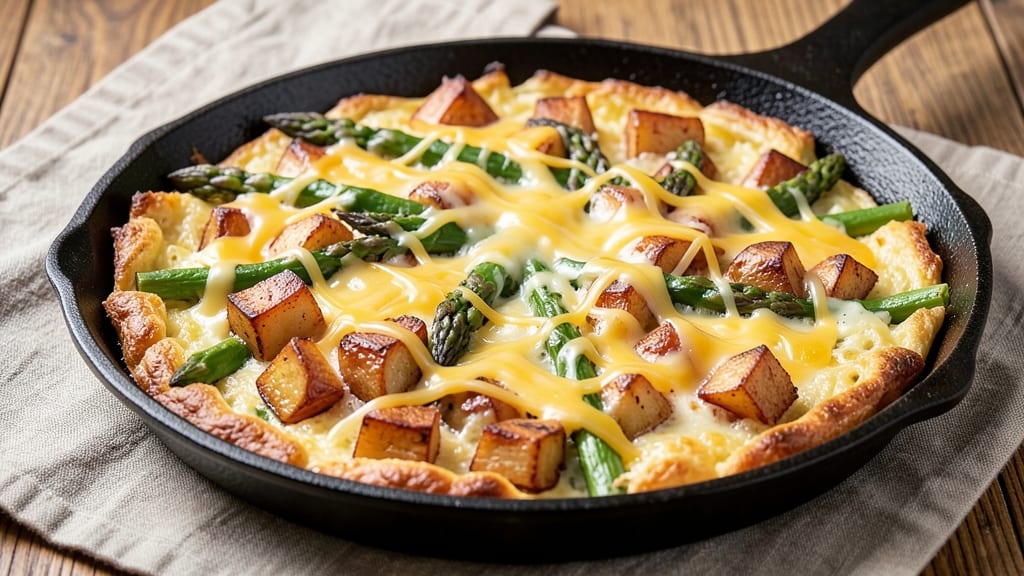
This asparagus and potato frittata delivers restaurant-quality results with a golden crust and fluffy eggs—all in one pan. The secret lies in perfectly sautéed asparagus and tender potatoes that create a sturdy base while keeping the eggs light and airy.
I developed this recipe during spring asparagus season when I wanted a hearty, one-dish meal that could feed a crowd without requiring multiple pans or complicated techniques.
The beauty of this frittata is its versatility—it works equally well on the stovetop or in the oven, and the vegetarian-friendly base makes it perfect for any meal. You'll start by roasting the potatoes until they're fork-tender and crisping the asparagus just enough to maintain their vibrant green color.
The egg mixture is then poured over the vegetables, creating a rich, custardy center with a perfectly set top.
What makes this recipe truly special is the balance of textures: crispy potato edges, tender asparagus spears, and silky eggs that hold together beautifully when sliced. The dish is ready in about 30 minutes, making it ideal for busy weeknights or weekend brunches.
The flavors are simple yet satisfying—earthy potatoes, fresh asparagus, and creamy eggs—all coming together in one cohesive, impressive dish.
Serve it warm with a sprinkle of fresh herbs or a drizzle of hot sauce for extra brightness. This frittata is equally at home as a side dish or a main course, and leftovers reheat beautifully.
Let's get started on this foolproof recipe that will become a staple in your meal rotation.
Ingredients for asparagus and potato frittata
Six ingredients make this restaurant-style frittata shine with golden crust and fluffy eggs.
| Ingredient | Amount | Notes |
|---|---|---|
| Large Eggs 🥚 | 8 whole | Room temperature for best mixing |
| Russet Potatoes 🥔 | 1 ½ lb | Medium diced, waxy variety preferred |
| Fresh Asparagus 🌱 | 1 lb | Trimmed, tough ends removed |
| Heavy Whipping Cream 🥛 | ½ cup | Full-fat for rich texture |
| Shredded Sharp Cheddar Cheese 🧀 | 1 cup | Aged for best flavor |
| Extra-Virgin Olive Oil 🫒 | ½ cup | For roasting and crisping |
| Fresh Chives 🌿 | ¼ cup | Finely chopped for garnish |
| Garlic Cloves 🧄 | 3 cloves | Minced for flavor base |
| Kosher Salt 🧂 | 1 ½ tsp | Diamond Crystal preferred |
| Freshly Ground Black Pepper 🌶️ | ½ tsp | For seasoning |
| All-Purpose Flour 🌾 | 1 tbsp | For crispy potato edges |
| Hot Sauce 🌶️ | 1 tbsp | Optional for serving |
The potatoes are the foundation—Yukon Golds if you can find them, but Russets work too. I always buy them a day ahead and let them sit out so they crisp up better. Trader Joe's carries great organic potatoes if you're near one, but any store's regular russets do the job. For the asparagus, look for bright green spears with tight tips—those farmers market bundles are worth the splurge. Trim the ends at an angle so they look pretty when sliced. The eggs? Pasture-raised if you want to go fancy, but store-bought large eggs work perfectly fine.
No Yukon Golds? Red potatoes add sweetness—just roast them a bit longer. Short on chives? Green onions work too. The hot sauce is totally optional, but I always keep a bottle of Cholula on hand for that extra kick. Want more richness? Add a splash of heavy cream to the egg mixture. The flour is key for crispy potato edges—don't skip it! And if you're making this ahead, room temperature eggs mix better—just let them sit out for 30 minutes before cracking.
Potatoes and asparagus keep separately in the fridge for 4-5 days. The frittata itself reheats beautifully—just pop slices in a skillet for 2-3 minutes until warm. I usually make this for brunch and portion it into individual servings. Freezes well for 2 months if you wrap it tightly in foil. The cheese gets melty when reheated, so it's perfect for leftovers. Store any extra hot sauce in the fridge—it lasts forever that way.
Why You'll Love This Recipe
- The secret’s in the texture: tender potatoes soak up the eggy richness while the asparagus stays bright and snappy. Honestly, the first bite of that golden top with the gooey center had me questioning why I don’t make this more often.
- One-Pan Magic: I swear by this recipe when I’m too tired to scrub pots—just slice the potatoes, trim the asparagus, and let the eggs do the rest. That creamy cheddar and crispy potato edges? All in one pan, no fuss.
- Creamy Crispy Contrast: The secret’s in the texture: tender potatoes soak up the eggy richness while the asparagus stays bright and snappy. Honestly, the first bite of that golden top with the gooey center had me questioning why I don’t make this more often.
- Lunchbox Hero: Between us, this frittata is my go-to for meal prep—slices perfectly, reheats like a dream, and even my picky teenager won’t turn it down. Pack it cold for work or warm it up for dinner; it’s that reliable.
Step-by-step instructions for asparagus and potato frittata
This frittata delivers a crispy golden crust and fluffy eggs—no flipping required.
Roast the Potatoes and Asparagus
Preheat your oven to 425°F. Toss the 1.5 lb medium-diced russet potatoes with 2 tablespoons of the extra-virgin olive oil, 1 teaspoon kosher salt, and ¼ teaspoon black pepper. Spread them on a rimmed baking sheet in a single layer. Roast for 20 minutes until they start to brown and soften.
While the potatoes roast, trim the 1 lb fresh asparagus and cut into 1-inch pieces. Toss them with the remaining 3 tablespoons extra-virgin olive oil, ½ teaspoon kosher salt, and ¼ teaspoon black pepper. Add them to the baking sheet with the potatoes and roast for another 10-12 minutes until both are tender and the asparagus is bright green. You want them cooked through but still holding their shape.
Sauté the Garlic and Build the Base
Heat a 10-inch oven-safe skillet over medium heat. Add the 3 minced garlic cloves and sauté for 30 seconds until fragrant—don't let them brown. Sprinkle in the 1 tablespoon all-purpose flour and stir for 1 minute to cook off the raw taste. This creates a light, flavorful base for your frittata.
Remove the skillet from heat and arrange the roasted potatoes and asparagus evenly in the bottom. Sprinkle ½ cup of the shredded sharp cheddar cheese over the vegetables. The heat from the skillet will help the cheese melt slightly and create a flavorful layer.
Whisk the Egg Mixture
In a large bowl, whisk together the 8 room-temperature large eggs, 0.5 cup heavy whipping cream, 1 teaspoon kosher salt, and 0.5 teaspoon black pepper until fully combined. The cream adds richness and helps create that signature fluffy texture. Pour the egg mixture evenly over the potatoes and asparagus in the skillet.
Sprinkle the remaining ½ cup shredded sharp cheddar cheese evenly over the top. The cheese will melt into the eggs, creating pockets of gooey goodness throughout. Let the mixture sit for 2-3 minutes to begin setting slightly—this helps prevent a runny center.
Bake to Golden Perfection
Transfer the skillet to the preheated oven and bake for 20-25 minutes until the top is golden brown and the center is just set. You'll know it's ready when the edges pull away slightly from the pan and the top has a beautiful crust. If the edges brown too quickly, cover them loosely with aluminum foil.
Here's the thing—don't overbake. The frittata will continue cooking slightly as it rests. When you insert a knife near the center, it should come out clean but still slightly moist. Remove from the oven and let it rest for 5 minutes before serving.
Garnish and Serve
Transfer the frittata to a cutting board and let it cool for 2-3 minutes. Sprinkle the 0.25 cup finely chopped fresh chives evenly over the top for a pop of color and fresh flavor. Serve warm with a drizzle of hot sauce on the side if you like a little kick.
Slice into wedges and serve immediately. Each bite should deliver crispy edges, fluffy eggs, and tender roasted vegetables with melty cheese. The contrast between the golden crust and creamy interior makes this frittata a standout dish—perfect for brunch or a hearty dinner.
Pro Tips For Making Asparagus And Potato Frittata
- Pre-cook the potatoes: I used to skip this and wondered why the frittata always tasted like it needed more salt—potatoes soak up liquid differently when raw. Slice them ¼-inch thick, boil for 8–10 minutes until fork-tender but not falling apart, then drain well. Cold potatoes won’t steam your frittata later, and they’ll hold their shape.
- Trim asparagus right before cooking: The tips get rubbery fast, and I’ve learned the hard way that prepping them too early ruins the texture. Snap the spears first, then trim the bottoms just before adding them to the pan—keep them whole for visual appeal, but cut the tough ends off right when you’re ready to fold them into the egg mix. Fresh asparagus should sizzle bright green, not turn sad and limp.
- Use a mix of room-temp and cold eggs: I was skeptical until I tried it: whisk 6 eggs at room temperature for creaminess, then add 2 cold eggs last. The cold ones help the frittata set faster without overcooking the edges, and the texture becomes richer. Skip the cold eggs if your kitchen’s warm, but in cooler weather, this trick saves your frittata from drying out.
- Salt the cheese, not the eggs: Sharp cheddar’s already got punch, but I used to dump it in unsalted and wonder why the flavor felt flat. Toss the shredded cheese with ½ teaspoon of salt and a pinch of black pepper before mixing it in—this boosts the depth without overpowering the eggs. The salt also helps the cheese melt more evenly, so you don’t end up with clumps.
Common mistakes when making this recipe
Overcooking Vegetables
Your asparagus and potatoes are the stars of this frittata, so treat them right! The biggest mistake is overcooking them before they go into the egg mixture. When you roast the potatoes for more than 20-25 minutes total or let the asparagus turn mushy, they lose their texture and flavor.
I've seen this happen when people check on them too often—resist the urge to peek! Roast them until they're tender but still hold their shape, with just a hint of crispiness on the edges. 🌱
Skipping the Resting Time
After baking, never rush to slice that frittata! The 5-minute rest is critical—it lets the eggs set properly and prevents a runny center. I once cut into mine too soon and ended up with a soupy mess.
Let it cool slightly on the counter first, then transfer to a cutting board for another 2-3 minutes. This also helps the layers hold together when you slice into wedges.
Uneven Egg Distribution
Pouring the egg mixture too quickly or unevenly creates thin spots that cook faster, while thicker areas stay underdone. Pour slowly in a steady stream, letting it settle naturally. Tilt the pan slightly if needed to help distribute the eggs evenly.
I like to use a ladle for better control. The goal is a ½-inch thick layer of eggs throughout—this ensures that beautiful fluffy texture in every bite.
Ignoring the Flour Step
That 1 tablespoon of flour isn't just for show—it creates a light, crispy base that prevents the frittata from sticking to the pan. Skipping it means your dish might stick or have a gummy texture.
Cook the flour with the garlic for 1 minute to remove any raw taste, then spread it evenly in the pan before adding the veggies. This simple step makes all the difference in texture and flavor.
Using Cold Eggs
Cold eggs from the fridge won't mix properly and can create pockets of uncooked egg in your frittata. Let your 8 large eggs sit at room temperature for at least 30 minutes before whisking. I usually take them out while I'm preheating the oven.
Room-temperature eggs also incorporate the cream more smoothly, giving you that signature silky texture. Trust me, this small step makes a huge difference in the final result. 🥚
Overbaking for a Crispy Top
While a golden crust is desirable, overbaking dries out the eggs and makes the frittata tough. The top should be golden but still slightly soft in the center when you remove it from the oven. If your oven runs hot, reduce the temperature to 375°F for the final 5-10 minutes**.
The frittata will continue cooking as it rests, so pull it out when it's just set—you can always put it back in for a minute if needed.
Nutrition facts
Frequently asked questions
Can I make this frittata without an oven?
Use a 10-inch nonstick skillet on the stovetop over medium-low heat. After adding the egg mixture, cover with a lid and cook for 12-15 minutes, checking occasionally. The center should be just set when done. This method works best for smaller groups or when you prefer stovetop cooking.
How do I store leftovers?
Let the frittata cool completely, then wrap tightly in aluminum foil or store in an airtight container. It keeps well in the fridge for 3-4 days. To reheat, slice into wedges and warm in a skillet over medium heat for 2-3 minutes per side until heated through. The texture stays best when reheated gently.
Can I add other vegetables?
Yes! Try diced bell peppers, spinach, or cherry tomatoes for extra color and nutrients. Sauté them with the garlic before adding the potatoes and asparagus. For best results, use vegetables that hold up well to roasting—avoid delicate greens like lettuce that would wilt. Adjust cooking times as needed based on the new ingredients.
Why did my frittata turn out gummy? This usually happens when the eggs aren't fully cooked or the mixture is too thin.
Can I make this ahead for a brunch gathering?
This is a great make-ahead dish! Assemble the frittata up to the egg mixture stage, cover, and refrigerate overnight. When ready to bake, add the eggs and cook as directed. The flavors develop beautifully overnight, and it reheats perfectly for brunch. Just add 5-10 minutes to the baking time if starting cold.