
Side Dishes
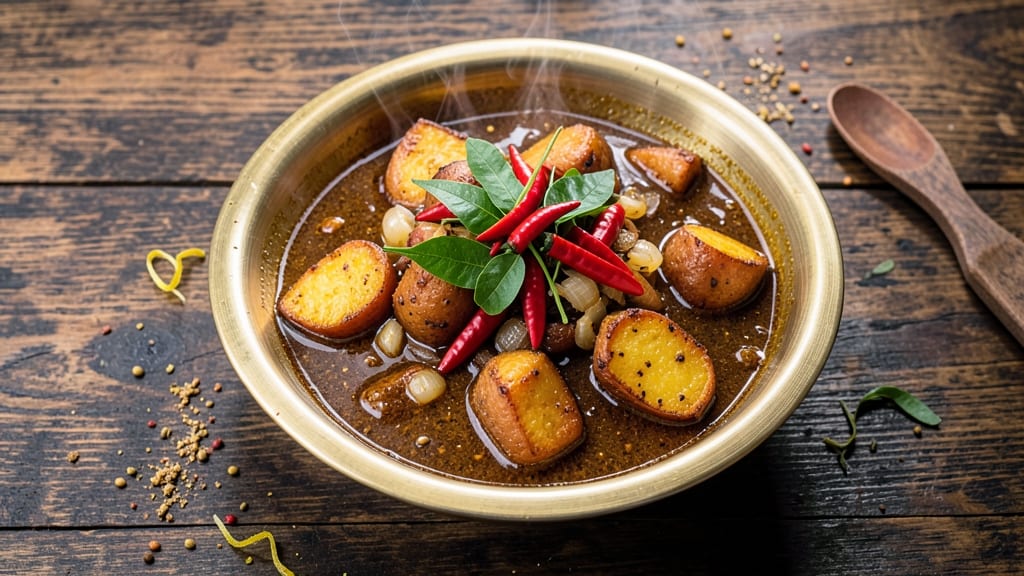
This Andhra potato curry delivers the bold, tangy flavors of South India in every bite—where fiery mustard seeds meet tamarind’s bright acidity. The secret lies in the tempering: whole spices toasted until fragrant, then crashed with curry leaves and red chilies to create a fragrant oil that coats each potato.
I first tasted this dish at a family gathering in Hyderabad, where my grandmother insisted it was the only way to eat potatoes—never plain, always spiced.
The dish starts with potatoes simmered in a tomato-tamarind base until tender, then finished with a tempering that transforms simple ingredients into something vibrant and complex. Mustard seeds sizzle in hot oil, releasing their signature pungency, while curry leaves add an earthy aroma.
The tamarind paste balances the heat, creating a sauce that’s both sharp and satisfying. This is vegetarian comfort food at its finest—packed with flavor but still light enough to pair with rice or dosa.
What makes this curry special is its versatility. Serve it as a side with steamed rice, or let it shine as a main dish with a dollop of yogurt and fresh cilantro. The spices develop deeper as the curry sits, so it tastes even better the next day.
For an extra layer of complexity, some Andhra households add gongura (sorrel) or menthya (field mint) leaves, but the classic version here delivers all the essential flavors without extra ingredients.
The key to success is patience—letting the spices bloom in the oil and the tamarind dissolve completely into the sauce. Once mastered, this curry becomes a staple in your rotation, offering a taste of South India’s bold, tangy traditions. Ready to make it? Let’s get started.
Ingredients for andhra potato curry
Bold spices, tangy tamarind, and crispy mustard seeds—this curry turns simple potatoes into a flavor explosion.
| Ingredient | Amount | Notes |
|---|---|---|
| Russet Potatoes 🥔 | 2 lb | Cut into 1-inch cubes |
| Vegetable Oil 🫒 | ½ cup | For tempering |
| Mustard Seeds 🌶️ | 1 tbsp | Whole, for tempering |
| Curry Leaves 🌿 | ¼ cup | Fresh, packed |
| Red Chilies 🌶️ | 4 whole | Dried or fresh, whole |
| Tamarind Paste 🍈 | ¼ cup | Adjust for tanginess |
| Tomatoes 🍅 | 2 medium | Chopped, ripe |
| Onion 🧅 | 1 medium | Finely chopped |
| Garlic Cloves 🧄 | 6 cloves | Minced |
| Ginger 🌿 | 1 inch | Fresh, grated |
| Ground Cumin 🌿 | 1 tbsp | Toasted for depth |
| Ground Coriander 🌶️ | 1 tbsp | Freshly ground |
| Turmeric Powder 🧂 | ½ tsp | Bright yellow color |
| Salt 🧂 | 1 tsp | Adjust to taste |
| Fresh Cilantro 🌿 | ¼ cup | Chopped, for garnish |
The mustard seeds are non-negotiable here—they need to pop and sizzle in hot oil for that signature Andhra punch. Buy whole seeds from the bulk bin at Whole Foods or your local Indian market; pre-ground loses its magic. Curry leaves? Fresh is a must—dried just won’t cut it. I grab mine at H Mart or the international section of Kroger. For tamarind paste, Mamee brand is my go-to—it’s consistent and tangy without being overly sour. The red chilies should be whole, not powdered, so you can control the heat. If you can’t find fresh curry leaves, substitute with 2 tbsp of dried curry leaf powder, but honestly, it’s not the same.
No mustard seeds? Swap for 1 tsp of mustard powder, but you’ll lose that satisfying pop. Tamarind paste too sour? Balance it with 1 tsp of sugar. Fresh ginger and garlic are ideal, but powdered works in a pinch—just use half the amount. The potatoes? Russets are perfect—they hold up to the spices and stay firm. For extra depth, some Andhra cooks add a pinch of asafoetida (hing), but it’s optional. The tomatoes can be canned San Marzano if fresh aren’t available—just drain them well. And if you’re feeling adventurous, add 1 tsp of gongura powder for a tangier twist, but it’s not traditional.
This curry tastes even better the next day—let the flavors meld. Store in an airtight container for up to 5 days in the fridge. For leftovers, reheat gently on the stove with a splash of water. Freezes beautifully for 3 months, though the texture might get slightly softer. I always make a double batch—it’s perfect for meal prep. Garnish with fresh cilantro right before serving, or keep it whole for a pop of color. The spices will settle, so give it a stir before serving.
Why You'll Love This Recipe
- No-Chop Nightmare: I swear by this recipe when I’m too tired to dice anything. Toss in whole Russets (peeled, yes), let them soften in the oil with mustard seeds and curry leaves—no knife skills required. The potatoes break apart perfectly on their own, and honestly? That’s half the battle won.
- Spice That Stays: That first sizzle of mustard seeds and red chilies in hot oil? Pure magic. The curry leaves release their earthy aroma, and the slow-cooked potatoes soak up just the right amount of spice—enough to wake you up, but not so much it’ll ruin your evening. (Yes, even on a Tuesday night.)
- Lunchbox Hero: Between us, this curry reheats like a dream. Pack it in containers with steamed rice or roti, and it’s still flavorful the next day—no sad, soggy leftovers here. My kids actually ask for this, and that’s saying something after years of begging for mac and cheese.
- Pantry Staple Power: Mustard seeds, curry leaves, a few chilies—you’re probably already using these for other dishes. The potatoes? They’re cheap, filling, and last forever. I’ve made this with just these basics when my fridge was bare, and it still tasted like a proper meal. Reliable. No excuses.
Step-by-step instructions for Andhra potato curry
Here's how to make this bold, tangy curry with perfect spice balance and tender potatoes.
Temper the Spices in Hot Oil
Heat the 0.5 cup vegetable oil in a heavy-bottomed pot over medium heat until it shimmers. Add the 1 tablespoon mustard seeds and let them sizzle for 30 seconds until they pop audibly. This is your signal to add the 4 whole red chilies and 0.25 cup curry leaves.
Watch closely as the curry leaves darken and the chilies turn vibrant red. Let them cook for 1 minute until fragrant. This tempering layer forms the aromatic base of the curry. If you smell the mustard seeds burning, reduce the heat slightly - they should pop without smoke.
Cook the Aromatics and Build the Base
Add the finely chopped 1 medium onion and cook for 5-6 minutes until golden brown. Stir in the 6 cloves minced garlic and 1 inch grated ginger, cooking for another 1 minute until the raw smell disappears. This ensures all your flavors meld together.
Next, add the 1 tablespoon ground cumin and 1 tablespoon ground coriander, stirring for 30 seconds to toast the spices. The aroma should fill your kitchen - this is where the curry develops its depth. Immediately pour in the 0.25 cup tamarind paste and mix well to dissolve completely.
Simmer the Potatoes in Spiced Tomato Gravy
Add the chopped 2 medium tomatoes and cook until they break down into a thick paste (5-7 minutes). Sprinkle in the 0.5 teaspoon turmeric powder and 1 teaspoon salt, stirring vigorously. Pour in 1 cup water and bring to a gentle boil.
Add the 2 lb russet potatoes cut into 1-inch cubes. Reduce heat to low and simmer uncovered for 20-25 minutes, stirring occasionally, until the potatoes are fork-tender. The curry should reduce slightly but still coat the back of a spoon. If it gets too thick, add 2-3 tablespoons water to maintain the right consistency.
Finish with Fresh Herbs and Adjust Seasoning
Once the potatoes are tender, remove from heat and stir in the 0.25 cup chopped fresh cilantro. Let the curry sit for 5 minutes to allow flavors to meld. Taste and adjust the seasoning - you might need more salt or a splash of water if the tamarind is too tangy.
The curry should have a perfect balance of tangy, spicy, and earthy flavors with tender potatoes that hold their shape. Serve hot with steamed rice or roti for the full Andhra experience. Real talk: the longer it sits, the better the flavors develop, so don't rush this step.
Pro Tips For Making Andhra Potato Curry
- Boil Potatoes Halfway: Cut Russets into even 1-inch chunks, then boil them for 8-10 minutes until just fork-tender—not mushy. Overcooking turns them to mush in the curry, and you’ll end up with a watery mess instead of those perfect, fluffy bites.
- Temper Mustard Right: Heat oil until it shimmers, then add mustard seeds low and slow—they’ll pop like fireworks if you rush it. If they burn, the whole curry tastes bitter. I learned this the hard way after three batches of smoky disappointment.
- Dry Potatoes Before Frying: Pat boiled potatoes thoroughly with a kitchen towel—wet spots mean oil splatter and uneven browning. A quick shake in a colander works just as well as towels, and your stove will thank you.
- Toast Chilies Whole: Add whole red chilies to the oil before curry leaves—they’ll bloom their flavor faster and prevent the leaves from burning. Crush them after they darken, not before, or they’ll turn to ash. (Yes, I’ve done that too.)
Serving suggestions for this recipe
Classic Pairings
Serve this Andhra potato curry with steamed basmati rice—the mildness of the rice balances the tangy, spicy flavors beautifully. I like to use long-grain Indian basmati from Tata brand, which stays fluffy and separates perfectly.
For extra authenticity, pair with Andhra-style roti or paratha, which soak up the flavorful sauce. 🍚
Tangy Balance
To cut through the heat, offer a side of plain yogurt or raita with cucumber and mint. The cooling dairy balances the fiery mustard seeds and tamarind. I often make a quick version with 2% Greek yogurt, grated cucumber, and a pinch of salt.
A sprinkle of roasted cumin powder adds depth to the yogurt's simplicity.
Fresh Contrast
Add a simple cucumber-onion salad to refresh your palate between bites. Thinly slice 1 English cucumber and ½ red onion, toss with 1 tbsp lemon juice, and a pinch of salt.
The crisp, cool salad provides a refreshing counterpoint to the rich, spiced curry. Garnish with a few cilantro leaves for extra freshness.
Spice Level Control
For guests who prefer milder flavors, serve warm naan bread on the side. The soft, pillowy texture helps mop up the sauce while toning down the heat. I recommend store-bought naan from the Indian grocery aisle—just reheat in a dry skillet for 30 seconds per side until crispy.
A dollop of mango chutney on the side adds sweetness to complement the tangy curry.
Meal Prep Friendly
This curry reheats beautifully, making it perfect for meal prep. Store leftovers in an airtight container for up to 5 days. When reheating, add 2-3 tablespoons of water to prevent drying out.
Serve with microwaved basmati rice or pre-made dosa for a quick, satisfying meal. The flavors actually deepen overnight, so it tastes even better the next day! ✨
Nutrition facts
Frequently asked questions
Can I make this curry without mustard seeds?
Yes, but you'll lose that signature Andhra flavor. For a substitute, use 1 teaspoon mustard powder instead, but add it directly to the oil with the other spices. Alternatively, 1 teaspoon of ground fenugreek (methi) can mimic some of the earthy depth, though the texture won't be the same.
How do I adjust the heat level?
For milder heat, reduce the red chilies to 2-3 whole (or 1 teaspoon powdered). For extra spice, add ½ teaspoon of cayenne pepper or 1 extra dried chili. Remember: the mustard seeds contribute heat too, so adjust them if needed. Always taste before serving!
What's the best way to store leftovers?
Store in an airtight container in the fridge for up to 5 days. The flavors actually improve overnight! For reheating, warm gently on the stove with 2-3 tablespoons water to prevent drying. Freezes well for 3 months, though the potatoes may get slightly softer.
Can I use sweet potatoes instead?
Sweet potatoes work beautifully and add natural sweetness that pairs well with the tangy tamarind. Use the same quantity, but reduce cooking time by 5 minutes as they soften faster. The texture will be slightly creamier, which some prefer in Andhra-style curries.
Why is my curry too sour?
Tamarind paste can vary in strength. Balance excessive sourness by adding ½ teaspoon sugar or 1 teaspoon coconut milk to mellow the acidity. If the curry is still too sharp, a pinch of salt or a splash of water can help. Always taste as you go—traditional Andhra curries should be tangy but not overwhelming.