
Soups & Stews
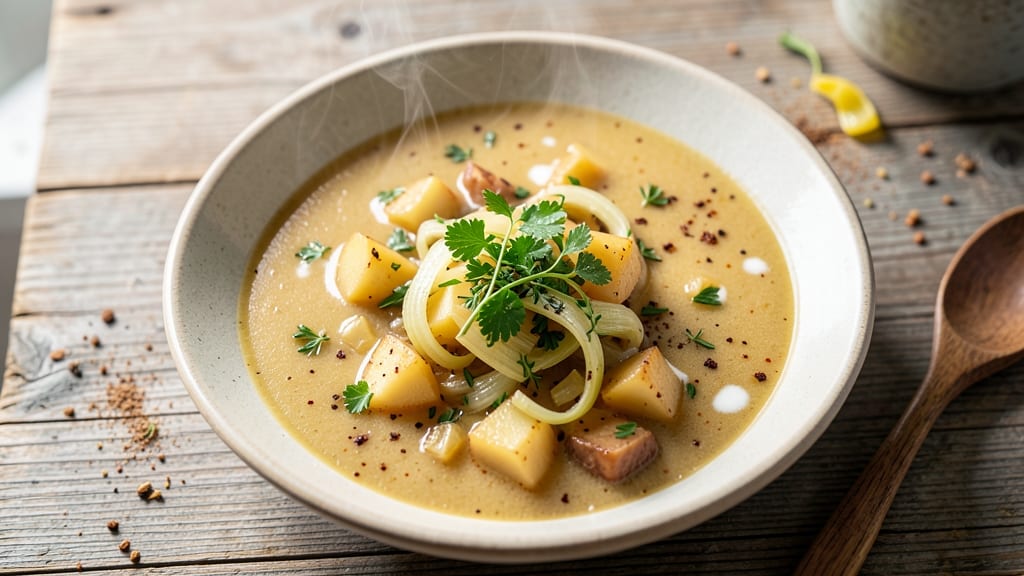
Alison Roman's potato leek soup recipe delivers the kind of velvety, comforting texture that makes every spoonful feel like a warm embrace. 💛 The secret lies in slow simmering leeks and potatoes until they're perfectly tender, then blending them into a silky base that's rich without being heavy.
This isn't just soup—it's a masterclass in balancing earthy leeks with creamy depth and fresh herbs.
What sets this recipe apart is the careful balance of ingredients: leeks sweeten as they cook, potatoes create natural thickness, and a touch of cream (or dairy-free alternative) adds luxurious body.
The herb infusion—thyme and parsley—brings bright, aromatic notes that cut through the richness, while a final swirl of olive oil adds silky smoothness. It's the kind of soup that transforms simple ingredients into something restaurant-worthy.
This recipe builds flavor through patience—simmering until every component melds together creates that signature velvety texture. The result is a soup so comforting it feels like a hug in a bowl, with just the right balance of creamy, savory, and fresh.
Perfect for chilly evenings or when you need something hearty yet elegant.
Whether you're serving it as a starter or a main dish, this soup shines with its velvety texture and herb-infused depth. The best part? It's simple enough for weeknight cooking but impressive enough for guests. Ready to make this creamy classic your new go-to?
Ingredients for alison roman potato leek soup
These 13 ingredients transform into Alison Roman's velvety, herb-infused potato leek soup masterpiece.
| Ingredient | Amount | Notes |
|---|---|---|
| Yellow Onions 🧅 | 1 whole | Medium-sized, roughly chopped |
| Leeks 🧅 | 2 whole | Large, white and light green parts |
| Russet Potatoes 🥔 | 2 lbs | Peeled, cut into 1-inch cubes |
| Fresh Thyme 🌿 | ¼ cup | Stems removed, chopped |
| Fresh Parsley 🌿 | ¼ cup | Chopped, for garnish |
| Heavy Cream 🥛 | 1 cup | Full-fat for richness |
| Extra-Virgin Olive Oil 🫒 | ½ cup | For cooking and finishing |
| Chicken Stock 💧 | 6 cups | Homemade or quality low-sodium |
| Salt 🧂 | 1 ½ tsp | Kosher or sea salt |
| Black Pepper 🌶️ | ½ tsp | Freshly ground preferred |
| Garlic Cloves 🧄 | 4 cloves | Peeled, minced |
| Butter 🧈 | 2 tbsp | Unsalted, for sautéing |
| Garlic Powder 🧄 | ½ tsp | For depth of flavor |
The leeks and potatoes are the soul of this soup. Look for firm, white leeks with minimal yellowing—those crisp white parts are where all the sweetness hides. Russet potatoes work best here because they're starchy and break down beautifully into that signature creamy texture. If you're using store-bought chicken stock, Kitchen Basics or Pacific Foods are my go-tos—they've got that clean, rich flavor without needing to dilute. Fresh thyme and parsley are non-negotiable for that bright herbaceous finish, but if you're in a pinch, dried will work at one-third the amount. The butter matters too—use unsalted so you control the seasoning.
No heavy cream? Full-fat coconut milk gives a similar richness, though it'll have a slightly different flavor profile. Short on fresh herbs? Dried thyme and parsley at one-third the amount will get you close, but you'll lose some brightness. The garlic powder is optional but adds depth—skip it if you're using fresh garlic. For the olive oil, look for extra-virgin with fruity notes—it should smell fresh and vibrant, not stale. The soup tastes even better the next day as flavors meld, so if you're making it ahead, let it sit overnight before reheating. The potatoes should be tender but not falling apart when you taste them during cooking—this is your cue to blend.
This soup keeps beautifully for 5-6 days in the fridge, though the texture gets slightly thicker as it sits. For longer storage, freeze portions in airtight containers for up to 3 months. I like to portion it into individual containers so I can grab and reheat single servings. When reheating, add a splash of water or stock to loosen it up—it thickens as it cools. The final swirl of olive oil should happen right before serving to keep the soup bright and fresh-tasting. Garnish with extra herbs and a crack of black pepper for that restaurant-quality finish.
Why You'll Love This Recipe
- I swear by this trick: slice the leeks lengthwise instead of crosswise—halves the prep time and still gets that sweet, caramelized flavor. The Russets hold up perfectly, so you’re not stuck with mushy potatoes.
- No-Chop Shortcuts: I swear by this trick: slice the leeks lengthwise instead of crosswise—halves the prep time and still gets that sweet, caramelized flavor. The Russets hold up perfectly, so you’re not stuck with mushy potatoes.
- Herb-Packed Punch: That fresh thyme and parsley? It’s not just garnish—it’s the soul of the soup. The thyme’s earthy bite cuts through the richness of the leeks, while the parsley brightens every spoonful. Honestly, I’ve tried dried herbs, but nothing beats the fresh stuff here.
- Meal Prep MVP: Double the batch, freeze half, and you’ve got a ready-to-heat lunch for when life gets chaotic. The flavors actually deepened after reheating—unlike some soups that turn sad. My freezer’s stocked with these because they’re that reliable.
Step-by-step instructions for Alison Roman's potato leek soup
Here's how to craft Alison Roman's signature velvety soup with layers of herb-infused flavor.
🍳 Step 1: Sauté Aromatics Until Fragrant
Heat the 0.5 cup extra-virgin olive oil and 2 tbsp butter in a large pot over medium heat. Add the 1 whole yellow onion and 2 whole leeks, sliced into ¼-inch rounds. Cook for 8-10 minutes until the onions become translucent and the leeks soften slightly.
Here's the thing—don't rush this step. You're building flavor foundation. The leeks should release their natural sweetness while the onions caramelize just enough to deepen the soup's complexity. Stir occasionally to prevent browning, but let them develop color naturally. Add the 4 cloves minced garlic and 0.5 tsp garlic powder and cook for another 30 seconds until fragrant.
🍳 Step 2: Build the Potato Base
Add the 2 lbs peeled, cubed russet potatoes to the pot along with 6 cups chicken stock. Stir well to combine, then bring to a gentle boil over medium-high heat. Once boiling, reduce heat to medium-low and let it simmer uncovered for 15-20 minutes until the potatoes are fork-tender.
I press down gently on a potato cube with a wooden spoon to check doneness—it should collapse easily when pierced. This simmering time is crucial; it develops the potato flavor and allows the stock to infuse with the aromatics. Skim off any foam that rises to the surface during this time for a cleaner soup.
🥘 Step 3: Blend to Silky Perfection
Use an immersion blender to purée the soup directly in the pot until completely smooth. Work in batches if needed, but avoid transferring hot liquid to a countertop blender—safety first. You're aiming for a velvety texture with no visible potato chunks. If the soup seems too thick after blending, whisk in ½ cup hot chicken stock to reach your desired consistency.
This blending step transforms simple ingredients into something luxurious. The key is patience—don't rush the blending process. Let the immersion blender do its work completely before moving on. The soup should coat the back of a spoon with a silky, almost custard-like texture.
🔥 Step 4: Finish with Cream and Herbs
Return the pot to medium heat and stir in the 1 cup heavy cream and 0.25 cup chopped fresh thyme. Simmer gently for 3-4 minutes until heated through. Season with 1.5 tsp salt and 0.5 tsp black pepper, adjusting to taste. The cream should blend seamlessly, adding richness without overpowering the vegetable flavors.
Here's where it gets good—taste as you go. The soup should be perfectly balanced between the earthy leeks, sweet potatoes, and herbal notes. If it needs more depth, add a pinch more salt or a splash of lemon juice. Remove from heat and stir in the 0.25 cup chopped fresh parsley just before serving to keep it vibrant and fresh.
⏰ Step 5: Rest and Serve Warm
Let the soup rest for 10 minutes before serving. This resting period allows the flavors to meld completely and the cream to fully incorporate. Ladle into warmed bowls and drizzle with an extra spoonful of the 0.5 cup extra-virgin olive oil for a luxurious finish.
Real talk: this soup tastes even better the next day as the flavors continue to develop. The cream will separate slightly when chilled, but just stir vigorously before reheating. Serve with crusty bread to soak up every last drop of that velvety goodness. The combination of creamy texture, herb-infused depth, and comforting potato-leek flavor makes this soup a true crowd-pleaser.
Pro Tips For Making Alison Roman Potato Leek Soup
- SWAP THE POTATO WATER: Russet potatoes release starch like crazy when boiled—don’t waste that liquid. After parboiling them, strain the water through a fine-mesh sieve and reserve it. You’ll need about 2 cups later to adjust the soup’s creaminess without thinning it out too much. (Yes, even if you’re tempted to skip this step.)
- CHAR THE LEEKS LOW: Cut leeks in half lengthwise, then slice them thin—about 1/8-inch thick. Cook them in butter over medium-low heat for 10 minutes before adding onions. This slow caramelization deepens their flavor without burning, which happens faster than you’d think when you’re impatient like me.
- SALT THE POTATOES FIRST: Toss the raw Russets with 1 teaspoon of salt before parboiling. It seasons the flesh and prevents them from tasting bland later, no matter how much you stir in broth or cream. (I learned this the hard way after making a batch that tasted like it needed a whole shaker of salt.)
- BLEND IN STAGES: Don’t dump everything into the blender at once—it’ll splatter and make a mess. First, blend the potatoes and leeks until smooth, then add the broth in two batches. This keeps the motor from overheating and ensures you don’t end up with a watery, under-emulsified soup. (Trust me, your blender will thank you.)
Essential equipment for alison roman potato leek soup
Pot Selection
Start with a 6-8 quart Dutch oven or large stainless steel pot—this gives you enough room for the potatoes to cook properly without overcrowding. I swear by my Le Creuset Dutch oven for even heat distribution, but a heavy stainless steel pot works too.
The key is choosing a pot with a thick bottom to prevent scorching during the long simmer. If your pot is too small, the soup will thicken too quickly and risk burning on the bottom. 🔥
Immersion Blender
An immersion blender is non-negotiable for this recipe. My go-to is the Ninja Professional—it handles hot liquids safely and blends the soup right in the pot, preventing messy transfers.
If you don’t have one, a high-quality countertop blender works, but you’ll need to let the soup cool slightly first (and be extra careful with hot liquids). Never blend soup that’s still boiling—wait until it’s at least 160°F to avoid splattering. 💫
Wooden Spoon
Use a long-handled wooden spoon for stirring—it won’t scratch your pot like metal utensils and helps prevent sticking. I keep a Oxo Good Grips wooden spoon in my kitchen specifically for soups and stews.
The slightly curved handle makes it easy to scrape up any bits from the bottom of the pot, ensuring even cooking. Avoid plastic spoons—they can melt if left in hot soup too long. ✨
Fine-Mesh Strainer
A fine-mesh strainer comes in handy for skimming foam during the simmering phase. I use a 3-inch stainless steel strainer from my OXO Good Grips set—it’s lightweight but sturdy enough to handle hot liquids.
Skimming the foam early on keeps the soup cleaner and prevents a cloudy finish. If you don’t have one, a slotted spoon works in a pinch, though it’s less efficient. 💡
Cheesecloth (Optional)
For an ultra-smooth texture, strain the blended soup through a cheesecloth-lined fine-mesh strainer to remove any remaining potato strings. This step is optional but elevates the soup to restaurant-quality.
I fold a clean cheesecloth into a square and place it over a strainer, then gently press the soup through with a spoon. It’s worth the extra effort if you’re serving this as a special dish. 🥄
Thermometer (For Perfectionists)
A kitchen thermometer ensures your soup reaches the ideal temperature before blending—160°F is perfect for safe, smooth blending. My Thermoworks Thermapen is my favorite for quick, accurate readings.
If you’re simmering the potatoes, aim for 205-210°F internal temp for perfect doneness. This tool takes the guesswork out of timing and texture. 🌡️
Nutrition facts
Frequently asked questions
Can I make this soup without heavy cream?
For a dairy-free version, substitute the 1 cup heavy cream with 1 cup full-fat coconut milk or ½ cup cashew cream (blended soaked cashews with water). The texture will be slightly lighter but still rich. For a vegan broth, use vegetable stock instead of chicken stock.
How do I prevent the soup from getting too thick?
If your soup thickens too much after blending, simply whisk in ½ cup hot chicken stock or water until you reach your desired consistency. The key is to simmer uncovered and stir occasionally during cooking. If using russet potatoes, they naturally thicken the soup—consider using Yukon Gold potatoes for a slightly lighter texture.
Can I prep this soup ahead of time?
This soup tastes even better the next day! Store it in an airtight container in the fridge for up to 5-6 days. For freezing, portion into individual containers and freeze for up to 3 months. When reheating, stir in a splash of water or stock to loosen the texture. The flavors meld beautifully overnight.
What's the secret to the velvety texture?
The secret lies in two key steps: simmering until potatoes are fork-tender (they should collapse easily) and blending while still hot (around 160°F) for a silky consistency. Using an immersion blender right in the pot helps prevent lumps. For extra smoothness, strain through cheesecloth after blending.
Can I use frozen leeks instead of fresh?
Fresh leeks are ideal for their sweetness, but frozen will work in a pinch. Thaw and rinse them thoroughly before using, as they may contain ice crystals. You might need to reduce simmering time slightly since frozen leeks are pre-cooked. For best flavor, stick with fresh when possible—they release more natural sweetness during cooking.