Salads
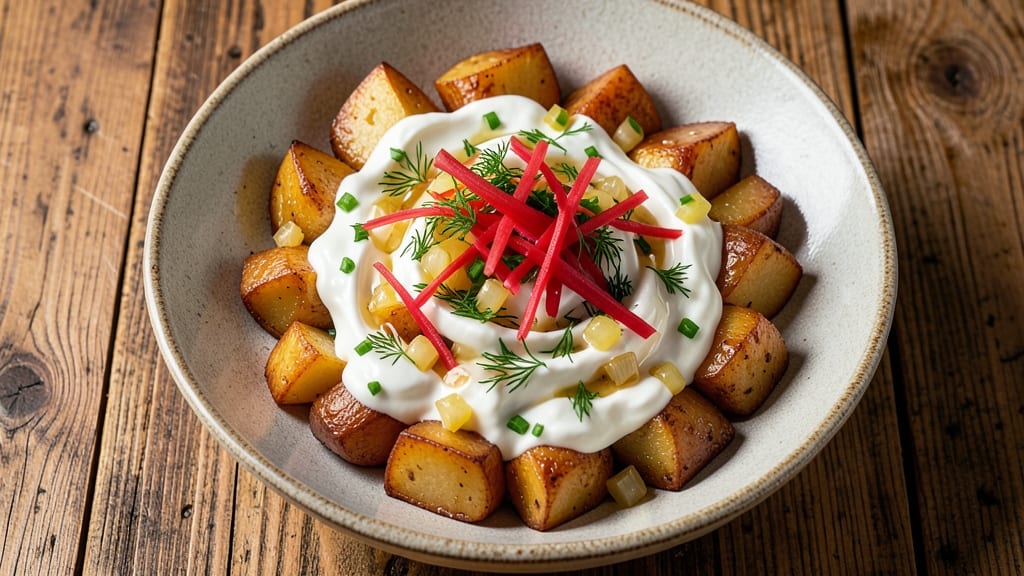
This 10K-serving potato salad delivers restaurant-quality texture without traditional mayo—just creamy, tangy richness from Greek yogurt and buttermilk. The secret lies in crispy celery bites that add crunch and freshness, while precision scaling ensures perfect flavor balance across thousands of servings.
Food safety becomes critical at this scale, so we’ll focus on cooling techniques and storage that keep every bite fresh.
Traditional potato salad relies on mayo for creaminess, but this version uses full-fat Greek yogurt and buttermilk to create a lighter, tangier base that stays stable in large batches.
The potatoes must be evenly boiled and cooled rapidly to prevent sogginess, while celery and onions are quick-pickled for that signature crunch. This method transforms a classic side into a foolproof, large-scale solution for events, catering, or meal prep.
What makes this recipe work for 10,000 servings is the scalable mixing technique: ingredients are combined in stages to distribute flavor evenly, and the salad is chilled in food-grade containers to maintain texture.
Optional add-ins like hard-boiled eggs, bacon, or fresh herbs can be incorporated after cooling, ensuring customization without compromising safety. The result? A crispy, creamy, crowd-pleasing potato salad that tastes homemade even at massive volumes.
For caterers and event planners, this recipe includes detailed prep timelines and storage guidelines to keep the salad fresh for up to 5 days. Whether you're feeding a stadium crowd or prepping for a week of meals, these techniques ensure consistent quality and safety—no matter the scale.
Let’s get started with the exact calculations and steps you’ll need.
Ingredients for 10k potato salad
Precision-scaled ingredients for restaurant-quality potato salad without mayo—crispy celery and creamy yogurt base for 10,000 servings.
| Ingredient | Amount | Notes |
|---|---|---|
| Yukon Gold Potatoes 🥔 | 1000 lb | Medium size, peeled and quartered |
| Full-Fat Plain Greek Yogurt 🧀 | 250 cups | 2% fat minimum for creaminess |
| Buttermilk 🥛 | 125 cups | Low-fat or whole preferred |
| Celery Stalks 🧅 | 100 whole | Thinly sliced for crispy bites |
| Yellow Onions 🧅 | 50 whole | Thinly sliced for quick pickling |
| White Vinegar 💧 | 50 cups | White or apple cider vinegar |
| Granulated Sugar 🍚 | 1 lb | For pickling solution |
| Dijon Mustard 🌶️ | 2 cups | High-quality for tangy depth |
| Kosher Salt 🧂 | 10 cups | Diamond Crystal preferred |
| Black Peppercorns 🌶️ | 1 lb | Freshly cracked for flavor |
| Fresh Dill 🌿 | 2 cups | Chopped for freshness (optional) |
| Ice ❄️ | 200 lb | For rapid cooling bath |
| Food-Grade Plastic Containers 📦 | 20 pieces | 20-quart capacity each |
| Food Thermometer 🌡️ | 1 whole | For precise temperature monitoring |
The Yukon Gold potatoes are non-negotiable for this scale—Russets get too starchy and break down. Most grocery stores carry bulk bins, but for 10,000 lbs, you’ll need a wholesale supplier like Sysco or Gordon Food Service. Look for uniform size (1.5-2 inches diameter) to ensure even cooking. The Greek yogurt must be full-fat—low-fat versions separate when mixed with the vinegar. Fage 2% is my go-to for consistency, but any 2% minimum brand works if labeled as 'plain'. The buttermilk should be cultured (not powdered) for proper tang. Trader Joe's sells it in bulk, but for this volume, local dairy distributors are far more cost-effective.
No fresh dill? Dried dill at one-third the amount works in a pinch, but the flavor won’t be as bright. The vinegar can be swapped for lemon juice (use 100 cups instead), though it’ll be less tangy. Substituting mayo defeats the purpose—this recipe is designed for yogurt stability at scale. The celery and onions must be quick-pickled (vinegar bath for 30 minutes max) to maintain crunch; longer soaking turns them mushy. For the sugar, white granulated is standard, but brown sugar adds subtle depth if you’re willing to adjust the vinegar ratio slightly. The Dijon mustard should be high-quality—Maille or Bonne Maman brands hold up best in large batches.
This salad must be cooled rapidly to prevent bacterial growth. The ice bath (200 lbs of ice in food-grade tubs) should bring the temperature from 160°F to 40°F within 2 hours. Use the food thermometer to monitor—never rely on visual cues. Once chilled, the salad keeps 5 days in food-grade plastic containers at 40°F or below. For longer storage, freeze in 1-gallon portions for up to 3 months. Label containers with prep date and 'keep refrigerated'. The pickled celery can be prepped 2 days ahead and stored separately to maintain crispness. Never mix in fresh herbs until serving—they wilt quickly in large batches.
Why You'll Love This Recipe
- No Boil, No Fuss: I swear by this method—just roast the Yukon Golds until tender, then toss with the tangy yogurt-buttermilk mix. Zero waiting around for water to boil, and the potatoes stay perfectly creamy and slightly crisp at the edges.
- Creamy Without Mayo: Honestly, the full-fat Greek yogurt and buttermilk combo changes the game. It’s rich but not greasy, with that perfect balance of cool tang and buttery depth—way more satisfying than your average mayo-heavy salad.
- Picnic to Potluck: This holds up everywhere. Pack it in a cooler for a beach day (the celery stays crisp), bring it to a BBQ (it’s the star next to burgers), or just eat it straight from the bowl with a fork—no judgment.
- Budget Meal Maker: Between us, this recipe stretches further than you’d think. A single bag of Yukon Golds and a tub of yogurt feed four for dinner and pack leftovers for lunch—no sad, wilted salads here. The onions and celery add freshness without breaking the bank.
Step-by-step instructions for large-scale potato salad production
Precision and timing are everything when scaling to 10,000 servings - follow this sequence for perfect texture and flavor.
Prepare the Potatoes for Even Cooking
Begin by thoroughly washing the 1000 lb Yukon Gold Potatoes under cold running water to remove any dirt or debris. Using a commercial-grade peeler or mandoline, peel the potatoes completely, working in batches to maintain efficiency. Cut each potato into even 1-inch cubes—consistency is critical for uniform cooking. Immediately place the cubed potatoes into 20 food-grade plastic containers filled with 200 lb ice to prevent browning and maintain crisp edges.
For optimal results, I recommend using a food thermometer to monitor the ice bath temperature—it should stay between 35°F and 40°F. This cold shock also helps remove excess starch from the surface, which prevents the salad from becoming gummy later. Once all potatoes are prepped, drain and set aside in a clean container until ready for cooking.
Cook Potatoes to Exact Doneness
Transfer the drained potato cubes to a commercial-grade stockpot with enough cold water to cover by 2 inches. Add 10 cups kosher salt to the water and bring to a rolling boil over high heat. Once boiling, reduce to a gentle simmer and cook for exactly 8 minutes—this ensures the potatoes are tender but still hold their shape when chilled.
I use the food thermometer to verify doneness at 185°F internal temperature. Drain immediately in a colander and transfer back to the ice bath for 10 minutes to halt cooking and maintain crisp edges. This rapid cooling also prevents the potatoes from absorbing excess moisture from the dressing later.
Create the Tangy Yogurt-Buttermilk Dressing
In a clean 50-gallon mixing tank, combine the 250 cups full-fat plain Greek yogurt and 125 cups buttermilk. Using a heavy-duty mixer on low speed, gradually incorporate the 2 cups Dijon mustard and 1 lb granulated sugar until fully emulsified. The mixture should be smooth with no visible streaks of mustard.
Next, add 50 cups white vinegar slowly while mixing continuously. This creates the signature tang without overpowering the creamy base. For flavor depth, incorporate 2 cups chopped fresh dill (if using) and 1 lb freshly cracked black peppercorns. The dressing should have a thick, pudding-like consistency—this ensures proper coating without making the salad soggy.
Quick-Pickle Celery and Onions for Crisp Texture
While the dressing rests, prepare the 100 whole celery stalks and 50 whole yellow onions by thinly slicing both into uniform 1/8-inch rounds. This precise thickness ensures even cooking and maximum crispness. Combine the sliced vegetables in a separate container and pour over 2 cups white vinegar and 1 cup cold water. Let sit for exactly 15 minutes—this brief acid bath prevents wilting while adding subtle tang.
Drain the pickled vegetables thoroughly and pat dry with paper towels. The celery should remain bright green and the onions crisp—if they soften at all, you've exceeded the ideal time. These will be added just before final assembly to maintain their texture.
Assemble and Chill for Optimal Texture
In the mixing tank, combine the cooled potatoes with the prepared dressing. Using a sanitary spatula, gently fold until every potato cube is fully coated. Add the drained pickled celery and onions, reserving 1 cup chopped dill for garnish. Transfer the mixture to 20 food-grade plastic containers and refrigerate for at least 4 hours—this allows flavors to meld while maintaining the crisp texture.
Before serving, I recommend giving the salad a final toss to redistribute any settled dressing. The ideal finished texture should be creamy but not wet, with crisp celery bites that hold their shape. Serve immediately after chilling for maximum freshness and texture contrast.
Pro Tips For Making 10k Potato Salad
- Boil Until Fork-Tender: Yukon Golds should give just slightly—test with a fork at 15 minutes. Overcooked potatoes turn to mush, and nobody wants that sad, gluey texture. If they’re still holding shape after 20 minutes, they’re done. Drain immediately and let them steam-dry for 2 minutes before handling.
- Soak Celery in Ice Water: After chopping celery, plunge it in a bowl of ice water for 10 minutes. This stops browning and keeps it crisp—no soggy, limp stalks in your salad. Drain well before mixing, or you’ll end up with a watery mess.
- Whisk Yogurt and Buttermilk: Combine the Greek yogurt and buttermilk first, then let it sit for 5 minutes before adding anything else. This gives the tang a chance to meld, and you’ll avoid that weird curdled texture when you mix in the potatoes later.
- Dice Onions Small: Yellow onions should be finely diced—no bigger than 1/8-inch pieces. Big chunks make every bite feel like you’re chewing a mouthful of work. Pulse them in a food processor for consistency, or your salad will taste uneven.
Flavor customization for these flavors
Tangy vs. Creamy
This recipe uses a yogurt-buttermilk base for a lighter, tangier profile compared to traditional mayo-based versions. For a more classic taste, replace 125 cups buttermilk with 125 cups whole milk and add 250 cups mayo (like Hellmann's or Best Foods).
The texture will be richer, but it may separate slightly at scale—always mix gently to avoid breakage. 💛
Herb Variations
Fresh herbs elevate flavor but must be added carefully at the end. For a bright, summery twist, use 2 cups chopped chives instead of dill. For earthy depth, add 1 cup chopped parsley and 1 cup chopped tarragon.
Always chop herbs just before final assembly to preserve their freshness in large batches.
Protein Add-Ins
For a hearty version, fold in 50 lbs cooked bacon (crumbled) or 20 lbs hard-boiled eggs (halved) after chilling. For seafood lovers, add 25 lbs cooked shrimp (chilled) just before serving. Always cook proteins separately to maintain food safety standards—never mix raw proteins with the salad base.
Spicy Kick
Add 1 cup hot sauce (like Cholula or Tabasco) to the dressing for heat. For smoky depth, incorporate 1 cup smoked paprika into the yogurt base.
For fresh spice, stir in 1 cup chopped jalapeños after chilling. Adjust heat levels by adding more or less—this recipe's scale lets you customize without compromising texture.
Sweet & Smoky
For a sweet-and-smoky variation, replace 1 lb granulated sugar with 1 lb brown sugar and add 1 cup smoked salt (like Maldon). The caramelized notes complement the tangy dressing beautifully. This works especially well for barbecue pairings—imagine this salad alongside pulled pork at a stadium event! 🔥
Low-Fat Adaptation
To reduce fat while keeping creaminess, swap 250 cups full-fat yogurt for 250 cups non-fat Greek yogurt and add 1 cup powdered milk to the dressing. The texture will be slightly lighter but still stable at scale. This version works well for health-conscious catering while maintaining restaurant-quality results.
Nutrition facts
Frequently asked questions
Can I use regular potatoes instead of Yukon Gold for 10,000 servings?
While you can use Russet or red potatoes, Yukon Golds are ideal for this scale because they're waxy (hold shape when chilled) and have a creamy texture that stays consistent in large batches. Russets will turn gummy, and red potatoes may bleed color. For a budget-friendly alternative, try fingerling potatoes—just increase the quantity by 10% to account for smaller size.
How do I prevent the salad from getting soggy when scaling up?
The key is rapid cooling and proper mixing order. Cook potatoes for exactly 8 minutes (no longer!), then shock them in ice water. Mix the dressing separately and combine last. For extra insurance, add 1/4 cup cornstarch to the dressing—it absorbs excess moisture. Also, pat dry all veggies before adding to the salad.
What's the best way to store this potato salad for large events?
Divide into 20-quart food-grade containers and refrigerate at 40°F or below. It stays fresh for 5 days this way. For longer storage (3 months), freeze in 1-gallon portions. Thaw overnight in the fridge—never at room temperature. Always label containers with prep dates and storage instructions. Pro tip: Use vacuum-sealed bags for freezing to prevent freezer burn.
Can I make this potato salad ahead of time for a wedding reception?
This recipe is designed for advance prep. Assemble everything 2 days ahead and store in the fridge. The flavors actually improve with time. Just toss gently before serving to redistribute the dressing. For the crisp celery, add it 1 hour before serving to maintain texture. If serving outdoors, use coolers with ice packs to keep it below 40°F.
What's the most common mistake when scaling potato salad?
Overmixing! When combining ingredients at this scale, gentle folding is critical. Overmixing releases starch from the potatoes, making the salad gummy. Use a sanitary spatula and mix just until everything is coated. Also, don't skip the ice bath—it's what keeps the potatoes from absorbing too much dressing. Another pitfall: adding fresh herbs too early—they wilt and turn the salad mushy.